
News, Insights & Impact
Stories, updates, and reflections from a Catholic mission in the digital age.
Subscribe to our Newsletter
Get new articles and updates from Yes Catholic Hangout sent straight to your inbox.
AI Security for the Agentic Era: Who Is Accountable When AI Acts on Our Behalf?
Artificial intelligence is moving beyond answering questions to executing tasks, making decisions, and interacting with digital systems with increasing independence. As AI agents gain access to sensitive information, financial resources, and business operations, security can no longer be limited to protecting data. It must also address the consequences of what these systems are permitted to do. This editorial examines the security challenges of the agentic AI era through the lenses of human responsibility, accountability, and the common good.
Read article →
When Answers Become Easier Than Understanding
Artificial intelligence is making knowledge more accessible, but access to information is not the same as understanding. As students increasingly rely on AI for explanations, assignments, and problem-solving, we must ask a deeper question: are these tools helping us become better thinkers, or making independent thought less necessary? This editorial examines the future of education through the lens of human dignity, intellectual responsibility, and the Catholic understanding of integral human development.
Read article →
If the Builders Don't Fully Trust It, Why Should Anyone Else?
A pattern worth noticing: companies deeply invested in promoting AI adoption often keep firmer human oversight over their own most sensitive operations than they recommend to everyone else. This editorial argues that gap between confidence for export and caution for home use is an honest signal worth more than any marketing claim, and a quiet confirmation that responsibility never transfers fully to a system, however capable it becomes.
Read article →
AI's Do's and Don'ts Are Not Enough. You Also Need an Examination of Conscience.
Every organization using AI eventually writes a list of do's and don'ts. This editorial argues that a compliance checklist, however necessary, is a floor rather than a formation, and that the harder, more durable discipline is something closer to an examination of conscience: not "did I follow the rule" but "did I treat the people affected by my use of this tool with the attention their dignity deserves."
Read article →
The Disruption That Hasn't Happened Yet
Professions built on judgment have told themselves a comfortable story: AI handles the routine work, judgment remains untouched. This editorial argues that comfort may be exactly what leaves such professions unprepared, and that the real disruption ahead isn't the replacement of judgment but an uncomfortable sorting of which tasks actually required it all along.
Read article →
Upskilling Was Never Optional. AI Has Only Made That Obvious.
Every AI rollout produces two conversations, one about capability and one, usually smaller and later, about the people affected. This editorial argues that upskilling is not a training-budget afterthought but a duty owed to the worker, and that an organization adopting new tools faster than it prepares its people has simply exported disruption downward onto those with the least power to resist it.
Read article →
The Agents You Forgot You Deployed
Most organizations cannot say how many automated agents are currently acting on their behalf. This editorial argues that agent sprawl is not primarily a technical failure but a stewardship failure, a form of delegated authority nobody is tracking, and that recovering control begins with the unglamorous discipline of a maintained inventory, not a smarter policing agent.
Read article →
The Machine That Never Stops Learning, and the Person Who Must
Systems marketed as "constantly learning" promise a kind of care, an intelligence that improves so you don't have to think about it. This editorial argues that a machine's ability to keep improving is not evidence it is improving in the right direction, and that the obligation to ask what it's optimizing for, and for whom, never transfers away from the humans who deployed it.
Read article →
What If Hallucination Isn't the Risk You Should Be Managing?
Every serious conversation about AI adoption treats hallucination as a technical defect to be minimized. This editorial argues that framing hides a deeper category error: truth was never a technical property a machine could hold, only a responsibility a person bears. The real governance question isn't how to catch more errors, but where fluency has quietly replaced human judgment and accountability.
Read article →
AI Runs the Models. You Still Have to Own the Room.
A model can process a negotiation's history and predict likely objections before the meeting starts. It cannot read the hesitation in someone's voice, or notice that the quietest person in the room is the one whose buy-in actually matters. This editorial argues that owning the room was never an analytical skill, and warns against a specific failure mode: preparation so thorough it quietly replaces the practised judgement a person needs when the room tells them something the model never could.
Read article →
The World of Abundance: What Catholic Social Teaching Asks of Innovation
Business education teaches founders to design products, convert ideas into revenue, and understand how capital decides what to fund. Catholic Social Teaching asks a question none of these disciplines pose on their own: who benefits when the plan succeeds exactly as intended, and who bears the cost. Drawing on Antiqua et Nova, Fratelli Tutti, and Laudato Si’, this editorial argues that abundance measured by accumulation and abundance measured by the capacity to give are not the same thing, and that only one of them is the abundance the Gospel actually names.
Read article →
The Gap Between AI Interest and AI Impact
Interest in AI is nearly universal, and pilot projects have proliferated accordingly. What’s far rarer is AI that moved past the pilot stage into something that measurably changed how an organisation serves the people who depend on it. This editorial identifies where most efforts stall, the absence of a defined problem before the technology is chosen, pilots that never survive contact with real-scale deployment, and outcomes measured by usage rather than genuine benefit, and sets out what it actually takes to close the gap.
Read article →
Human in the Loop Is Not the Same as Human in Control
When concerns arise about autonomous AI, the standard reassurance is that a human remains in the loop, a phrase that functions almost as a closing argument in governance discussions. This editorial argues the phrase deserves far more scrutiny than it gets: a human can be present in a process, reviewing too many decisions too fast, penalised for disagreement, or lacking the expertise to evaluate what they’re approving, and still exercise no meaningful control at all.
Read article →
Knowing When Not to Use AI
Every conversation about AI adoption asks how to implement it well. Almost none ask the prior question: whether to use it at all, for this purpose, in this context. This editorial identifies specific situations that call for restraint, high-stakes decisions requiring contextual judgement, contexts lacking reliable data, relationships constituted by presence rather than information, and argues that the rarest and most valuable organisational skill right now is not deployment speed but the discipline to decline.
Read article →
Governance That Only Works in Private Is Not Governance
Most organisations deploying AI can produce a document describing their ethical commitments, and these documents are frequently sincere and entirely untested. This editorial argues that private confidence in one’s own ethics is not the same as public credibility, and that governance only becomes real once it can survive examination by people with no institutional loyalty to protect: outside auditors, journalists, affected users, and regulators who reach conclusions the organisation does not control.
Read article →
A Mystic-Theological Meditation on the Exaltation of the Holy Cross
For the Feast of the Exaltation of the Holy Cross, Fr John Okoro Egbulefu CCE offers a mystic-theological meditation moving through seven reflections: the crucified body as a bird in flight, the death of Christ as the greatest possible love, the descent into the underworld and the Cross as the flag of a won battle, the bidimensional structure of salvation mirrored in the Cross’s own geometry, and finally the sign of the Cross itself as a summary of why God created man, to know, love, and serve Him, traced back through Deuteronomy to its logical foundation.
Read article →
When Innovation Meets Investment, Who Is the Deal Actually For
The current AI investment boom brings founders, investors, and communities together with real optimism, and capital genuinely accelerates good ideas. But every previous technology cycle has eventually revealed a gap between what was funded and what served the people the innovation claimed to help. This editorial asks who actually captures the value AI investment creates, and what it would take to structure deals that answer that question honestly before the deal is signed rather than after.
Read article →
Designing AI Products for the Person Who Will Actually Use Them
The technical capability to build AI products has become widely accessible, which has produced an explosion of them and exposed a problem that has nothing to do with technical skill: many were built around what the technology could do rather than what the person using it actually needs. This editorial argues for starting product design from the unmet need rather than the capability, and for the discipline to conclude, sometimes, that AI is not the right answer at all.
Read article →
Applying AI to Strategy Without Letting It Make the Decision
Every leadership team faces pressure to apply AI to strategic planning, and the pressure is not unreasonable: these tools can surface patterns and risks no manual review would catch in time. This editorial draws the line between AI informing strategy and AI making it, arguing that a pattern detected in data does not know what an organisation values or what it is willing to sacrifice to protect its people, which is precisely what strategic judgement actually requires.
Read article →
How AI Gives Small Businesses an Edge, Without Giving Away the Store
AI has genuinely narrowed the gap between small businesses and large ones, putting forecasting, customer service automation, and marketing tools once reserved for well-funded companies within reach of a local shop. This editorial identifies where the real advantage lies, and warns against the risk sitting right next to it: trading away the personal relationship that made a small business worth choosing in the first place.
Read article →
Data Science Is the Discipline. AI Is the Headline
Public conversation about AI usually means the visible layer, a chatbot, an image generator, a prediction engine. It rarely means data science, the unglamorous discipline of collecting, cleaning, and validating what a model actually learns from. This editorial argues that most serious AI failures originate here, long before anyone evaluates the finished model’s fairness, and that the right question to ask about any AI claim is not about the model but about the data underneath it.
Read article →
The Layers of AI Governance
When an AI system fails publicly, the response almost always focuses on the visible layer: better bias checks, added human review, new confidence thresholds. But most serious failures originate much further down, in foundations too unglamorous to attract attention until an audit forces the issue. This editorial walks through governance as four nested layers, from data foundation through governance structure and trusted outputs to responsible AI at the top, and argues that the outer layer everyone rushes to fix only works if the boring layers underneath were built first.
Read article →
Lead Ethically in the Age of AI
Engineers ask whether something can be built. Leaders are the ones obligated to ask whether it should be, because they are the ones who answer for it afterward. This editorial sets out four habits that distinguish leaders who govern AI deployment well: knowing precisely what a system optimises for, asking who is affected before deployment rather than after complaints arrive, protecting the employee who raises the uncomfortable question, and tolerating genuine uncertainty rather than demanding false confidence from their teams.
Read article →
AI Is Changing Your Work Faster Than You Think
Most professionals encounter AI through marketing hype or alarmist headlines, and neither helps answer the question that actually matters: what is changing about my job specifically, and what should I do about it. This editorial explains why the current wave of AI touches many jobs simultaneously rather than one industry at a time, breaks down which parts of most roles are actually at risk versus merely changing, and sets out what helps a working professional navigate this without a technical background, including a warning about what happens to entry-level training paths when the routine tasks juniors once learned on disappear.
Read article →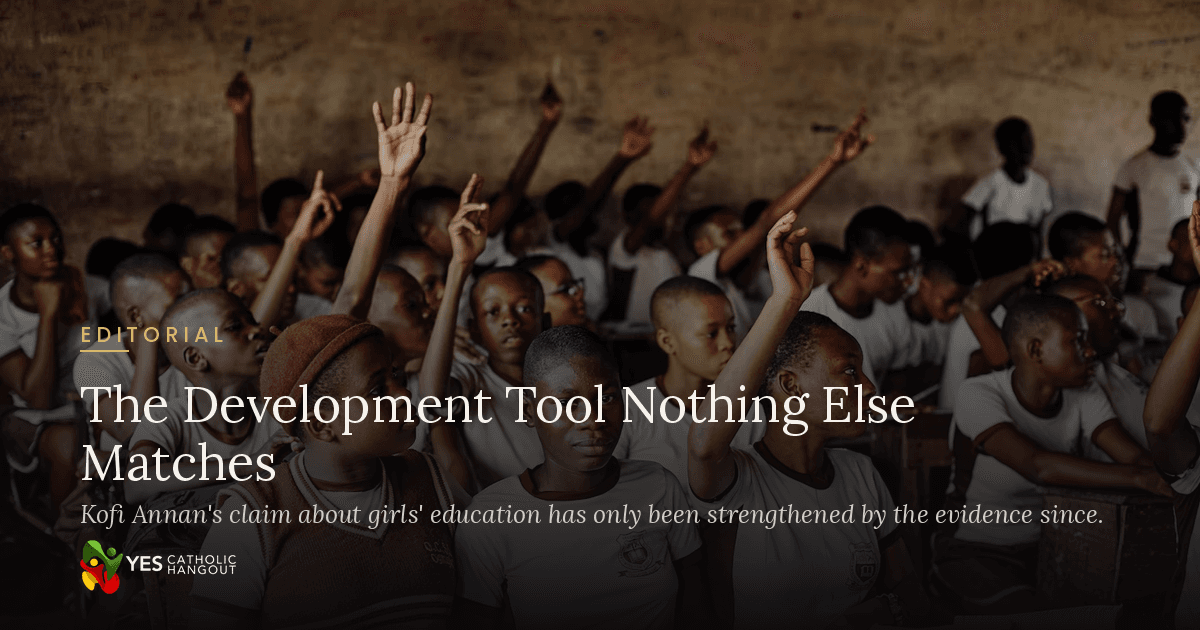
The Development Tool Nothing Else Matches
Kofi Annan said there is no tool for development more effective than the education of girls and the empowerment of women, and the evidence since has only strengthened the claim. This editorial examines why the effect compounds across so many outcomes at once, why education without empowerment produces frustration rather than transformation, and why the same failure pattern, mistaking access for inclusion, is now repeating in digital literacy and financial technology programmes that reach devices before they reach the women meant to use them.
Read article →
Communication Does Not Just Inform. It Forms
Four days into his pontificate, Pope Leo XIV told journalists that communication is not only the transmission of information but the creation of a culture, of human and digital spaces where people meet to think together. This editorial takes that claim seriously and applies it beyond journalism: to social platforms that reward intensity over accuracy, messaging tools that reshaped what silence means, and search engines that made “first result” a proxy for “true.” If communication creates culture, the standard for judging any message changes, from whether it is accurate to what kind of human environment it helps to build.
Read article →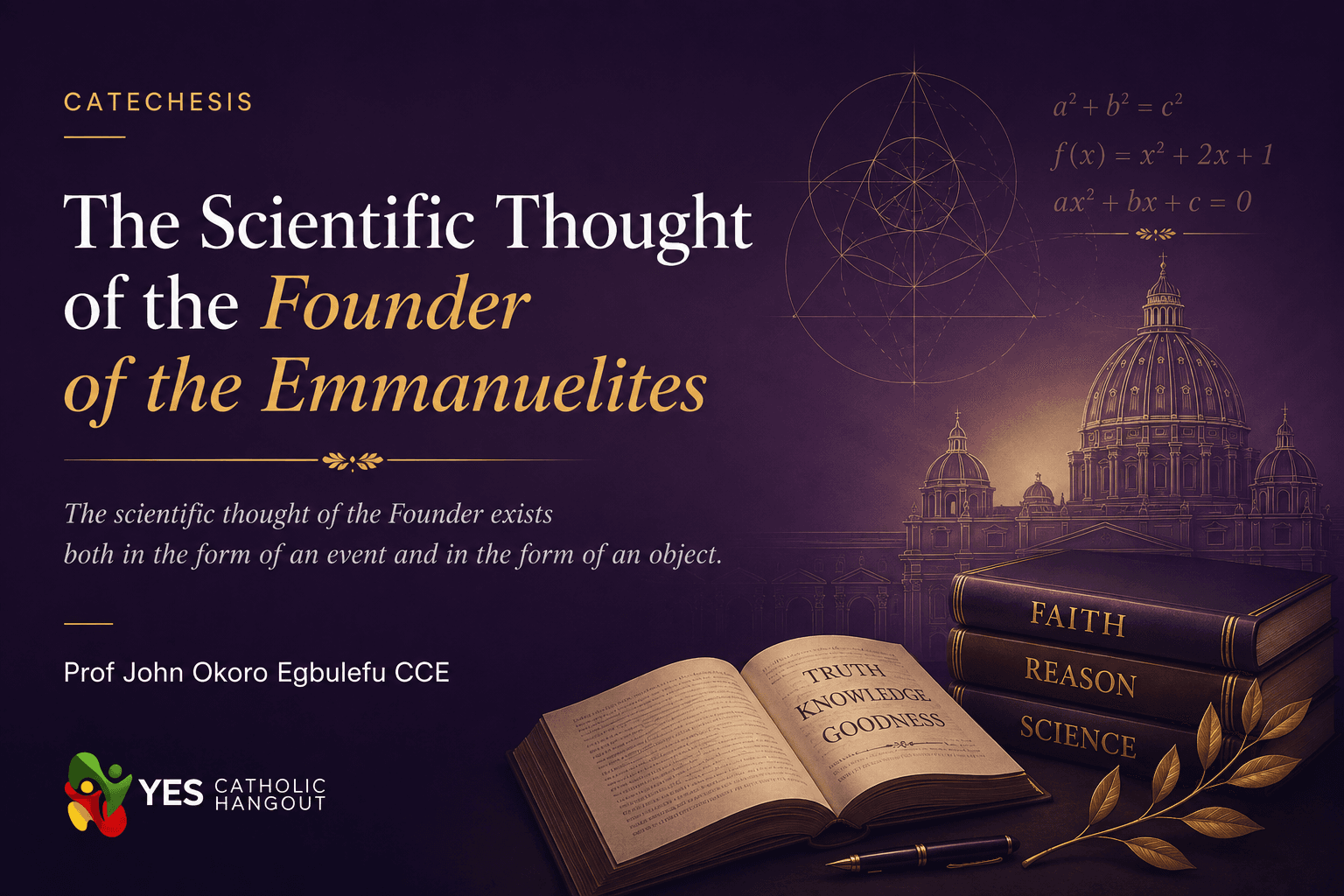
The Scientific thought of the Founder of the Emmanuelites
The scientific thought of the Founder of the priestly religious missionary Congregation of Christ the Emmanuel, the members of which are called the Emmanuelites, exists both in the form of an event and in the form of an object. It consists in his perception and persuasion concerning reality, knowledge, the human spirit, the structure of reality, mathematics, the divine Trinity, and the integrated/integral human culture.
Read article →
On the Relics of St. Agatha: Veneration or Idolatry?
When the relics of St. Agatha drew criticism online as tantamount to idolatry, a Knight of St. John put the question directly to Fr John Okoro Egbulefu CCE. His response comes in two parts: first, the doctrine of faith and morals from which the practice follows, since Christ is the crown of Virgins and bodily beauty exists for the glory of God; and second, the distinction that answers the charge, namely that veneration is what a creature offers a creature, while worship belongs to the Creator alone, and the two can no more be equated than the creature can be equated with the Creator.
Read article →
Why the Global Economy Needs Stronger Cybersecurity
Economic life has moved online faster than anyone planned, and almost everywhere the systems were designed for adoption rather than defence. Security was a later phase, and later has a way of not arriving. This editorial argues that cybersecurity is a justice question rather than a technical one: institutions experience breaches as cost, individuals experience them as harm, and the individuals least able to absorb that harm are the ones with the fewest reserves and the least recourse.
Read article →
Policies Do Not Prevent Action. Authority Does
An organisation that has adopted AI responsibly can usually produce a policy, a risk assessment, a roles register and an audit requirement. None of them prevents anything. A policy describes what should happen and constrains behaviour only through people’s willingness to follow it. Against a software agent it does nothing: a system with credentials to initiate a payment will initiate one, whatever the document says. This editorial argues that the authorisation layer is the governance work, and that every capability must trace back to a named person who granted it.
Read article →
Our Children Are Not Safe in the Hands of Unethical Algorithms
Nearly all advice about children and technology asks something of the parent, and none of it asks anything of the people who built the systems. Parents are expected to counteract, through vigilance and love in the evenings, the effects of continuously refined optimisation designed by well-resourced teams. This editorial argues that responsibility has been distributed wrongly, sets out what should be required of platforms rather than families, and notes that we do not ask parents to test food for contamination or verify a car seat’s crash performance.
Read article →
Rules Written Elsewhere
Binding AI regulation now exists, with defined obligations and penalties, and its risk-based tiering is the right instinct: regulating a scheduling assistant like an asylum screening system would consume the attention the serious case needs. But rules written in one jurisdiction do not stay there. This editorial examines what a framework drafted elsewhere misses when applied at a distance, from language performance to locally specific risks, and argues that compliance answers “is this permitted”, which is a different question from “is this right”.
Read article →
What Making Does to the Maker
The argument about AI and art has settled into two positions, and neither is quite right. This editorial sets the output question aside and asks instead what making does to the maker: the months of bad drawings through which a person learns to see, the sentence that will not hold and thereby makes the thought definite. It argues that the risk is not bad art but a generation with no reason to endure the difficulty, and therefore no access to what the difficulty produces.
Read article →
When the System Stops Advising and Starts Acting
For years the debate about AI in government concerned systems that produce information for a human to act on. Agentic systems are different: they take actions, and the output is not a recommendation but a completed act. This editorial argues that government is where this distinction matters most, because a citizen has no exit from the state and is owed reasons for what it does. It sets out which acts may reasonably be automated, which require a person, and six things every citizen is owed when a system acts on them.
Read article →
AI Governance Does Not Slow Innovation. Bad Governance Does
Ethics and speed are widely assumed to be opposed, with governance understood as a brake. The assumption is wrong. What actually slows organisations is undifferentiated review that treats a scheduling tool and a medical triage system as equivalent, and governance too heavy produces evasion rather than caution. This editorial argues for proportionality as a moral principle, explains why early governance is faster than late governance, and sets a practical design goal: within any organisation, the responsible way to use AI should be easier than the risky way.
Read article →
What Parents and Young People Should Know About AI Safety
When parents worry about AI, they usually worry about cheating, and that concern may be crowding out four that matter more: the confident wrong answer a young person has no expertise to catch, the AI companion that offers what feels like intimacy while requiring none of the patience real friendship demands, synthetic images and voices used both to deceive young people and to harm them, and the fact that everything typed into a chatbot goes somewhere. This piece covers each, with a section addressed directly to young people.
Read article →
The Weight of a Weightless Technology
Digital technology presents itself as immaterial, and the language of the cloud is soothing and almost entirely misleading. A model answering a question draws current from a grid, cooled by water, running on chips made from minerals mined under conditions no ethical framework would defend if they occurred elsewhere. This editorial argues that the ecological cost of AI is not a sustainability conversation running alongside the ethics conversation, but part of it, and that a technology’s ethics include its metabolism.
Read article →
Raising Children in a Digital World
Every generation of parents has feared a new technology, and each panic was partly foolish. Something is different now: previous media competed for a child’s attention, while current ones are continuously optimised by people whose success depends on winning that competition. This editorial argues the screen time question is better asked as “what is this displacing?”, that no control system forms a conscience, and that the most effective family technology policy is usually the one that applies to the parents too.
Read article →
Stop Exposing Nigerians to Electoral Insecurity
Millions of Nigerians make a quiet calculation before every election, and it is not about parties or policies: is it safe to go out and vote? Those who stay home are recorded as apathetic, but their absence is a rational response to a state that has not guaranteed their safety. This piece argues that the 2027 conversation must move beyond digitisation, sets out six non-negotiable conditions for any electoral technology, and warns against two opposite failures: innovation without ethics, which creates new vulnerabilities, and ethics without courage, which leaves old problems untouched.
Read article →
Sermon on the Glorious Assumption of the Blessed Virgin Mary into Heaven
Preached in the Basilica of St. Peter on the Feast of the Assumption, this sermon offers four reflections on Our Lady’s passage to heaven: the dormitio, distinguishing the three ways a human soul departs the world of the living; the silence of tradition about her tomb; the logical and theological grounds on which the Church came to define the dogma in 1950; and finally an invitation to stand in Mary’s place and feel what she felt when the angels came to carry her home.
Read article →
Applied AI Governance: From Requirements to Systems That Work
There is no shortage of AI principles. Transparency, accountability, fairness and human oversight now appear in nearly every framework, and the convergence is genuine. But organisations can affirm every one of them and still deploy systems that harm people, often without anyone acting in bad faith. This editorial examines where the translation from principle to practice actually breaks: requirements that were never resolved into specifications, review that arrives too late to do anything but approve, metrics that displace the question of whether a system should exist, and responsibility so widely distributed that it belongs to nobody.
Read article →
How Do We Nurture a Culture of Being a Synodal Church?
The Church has spent years in a synodal process, and the harder question now presses: what survives when the meetings end? A synod is an event that can be scheduled. Synodality is a culture that must be cultivated, and processes without culture always revert. Taking the Emmaus road as its pattern, this editorial names three obstacles that recur in parishes, sets out six habits that actually form synodal culture, and argues that a Church which learns to walk together offers something a polarised world urgently lacks.
Read article →
Cooperative Digital Sovereignty: Why AI Governance Cannot Be Built Alone
Governments everywhere now speak of digital sovereignty, and the impulse is legitimate: data generated in Lagos or Manila is too often processed, monetised, and governed elsewhere. But sovereignty can mean the capacity to govern one’s own affairs, or it can mean separation from everyone else, and the difference will shape the next decade of AI governance. This editorial argues that subsidiarity offers the balance the debate has been missing, and that for most of the world, cooperation and sovereignty are not opposites but prerequisites for one another.
Read article →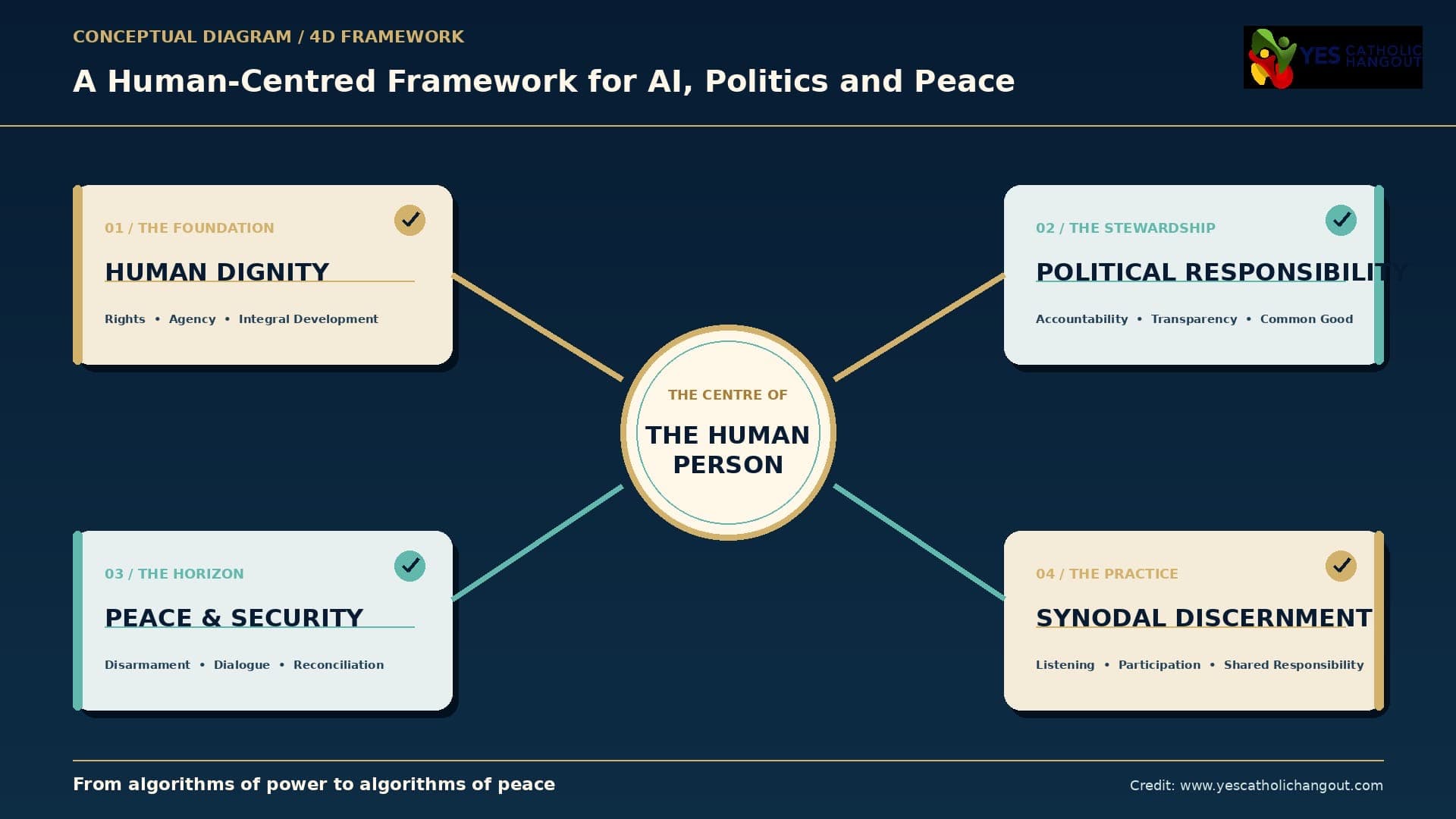
Disarming Technology, Building Peace: Reclaiming Political Responsibility for Human Dignity in the Age of AI
AI is often described as an impersonal wave arriving from beyond public deliberation. Yet behind every automated decision stand human choices, and behind an autonomous weapon stands the choice to delegate the gravest judgement of all. Fr. Oliver CCE argues that to disarm technology is not merely to remove weapons from a battlefield but to remove the patterns of domination built into technical systems, and sets out concrete responsibilities for governments, companies, researchers, educators, faith communities and citizens alike.
Read article →
The invincibility of the almighty God, the inevitability of the victory of His Will and the inalterability of His choice by creatures
Written on the Feast of St Lawrence, this reflection moves through three claims: that God is invincible by creatures, that the victory of His Will is inevitable, and that His choice cannot be altered by anyone. Fr John Okoro Egbulefu CCE grounds the first in a systematic account of the divine attributes flowing from God as first and last Being, and illustrates the third through two chosen ones who could not be displaced: the Son declared Beloved at Mount Tabor, and John the son of Zebedee, chosen over Nathaniel in whom there was no guile.
Read article →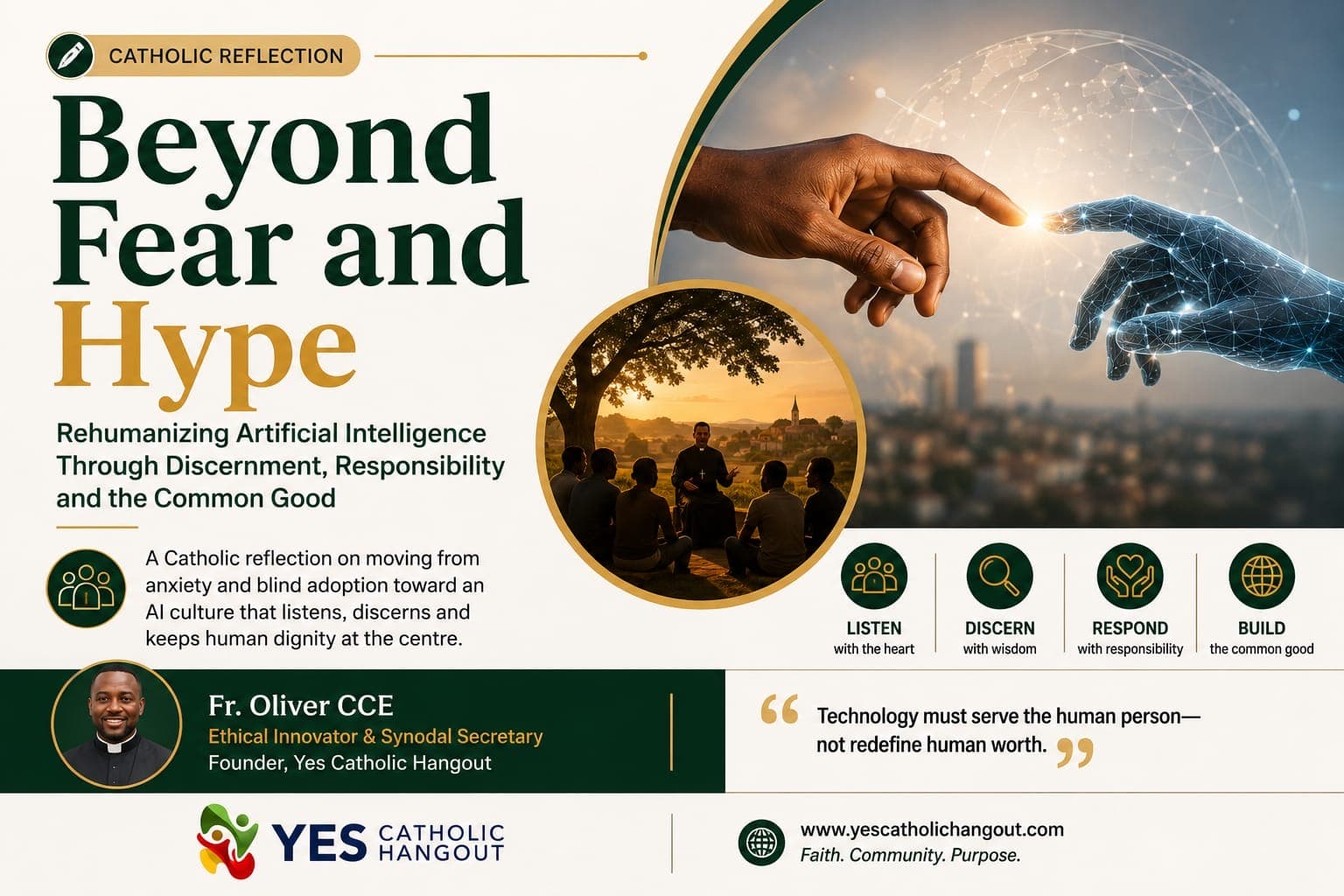
Beyond Fear and Hype: Rehumanizing Artificial Intelligence through Discernment, Responsibility and the Common Good
Public debate about artificial intelligence swings between fear that sees only threat and hype that sees only possibility. Fr. Oliver CCE argues that neither should determine humanity’s future, and that between them stands discernment. Drawing on Antiqua et Nova, Gaudete et Exsultate, Fratelli Tutti, Laudato Si’, and Pope Francis’s address to the G7, this feature asks what must never be outsourced to a machine, and proposes an Anthropological Theoalgorithm: a framework beginning before the code with one question, who is the human person this technology is meant to serve?
Read article →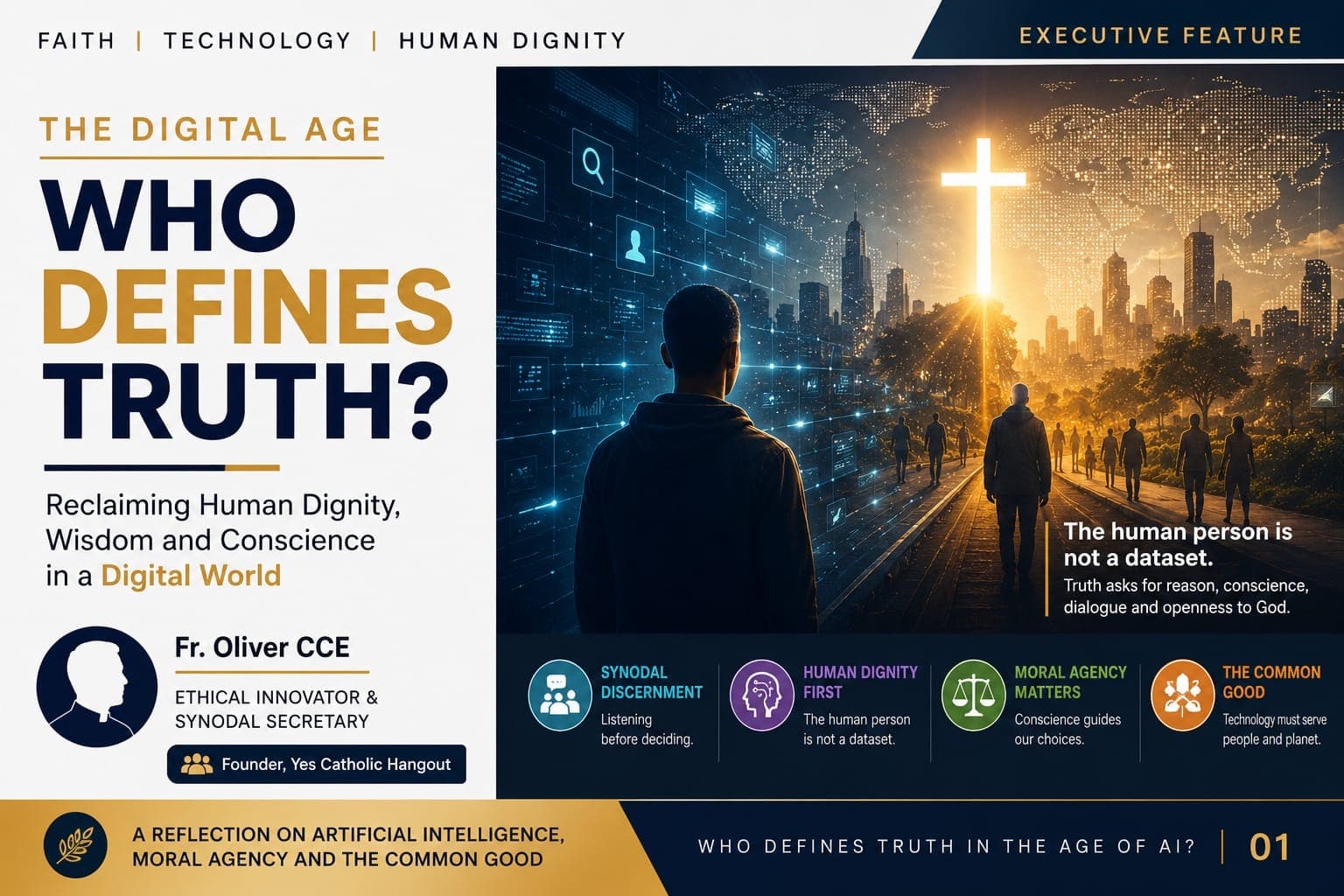
Who Defines Truth in the Age of AI?
A generated answer can arrive with the confidence of an expert. A ranking can quietly determine whose suffering remains statistically invisible. Fr. Oliver CCE argues that the central question of the AI age is not what machines can do, but who gets to define truth, and traces six movements toward an answer: truth, conscience, wisdom, discernment, responsibility and human dignity. Drawing on Laudato Si’, Fratelli Tutti, the Rome Call for AI Ethics, Orwell and C. S. Lewis, the piece pays particular attention to what AI governance owes to Africa and the Global South.
Read article →
A brief Thought on Dignity in general and on the extra-human, inter-human and intra-human relational layers of the human dignity in particular
Beginning from the Latin root of the word itself, dignus, meaning worthy, this reflection distinguishes three relational layers of human dignity: the extra-human, where dignity is received as gift from the God who created the human being in His image; the inter-human, where dignity follows from duties performed and rights justly claimed within social, economic, cultural and political life; and the intra-human, where the relationship between mortal body and immortal soul reveals dignity as both the duty to protect and empower others and the right to be protected and empowered in turn.
Read article →
The Spiritual Exercise of Training in re-living the experience of the transfiguration of the Lord Jesus lived by His earliest three Venite-cum-Me (Peter, James and John)
A guided spiritual exercise for the Feast of the Transfiguration, structured as an ascent: standing at the foot of the mountain, climbing its body as both a re-tracing of the via Crucis and a journey toward encounter with God, and arriving at the summit where Christ is transfigured, where Moses and Elijah appear as the two lungs of the breathing Jewish religion, and where the voice from the cloud names the Beloved Son. At each stage, Fr John Okoro Egbulefu CCE pairs the mystery with a hymn from the Emmanuelite Cantata, so that the exercise is not only contemplated but sung.
Read article →
Can Climate Action Be Driven by Humanity and Ethics?
For thirty years the world has treated the ecological crisis as a problem of incentives: price carbon, adjust behaviour. Yet every serious climate obligation runs across an asymmetry, since future generations cannot pay us and distant communities cannot reward us. This editorial argues that markets cannot generate obligations toward those who lack leverage, examines what conscience contributes that price signals cannot, and takes seriously the objection that moral appeals have already failed at scale.
Read article →
Build Value, Build Businesses, Build Nations: An Ethical Vision for Entrepreneurship Across Generations
Real economic participation doesn’t begin with a paycheck, it begins with creating value that others need. This piece makes the case for entrepreneurship as nation-building: solving problems instead of waiting, creating jobs instead of competing for them, and generating wealth that outlasts a single generation, with a direct word to both Gen Z founders and Gen X reinventors on why ownership, innovation, and ethics are what make impact last.
Read article →
Human Dignity Before Algorithms
As risk-based AI governance frameworks spread worldwide, Fr. Oliver CCE argues that regulation alone cannot answer the deepest question technology raises: what kind of human future are these systems helping to create? Drawing on Fratelli Tutti, Laudato Si’, the Economy of Francesco, and Magnifica Humanitas, this piece calls for synodal listening in AI governance, transparency as a form of respect, and human dignity as the first principle by which every algorithm must be judged.
Read article →
A Brief Meditation on the Scope and Content of the Religious Life
Written on the Feast of St Ignatius of Loyola, this meditation asks what the rising cost of living has quietly revealed among Religious Institutes: which communities have drifted from the poverty, obedience, chastity, selflessness, and honesty of Christ, the model against whom every claim to religious life must be measured. Fr John Okoro Egbulefu CCE traces these five marks back to Jesus himself, the one in the world but not of it, who owned nothing and lived wholly on providence.
Read article →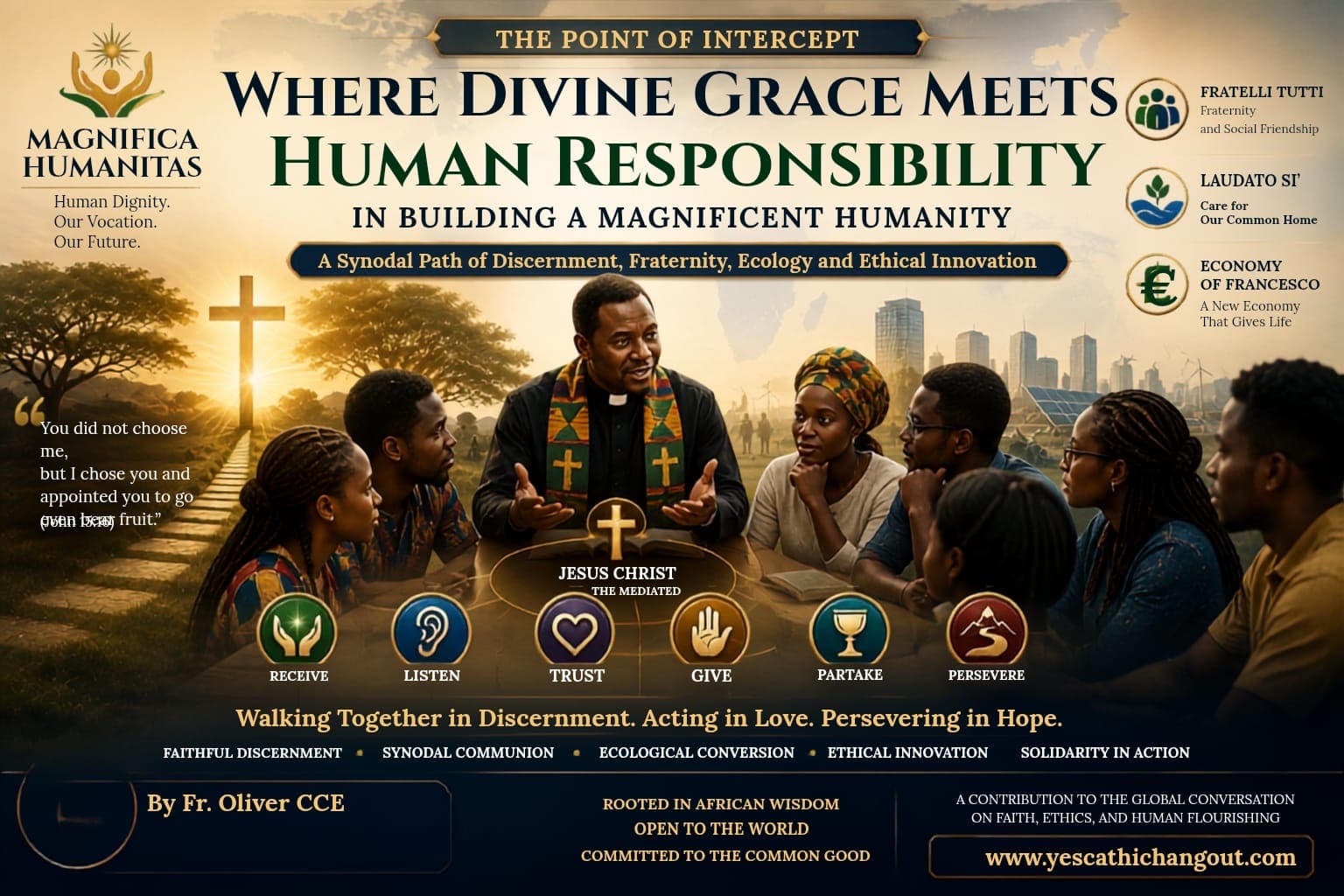
The Point of Interception: Where Divine Grace Meets Human Responsibility in Building a Magnificent Humanity
Every authentic vocation begins where God’s initiative meets human freedom, a place Fr. Oliver CCE calls the point of interception. Through six interconnected movements, receive, listen, trust, give, commune, and persevere, this reflection traces how grace shapes freedom into what he terms Magnifica Humanitas: a magnificent humanity measured not by power but by welcome, truth, and service. The piece extends this framework into artificial intelligence, governance, business, and mission, closing with a pastoral invitation to become more fully human in Christ.
Read article →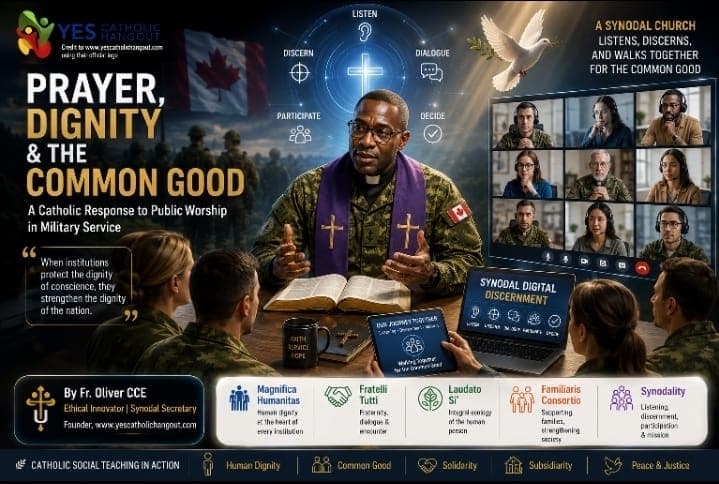
Prayer, Human Dignity, and the Common Good: A Catholic Response to Public Worship in Military Service
Amid online claims of “no prayer allowed” in the Canadian Armed Forces, Fr. Oliver CCE calls for verification before polarization. Drawing on Gaudium et Spes, Dignitatis Humanae, Fratelli Tutti, and Laudato Si’, this feature distinguishes institutional neutrality from hostility to religion, proposes a five-principle Catholic discernment, and offers a constructive policy pathway ensuring no one is compelled to pray, no one is excluded because they pray, and everyone receives humane support.
Read article →
AI Parenting Tips: Keeping Kids Creative, Safe, Honest
A child is not a dataset to be optimized but a person to be formed. As artificial intelligence enters Catholic homes, Familiaris Consortio’s vision of parents as first educators meets Magnifica Humanitas, Laudato Si’, Fratelli Tutti, and the Economy of Francesco to offer practical guidance for raising children who use AI with creativity, safety, and honesty, without ever letting it replace the formation only love can give.
Read article →
Building Tables, Not Walls
Against a world of rising walls, political, ethnic, economic, and algorithmic, this reflection proposes a counter-imagination: the table. Fr. Oliver CCE traces the table through Scripture, Catholic Social Teaching, and synodality, and introduces the Anthropological Theoalgorithm, a threefold test asking whether technology protects the vulnerable, strengthens communion, and leaves the earth richer, before closing with a call to become builders of tables in every parish, boardroom, and home.
Read article →
Situating the Topic of the AGIDE Summer Conference, Assisi 2026: “L’Identità degli Enti Ecclesiastici tra formazione, governance e responsabilità. Servire con l’esempio”
Ahead of the AGIDE Summer Conference in Assisi, Rev. Prof. John Okoro Egbulefu CCE situates the conference’s theme of formation, governance, and responsibility within Pope Leo XIV’s encyclical “Humanitas Magnifica.” Distinguishing a humanity merely great in number from a humanity great in deed, this reflection traces human dignity to the fulfilment of duty and the just claiming of right, and closes with the encyclical’s call to confront history with humility, truth, and reconciliation as AI reshapes the world.
Read article →
Conserving Creation Begins by Protecting Human Dignity and Our Common Home: A Synodal Vision for the Future
On World Nature Conservation Day, Fr. Oliver CCE argues that authentic conservation begins not with policy or science alone, but with protecting human dignity. Drawing on Magnifica Humanitas, Fratelli Tutti, Laudato Si’, and the Economy of Francesco, this reflection shows why the cry of the earth and the cry of the poor are one cry, and offers practical pathways for individuals, parishes, schools, businesses, governments, and technology companies to move from vision to action.
Read article →
From Synodal Vision to Ethical Transformation
The Church proposes not a programme of internal reform but a transformative way of life: synodality. Fr. Oliver CCE outlines six complementary actions for the digital age, implement, discern, participate, form, share, and evaluate, drawing on Magnifica Humanitas, Fratelli Tutti, Laudato Si’, and the Economy of Francesco as a shared compass for AI governance, ecological responsibility, economic justice, and institutional accountability.
Read article →
Truth, Reconciliation, and National Renewal: An Open Letter to President Bola Ahmed Tinubu, GCFR, in Light of Magnifica Humanitas
In an open letter to President Bola Ahmed Tinubu, Fr. Oliver CCE draws on Pope Leo XIV’s encyclical Magnifica Humanitas to appeal for national moral renewal in Nigeria. Four proposals anchor the letter: honoring the historical contribution of Irish missionaries, gestures of reconciliation and remembrance, secure and ethical digital electoral systems, and renewed respect for constitutional subsidiarity in local governance, all framed by the conviction that history becomes a source of hope when truth is embraced and reconciliation is lived.
Read article →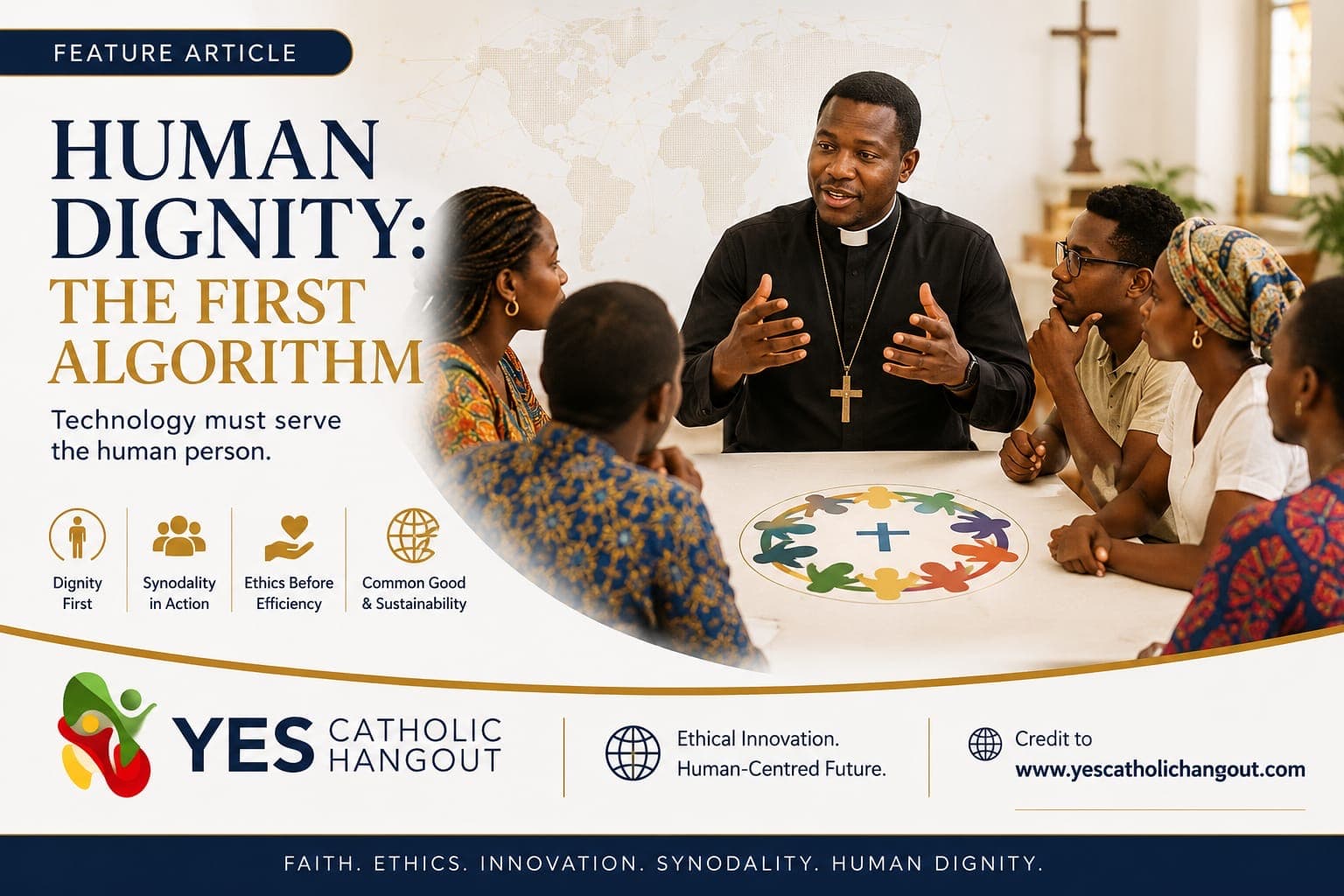
Human Dignity: The First Algorithm
Before humanity ever wrote an algorithm in code, God had already inscribed the first and enduring one into creation: the inviolable dignity of every human person. Fr. Oliver CCE explores this conviction at the heart of Magnifica Humanitas, offering nine guiding principles for ethical AI, from human dignity before efficiency to the common good before private advantage, and argues that the digital future does not need fewer innovations. It needs more ethical innovators.
Read article →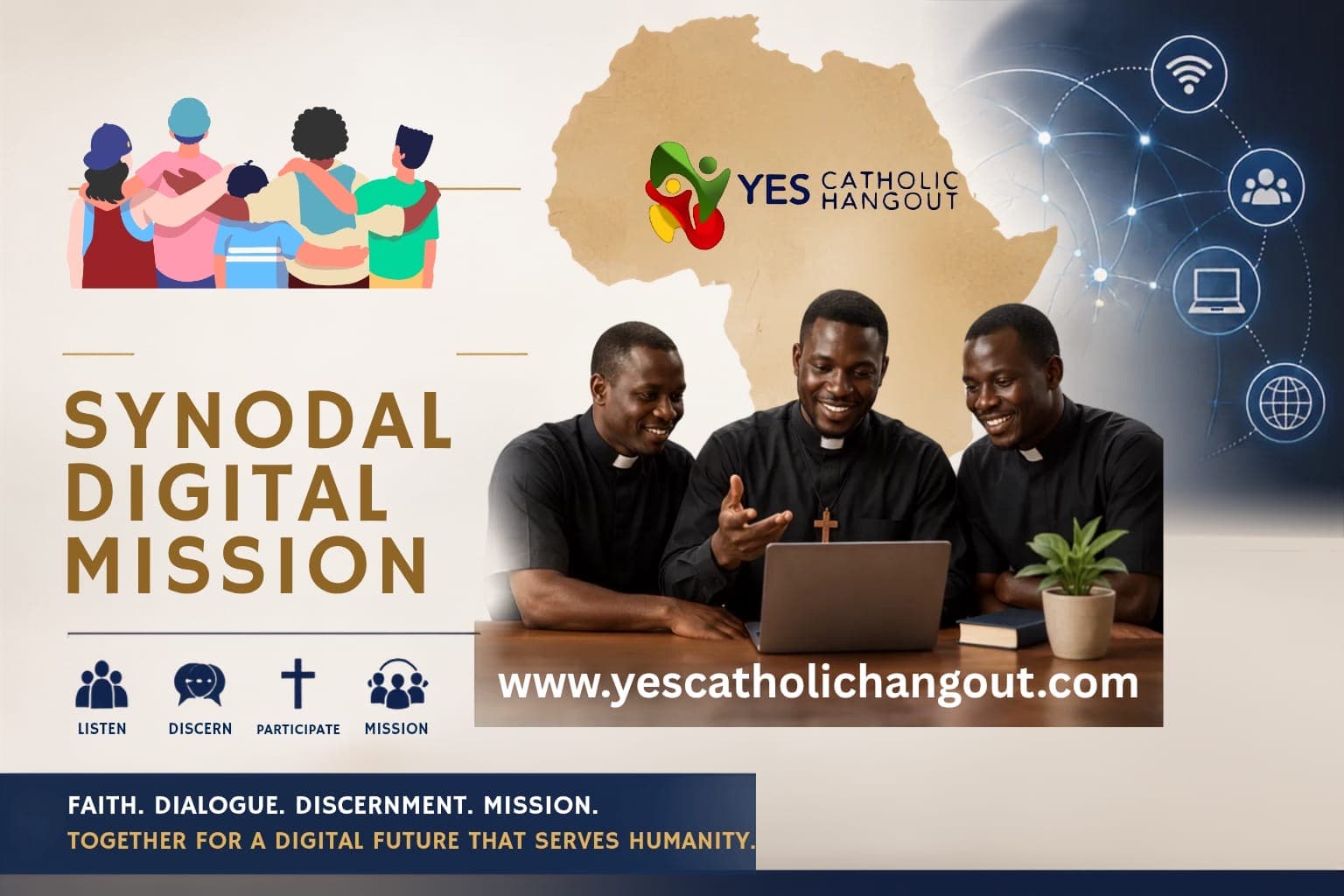
Ethical Innovation and Synodal Leadership for the Digital Age
Artificial Intelligence, automation, and biotechnology are reshaping every dimension of human life, and the question is no longer whether technology will transform civilisation, but whether civilisation has the moral clarity to ensure it serves human dignity. In this nine-part vision, Fr. Oliver CCE draws on Magnifica Humanitas, Fratelli Tutti, Laudato Si’, and the Economy of Francesco to propose synodal leadership as a governance model for the digital age, and calls on Catholic leaders, technologists, governments, and young people alike to embrace the vocation of ethical innovation.
Read article →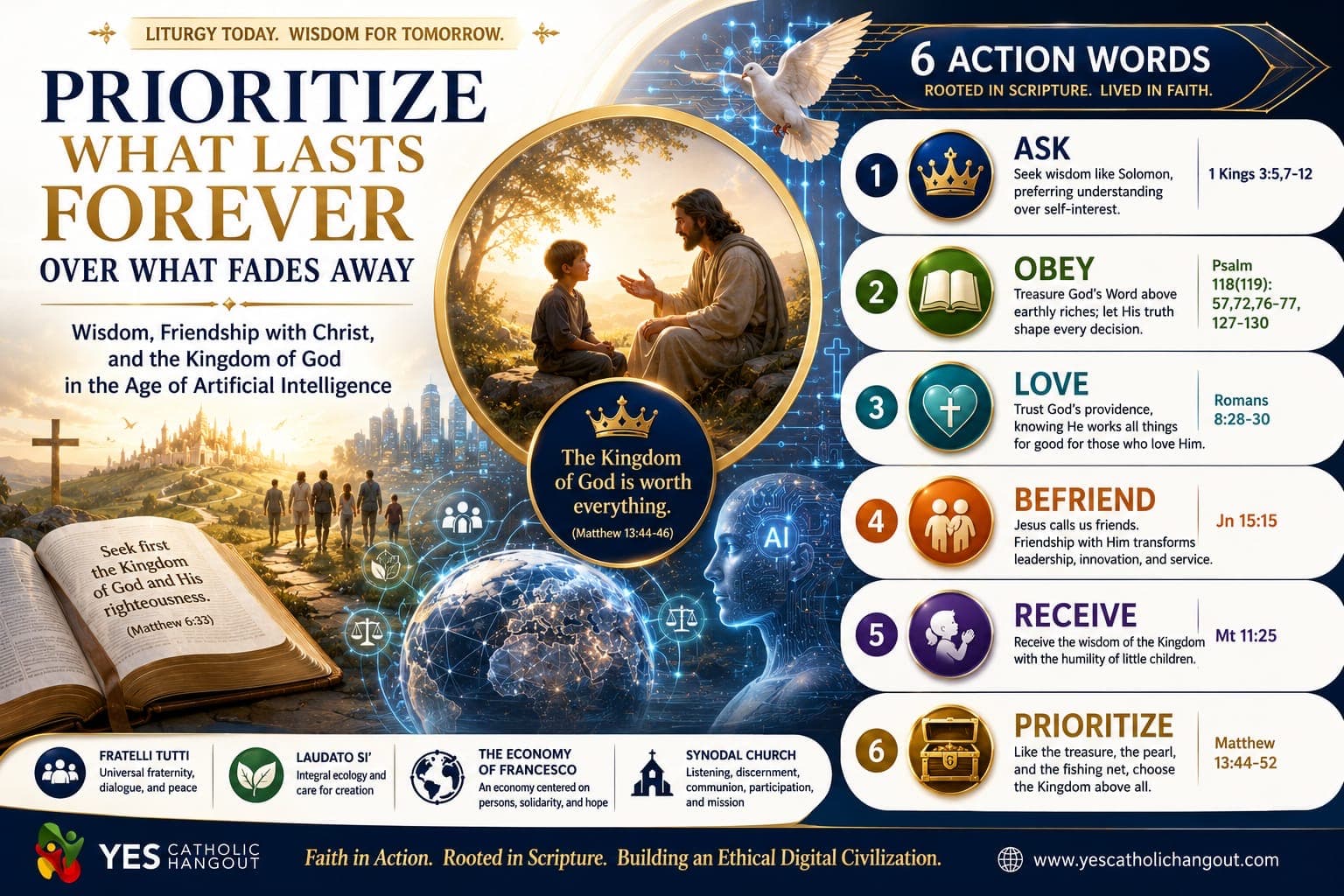
Prioritize What Lasts Forever Over What Fades Away: Wisdom, Friendship with Christ, and the Kingdom of God in the Age of Artificial Intelligence
Beneath every technological revolution lies an older question: what truly deserves the human heart? Drawing on Solomon’s wisdom, St. Paul’s hope, and Christ’s parables of the Kingdom, Fr. Oliver CCE proposes six movements for the digital age, ask, obey, love, befriend, receive, and prioritize, arguing that Artificial Intelligence will only serve humanity when it remains anchored in the Gospel truth that eternity is worth every sacrifice.
Read article →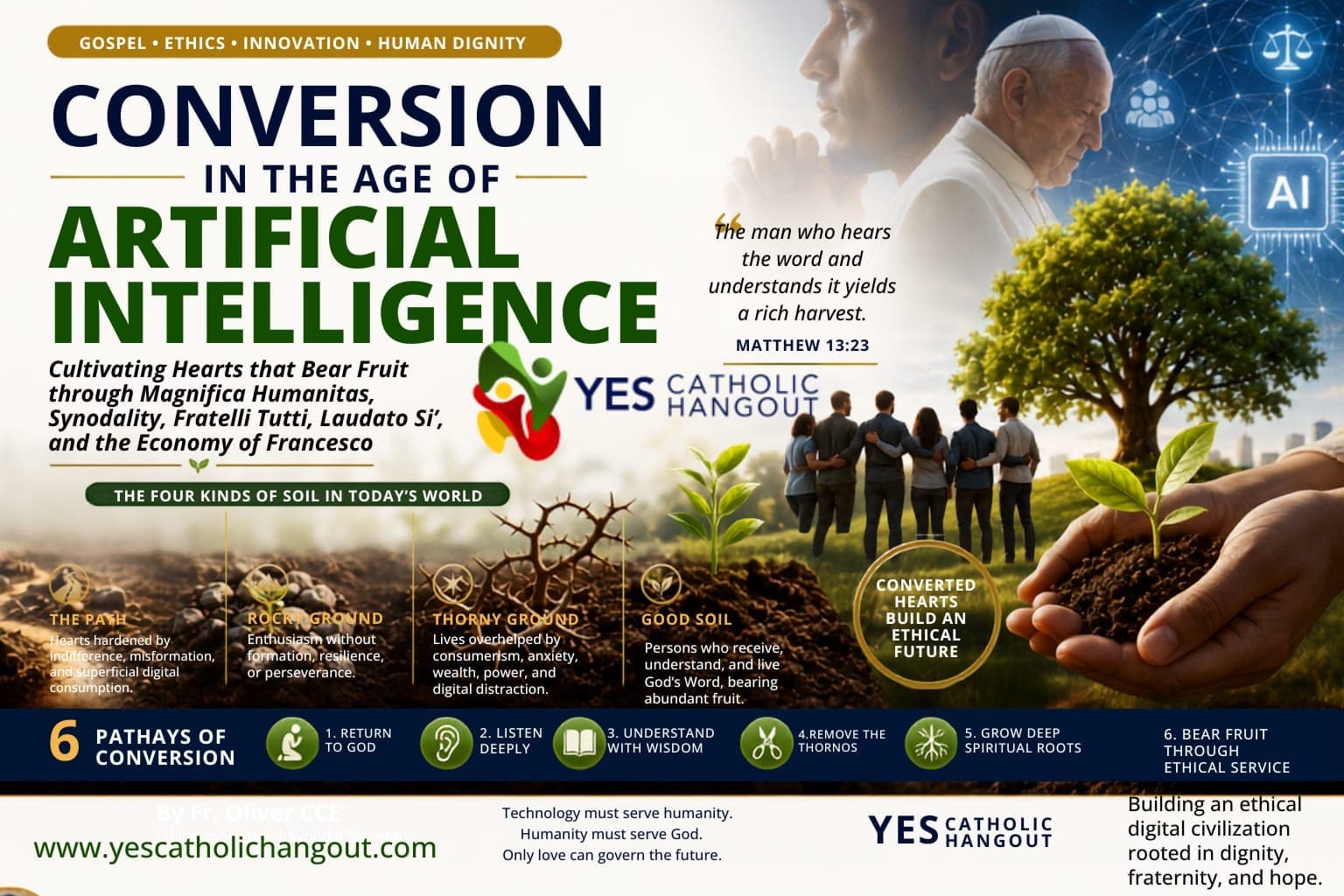
Conversion in the Age of Artificial Intelligence: Cultivating Hearts that Bear Fruit through Magnifica Humanitas, Synodality, Fratelli Tutti, Laudato Si’, and the Economy of Francesco
Beneath every technological breakthrough lies a question no algorithm can answer: who is the human person technology is meant to serve? Drawing on the Parable of the Sower, Fr. Oliver CCE identifies four kinds of hearts shaping our digital age, hardened, rocky, thorny, and fertile, and offers six pathways toward conversion, arguing that AI governance begins not inside the computer but inside the conscience.
Read article →
The Pope’s Prophetic Mission in the Age of Artificial Intelligence, Global Conflict, and Ethical Governance
Amid war, ecological degradation, and an accelerating AI revolution, Fr. Oliver CCE argues that the papacy’s prophetic mission has never been more urgent. Drawing on Magnifica Humanitas, Fratelli Tutti, Laudato Si’, and the Economy of Francesco, this reflection asks not what technology can do, but who the human person is that technology is meant to serve, and calls for a global ethical ecosystem built on synodal listening rather than technological sophistication alone.
Read article →
Transparency and the Human Person: A Synodal Call for Ethical Governance in the Digital Age
Canada’s public consultation on AI transparency is more than a regulatory exercise, argues Fr. Oliver CCE. It is a moral invitation to reconsider the relationship between technology, democracy, and the human person. Drawing on Magnifica Humanitas, Fratelli Tutti, and the Economy of Francesco, this reflection calls for a synodal approach to AI governance built on listening, accountability, and transparency as a cultural virtue rather than a mere legal obligation.
Read article →
Nigeria Urged to Embrace ‘Moral Renewal’ in Open Appeal to President Tinubu
The Yes Catholic Hangout community has issued an open appeal to President Bola Ahmed Tinubu, inviting Nigeria to embrace a path of moral renewal grounded in Catholic Social Teaching. Fr. Oliver CCE presents four proposals: a national apology to the Irish missionaries, a programme of national reparation, an ethical Electronic Permanent Voter Card system, and greater constitutional autonomy for state and local governments, arguing that Nigeria’s future depends as much on stronger consciences as on stronger institutions.
Read article →
Leaky Cisterns That Hold No Water: A Moral Appeal for Nigeria’s Renewal
Leaky Cisterns That Hold No Water: A Moral Appeal for Nigeria’s Renewal
Read article →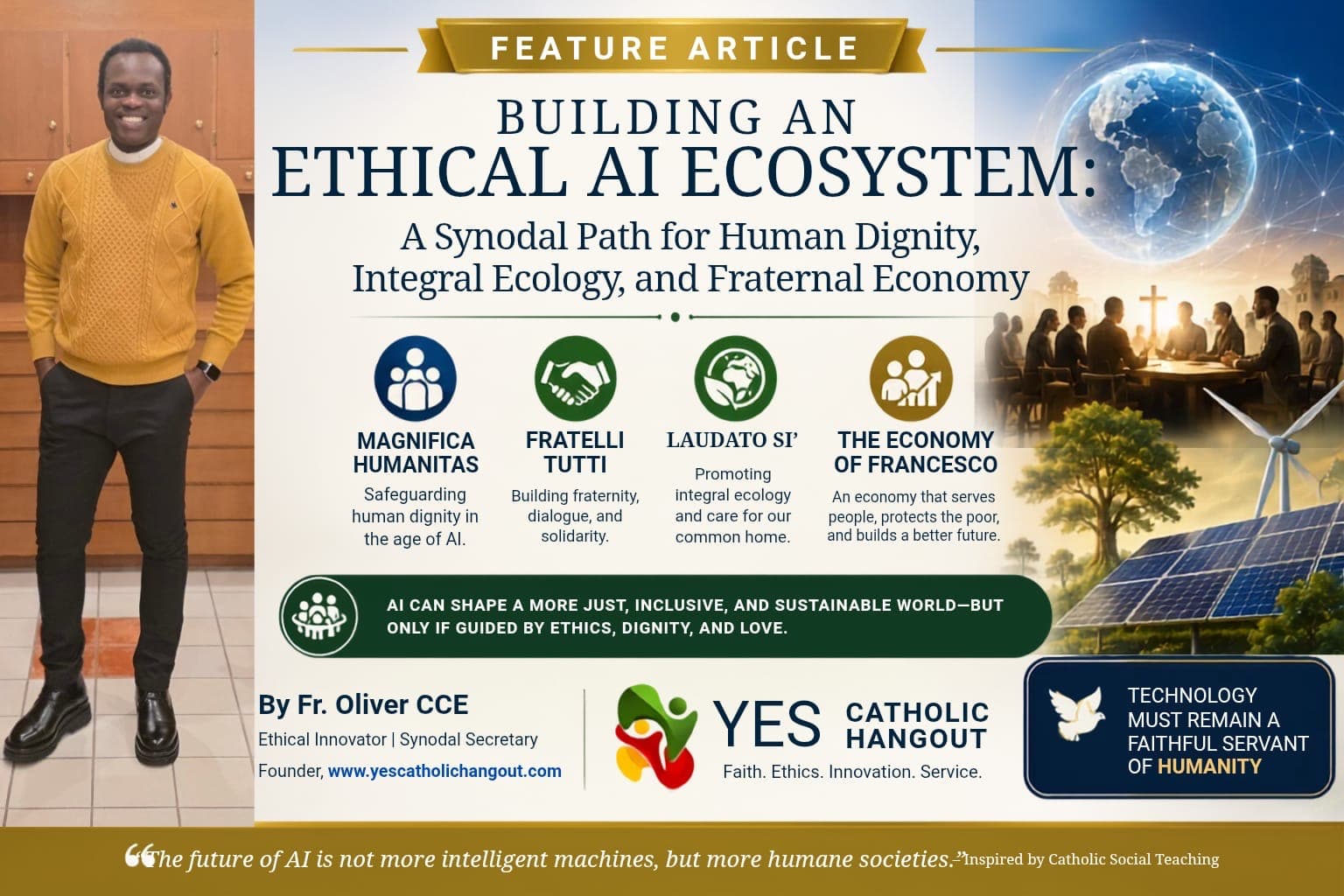
Building an Ethical AI Ecosystem: A Synodal Path for Human Dignity, Integral Ecology, and Fraternal Economy
The future of Artificial Intelligence will not be decided by the sophistication of its algorithms but by the depth of our moral vision. Fr. Oliver CCE proposes six enduring pillars for an ethical AI ecosystem, human dignity, truth and transparency, synodal discernment, integral ecology, inclusive innovation, and global solidarity, and calls the world to build a civilisation of love in which technology remains always a faithful servant of humanity and never its master.
Read article →
Building an Ethical AI Ecosystem: A Synodal Response to Magnifica Humanitas, Fratelli Tutti, Laudato Si’, and the Economy of Francesco
What kind of humanity do we want to build in the age of intelligent machines? Fr. Oliver CCE offers a synodal response grounded in Magnifica Humanitas, Fratelli Tutti, Laudato Si’, and the Economy of Francesco, proposing six pillars for ethical AI, listening, participation, discernment, transparency, responsibility, and communion, and a call for a Global Synodal Alliance where faith, science, and technology unite in service of the common good.
Read article →
Church in Nigeria Advances Media Evangelisation as ‘Communications Week’ Marks Five Years
Five years after its founding, Communications Week (ComWEEK) has transformed how the Catholic Church in Nigeria engages digital culture, earning praise from the Holy See’s Dicastery for Communication. As Fr. Michael Nsikak Umoh’s six-year tenure as National Director of Social Communications draws to a close, this report traces the unified communications structure, seminary media formation, and digital networks he leaves behind, and his call to sustain the momentum ahead of Nigeria’s 2027 elections.
Read article →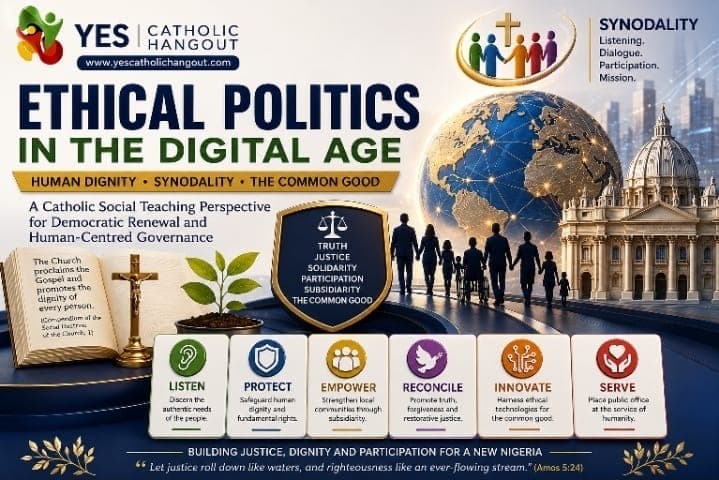
Ethical Politics in the Digital Age: Human Dignity, Synodality, and the Common Good
What kind of politics truly serves the human person in an age of artificial intelligence and digital governance? This editorial argues that Catholic Social Teaching offers a timeless compass, subsidiarity, participation, reconciliation, and synodal listening, and distills the path to democratic renewal into six enduring commitments: listen, protect, empower, reconcile, innovate, and serve.
Read article →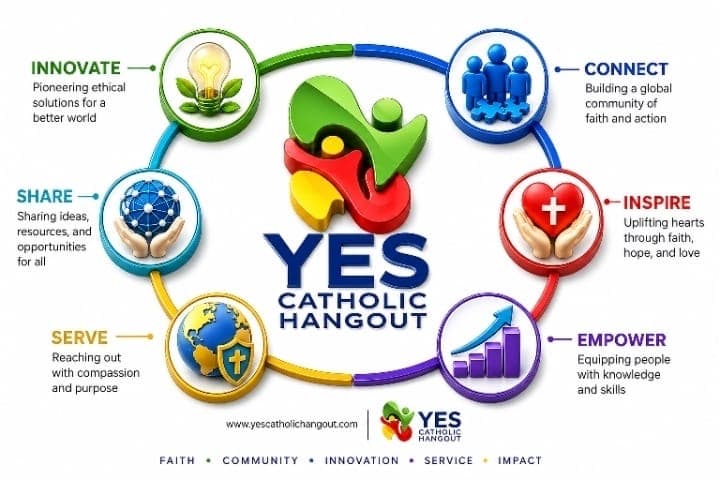
Answering the Call: Yes Catholic Hangout Launches a Movement for Ethical Innovation and Human Dignity
Yes Catholic Hangout has launched a new movement calling faith communities to place human dignity at the center of the digital age. Grounded in Magnifica Humanitas, Fratelli Tutti, and Laudato Si’, Fr. Oliver CCE outlines four commitments, ethical innovation, digital inclusion, AI literacy, and community collaboration, and invites Catholics and people of goodwill everywhere to innovate with purpose and lead with integrity.
Read article →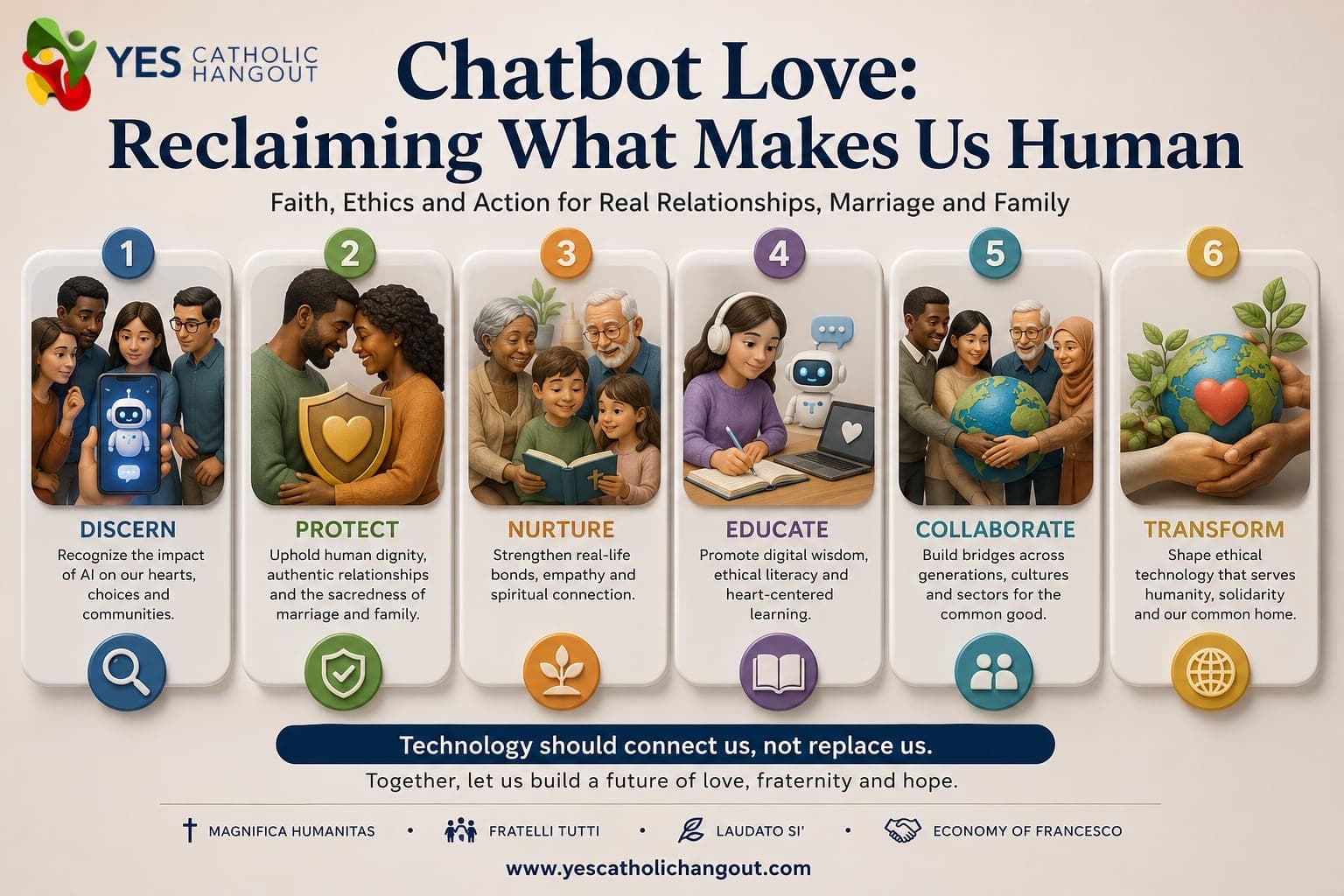
When Algorithms Whisper ‘I Love You’: Chatbot Companionship, Human Dignity, and the Call to Authentic Encounter
Millions are forming emotional bonds with chatbots that remember their favorite songs and never judge their anxieties. This synodal discernment asks what happens to human love, marriage, and family when algorithms can simulate intimacy, drawing on Magnifica Humanitas, Fratelli Tutti, Laudato Si’, and the Economy of Francesco to distinguish authentic encounter from being attended to by a mirror, and offers practical pathways for families, educators, pastors, and policymakers navigating the age of artificial intimacy.
Read article →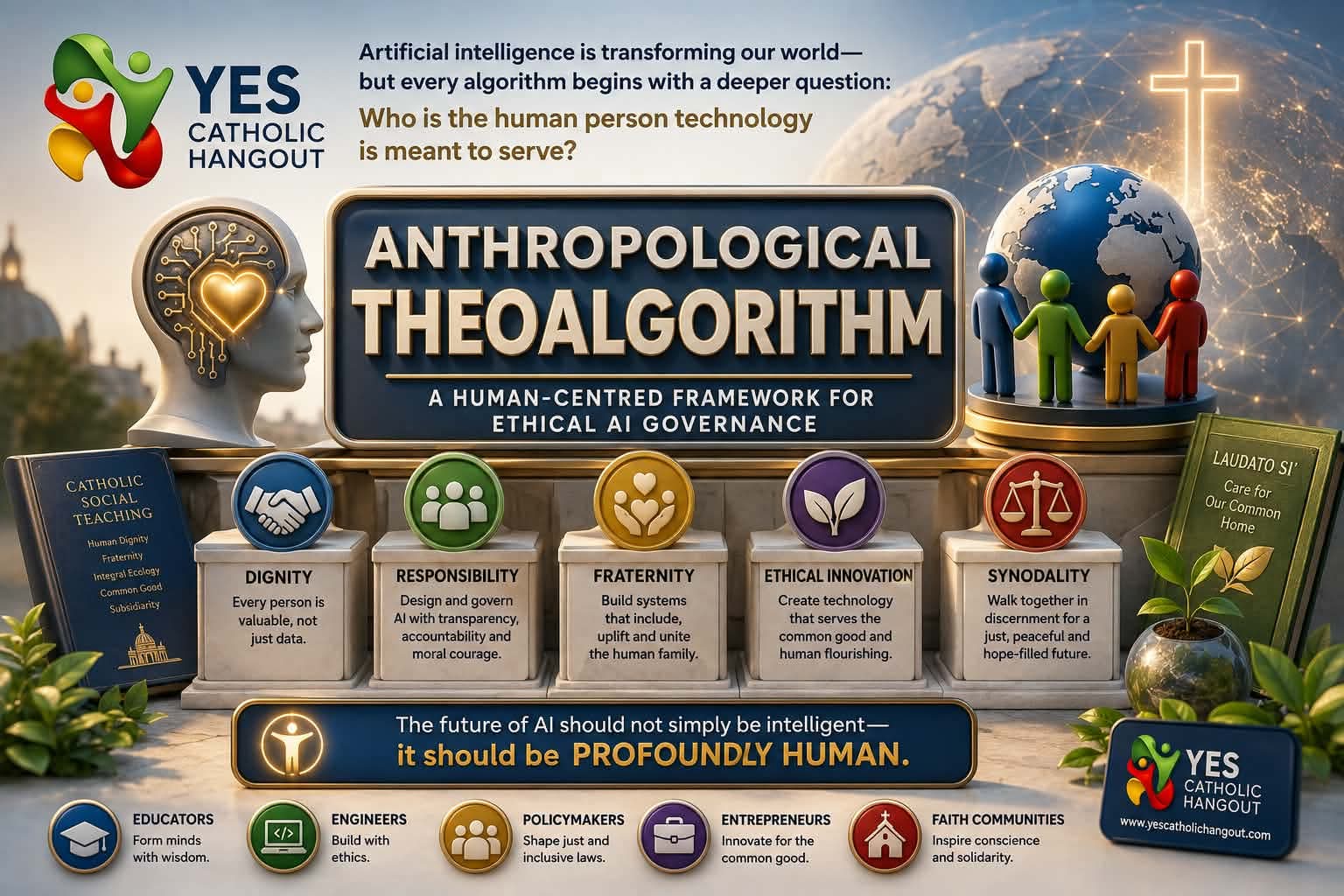
Anthropological Theoalgorithm: A Catholic Framework for AI Governance
Fr. Oliver CCE has presented a theologically grounded framework to the Vatican’s Dicastery for Culture and Education for the governance of artificial intelligence: the Anthropological Theoalgorithm and its applied discipline, Algorithmethics. Rooted in four pillars of Catholic Social Teaching and proven in practice through KPOMKWEM LTD in Nigeria, the framework asks a single question of every AI system: does it recognise the human person as imago Dei, or reduce them to data, a wallet address, or a node in a network?
Read article →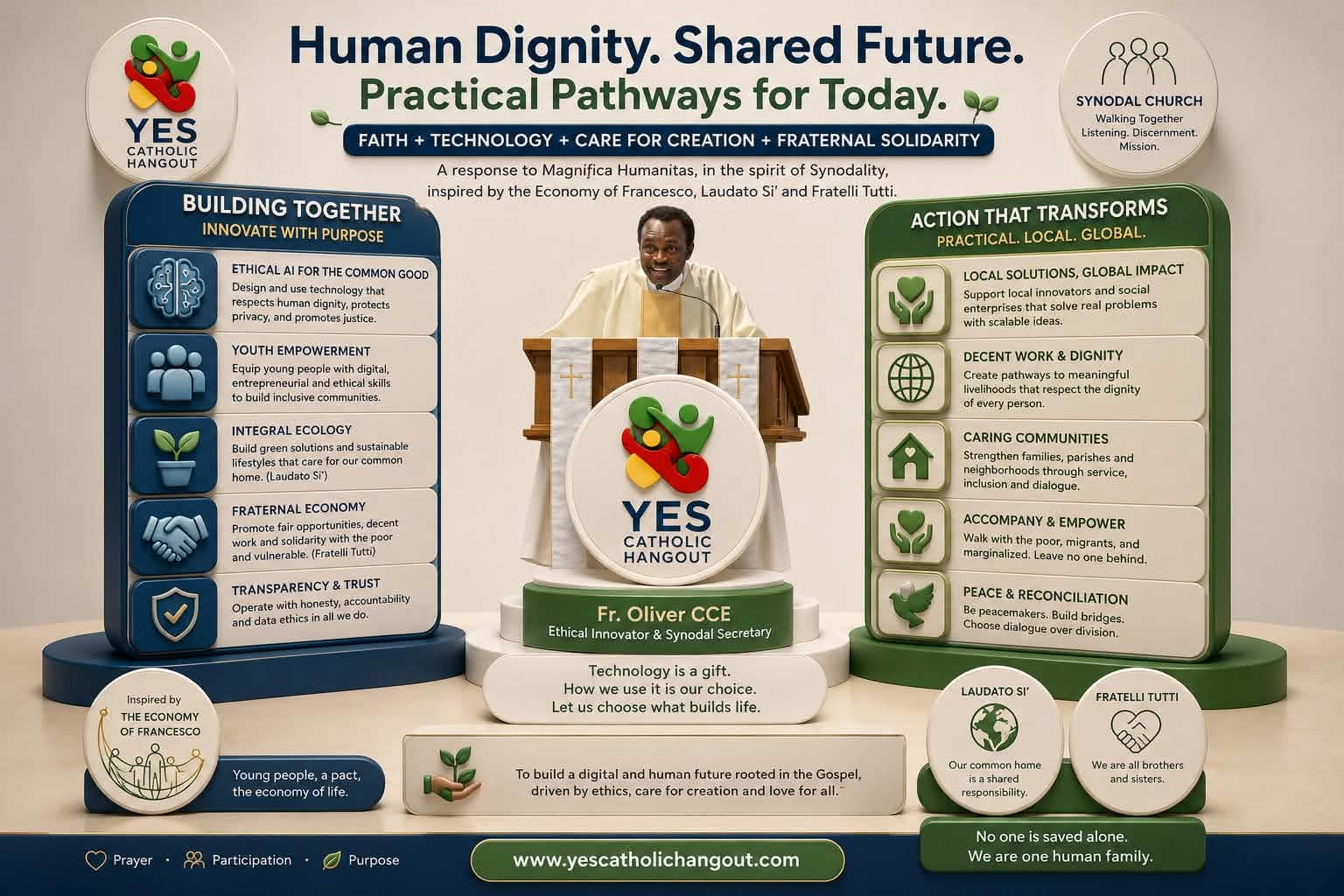
From Innovation to Integral Human Development: Can Artificial Intelligence Help Build a More Fraternal World?
As algorithms increasingly sort passports, predict migration flows, and govern access to work, this editorial asks whether our technologies serve the common good or become instruments of exclusion. Drawing on Laudato Si’, Fratelli Tutti, the Economy of Francesco, and Synodality, it explores how Web3 and decentralized technologies, portable digital identity, decentralized finance, blockchain-verified credentials, could help build a more fraternal digital economy for migrants and the displaced, and closes with six concrete calls to action for anyone shaping the digital future.
Read article →
From Learning to Loving: How Artificial Intelligence Can Advance Human Dignity and the New Evangelization
From classrooms to clinics to disaster zones, AI is quietly reshaping human life, raising a profound question: who will ensure it also serves truth, compassion, and human dignity? This editorial offers a five-part synodal vision, learning, predicting, adapting, optimizing, and automating, arguing that technology is judged not by the sophistication of its algorithms but by the depth of its service to humanity, especially the poorest and most vulnerable.
Read article →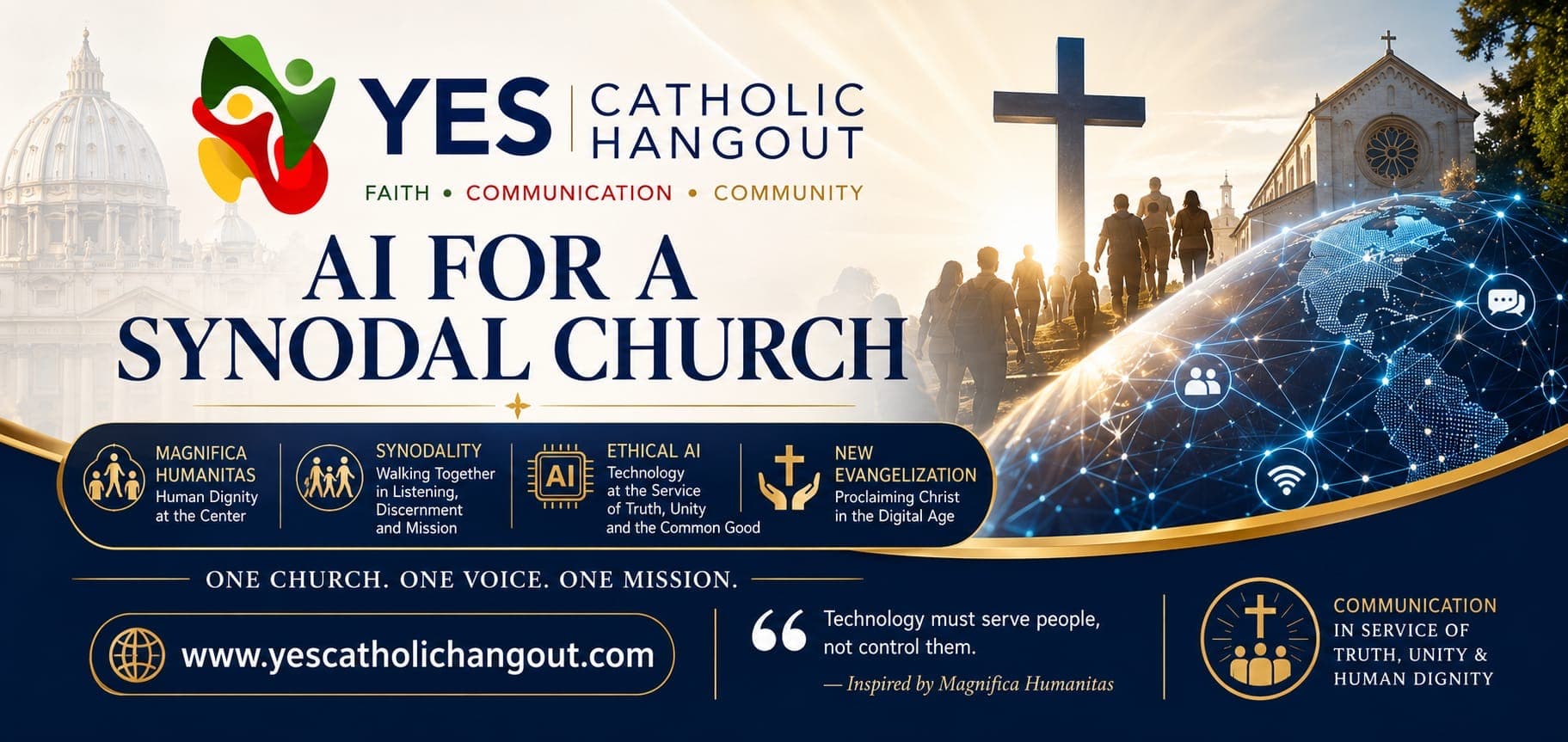
Artificial Intelligence for a Synodal Church: Practical Pathways to Magnifica Humanitas and the New Evangelization
As AI reshapes communication faster than any technology before it, this editorial asks how the Church can meet the digital age without losing her mission: through Magnifica Humanitas, the primacy of human dignity, and Synodality, the practice of walking together in listening and discernment. It offers five practical pathways, ten concrete commitments, and a sixty-year vision for a Catholic communication strategy where algorithms remain tools, never arbiters of truth, and every digital initiative serves the proclamation of Christ.
Read article →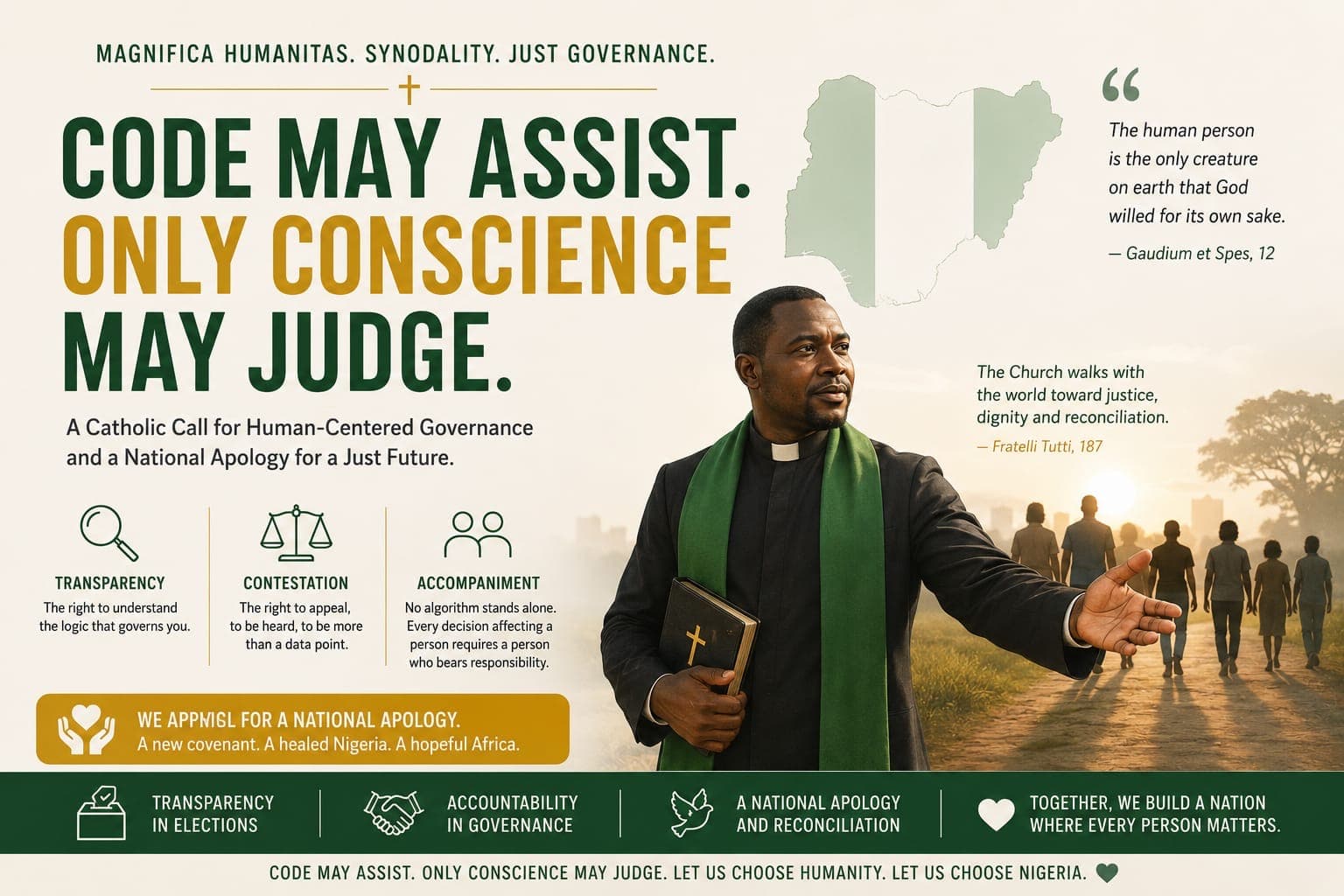
When Code Begins to Judge: The Church’s Vigil Over Governance in the Age of Legal AI
In a Lagos courtroom, a young man’s bail is set not by a judge but by a risk-assessment algorithm that knows his zip code but not his name. This reflection asks what happens to democracy, justice, and human dignity when code begins to judge, and calls for a synodal path forward: an AI-powered electoral system built on transparency and accountability, a national reckoning with the expulsion of Nigeria’s missionaries and the seizure of mission schools, and a firm conviction that when the machine and the human conflict, the human must always come first.
Read article →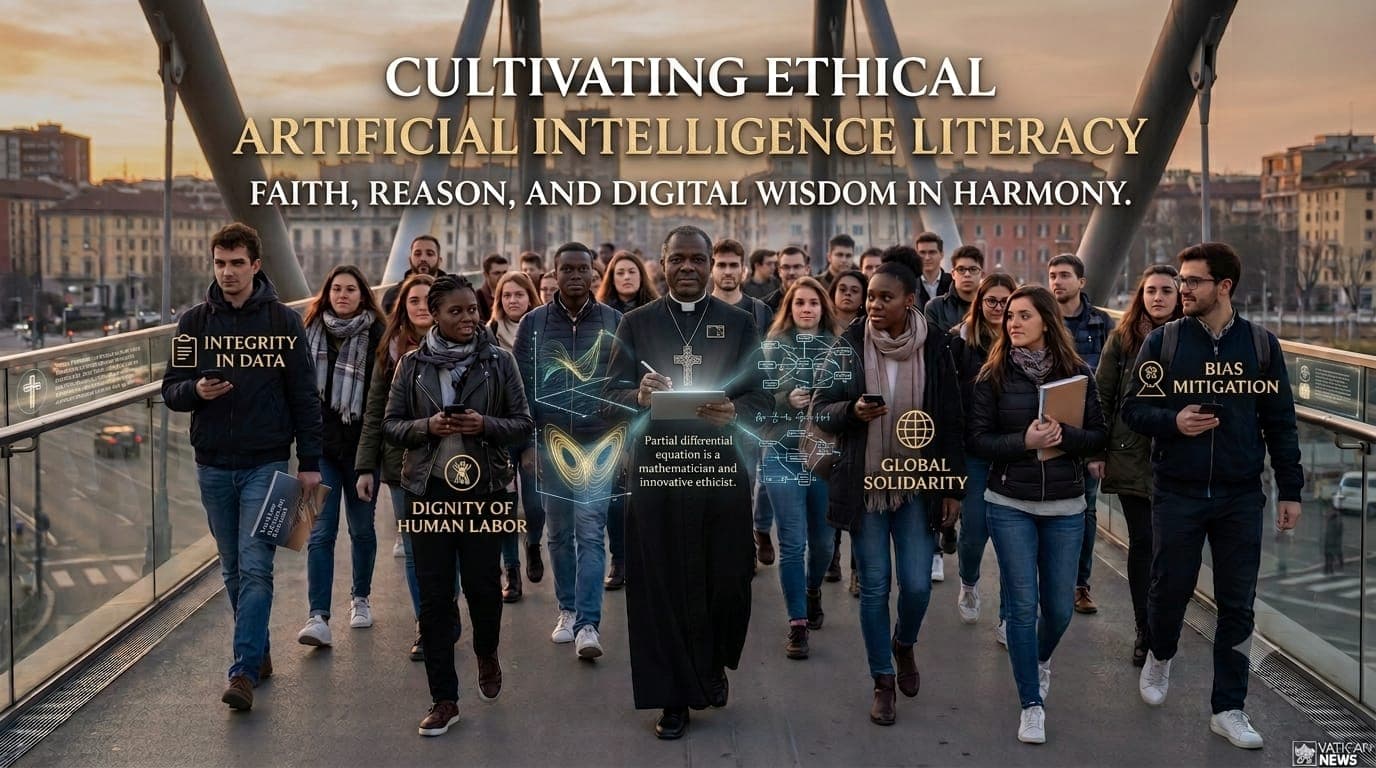
Fermat's Last Theorem, Reborn | When Human Reason Meets the Machine
More than three centuries after Pierre de Fermat posed one of mathematics' greatest challenges, a new generation of mathematicians is working alongside artificial intelligence to formally verify Fermat's Last Theorem. This article explores how the pioneering Lean 4 project at Imperial College London reflects a broader truth: AI can accelerate discovery, but it cannot replace human creativity, wisdom, or moral responsibility. Drawing on Pope Leo XIV's *Magnifica Humanitas*, the reflection argues that the future of artificial intelligence lies not in replacing human reason, but in placing technology at the service of truth, human dignity, and the common good.
Read article →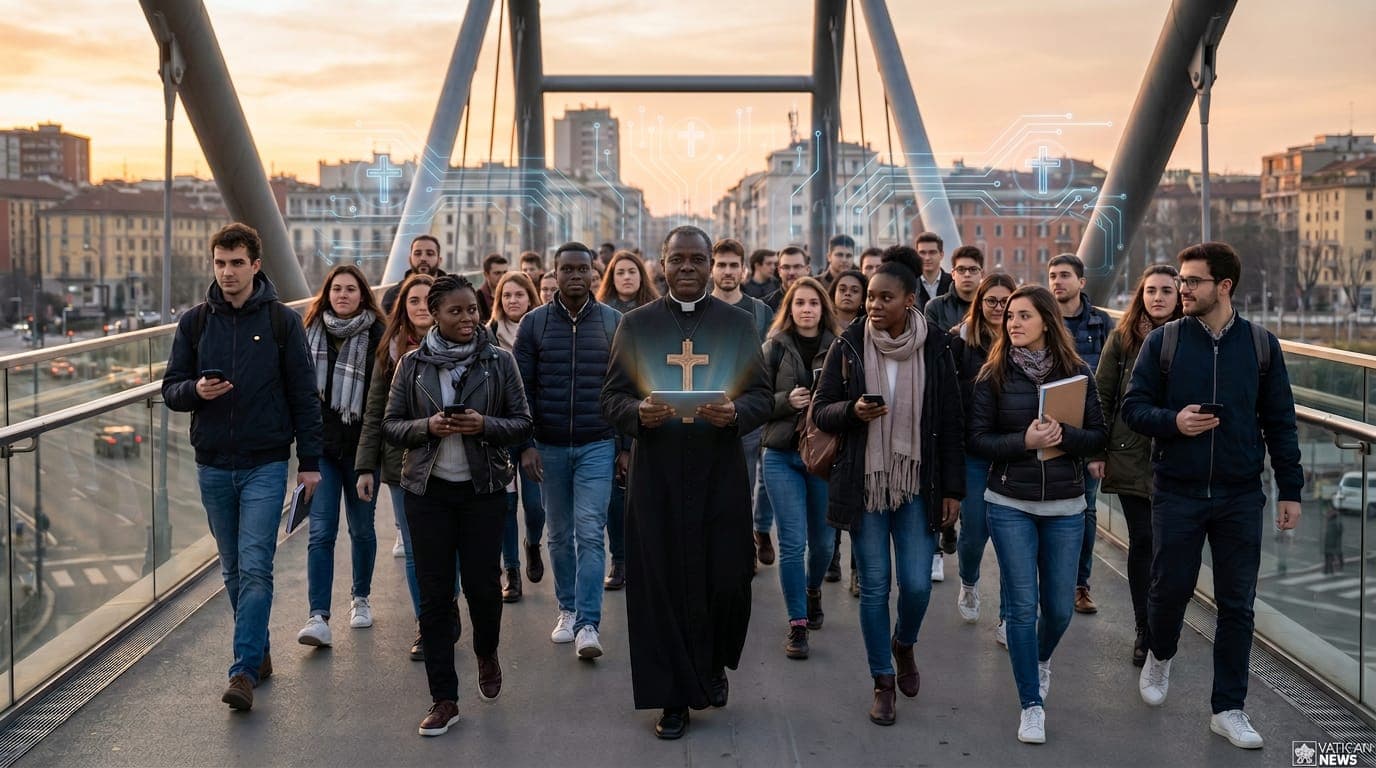
ALGORITHMETICS: When God Writes the First Line of Code
As artificial intelligence becomes increasingly woven into daily life, the Church invites society to ask a deeper question than what technology can do: what does it mean to be human? Drawing inspiration from Pope Leo XIV's vision of AI as a "mirror of human freedom," this reflection introduces **Algorithmethics**—a moral framework rooted in the dignity of the human person, the wisdom of Catholic Social Teaching, and the conviction that technology must always remain at the service of humanity. In an age of algorithms, the Church calls not for fear, but for discernment, ensuring that innovation is guided by conscience, justice, and the image of God present in every person.
Read article →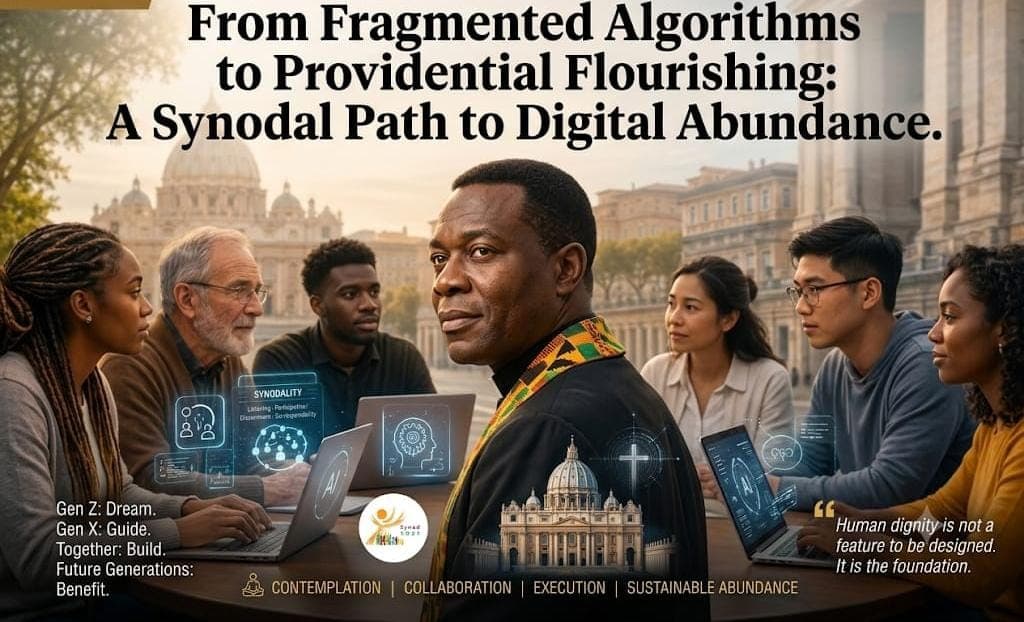
From Fragmented Algorithms to Providential Flourishing: A Synodal Path to Digital Abundance
A rejected job application reviewed first by AI raises a deeply personal question: if an algorithm can measure our skills, can it measure our vocation? This piece explores digital supremacy through the CCE framework of Contemplation, Collaboration, and Execution, arguing that true digital leadership is measured not by processing speed but by human flourishing, and offers a simple Synodal Digital Exam for families, workplaces, and parishes navigating the digital age.
Read article →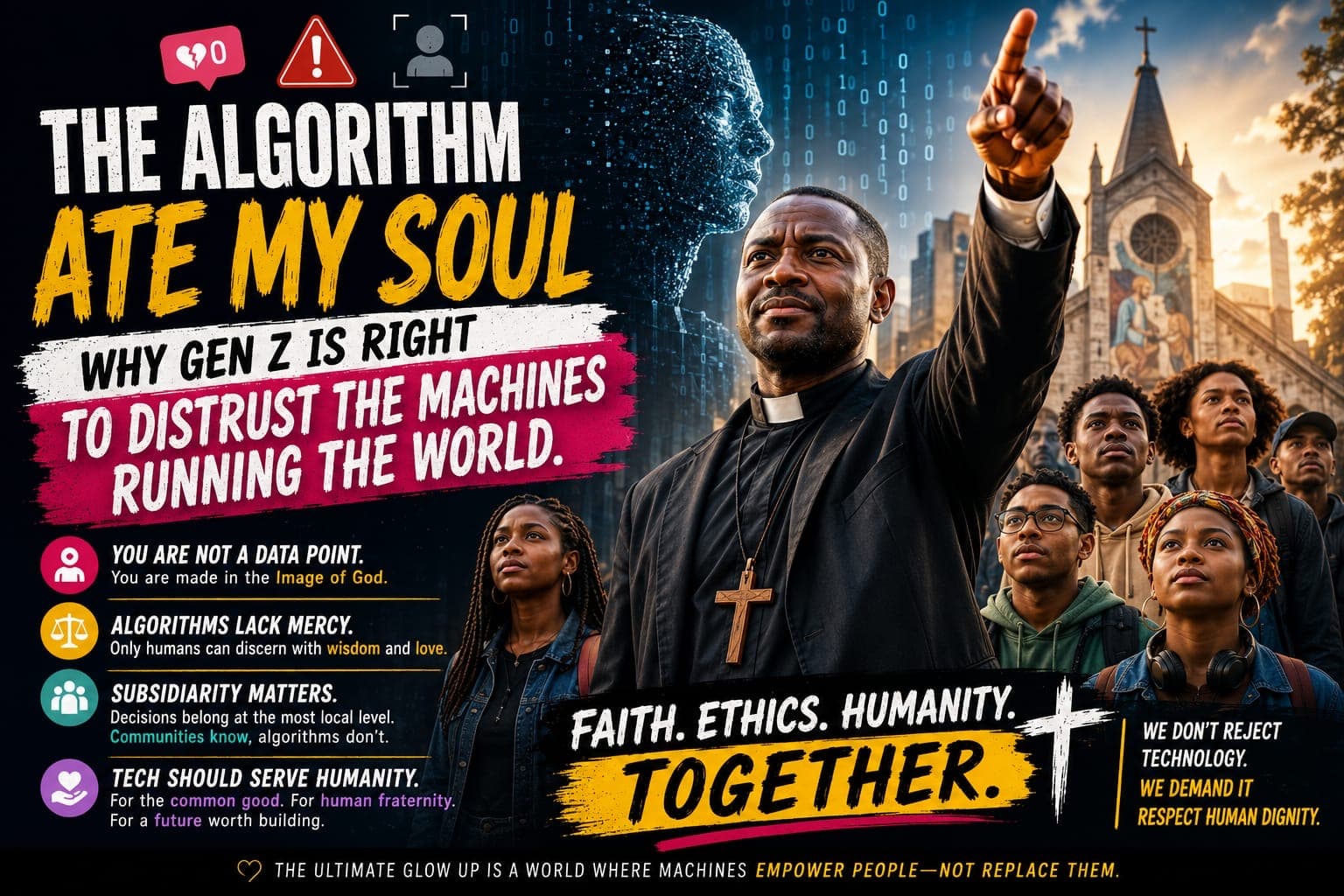
The Moral Void at the Heart of Algorithmic Governance
As artificial intelligence increasingly shapes decisions about employment, finance, education, and public life, a growing number of young people are questioning whether algorithms can truly be trusted to govern human lives. This article explores the ethical crisis at the heart of algorithmic governance, drawing on Catholic Social Teaching and Pope Francis' vision of the "wisdom of the heart" to argue that technology must always remain accountable to the dignity of the human person. Rather than rejecting innovation, it calls for an AI future where transparency, compassion, and human responsibility guide every technological advance.
Read article →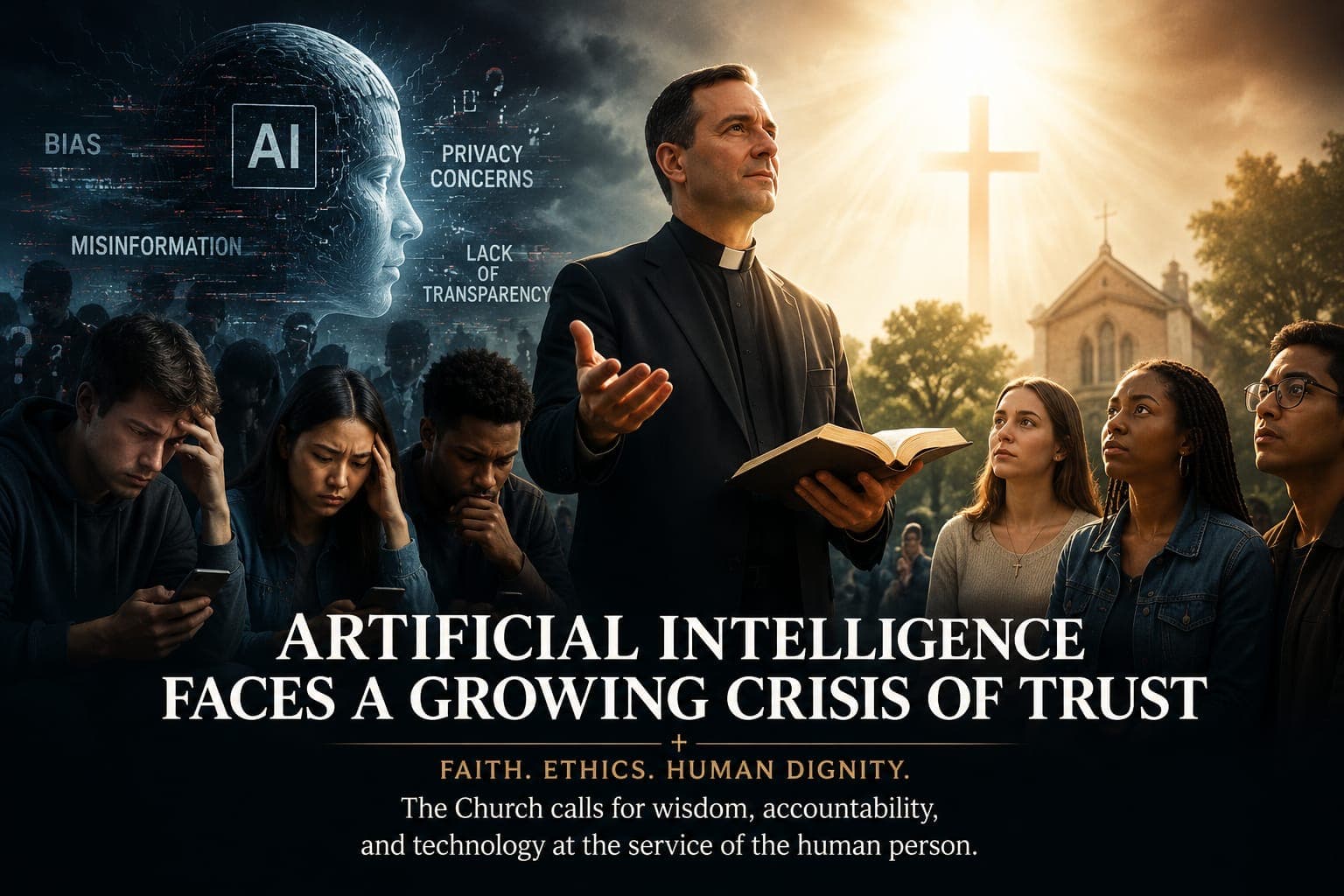
Artificial Intelligence Faces a Growing Crisis of Trust: Building an Ethical Technology Ecosystem for the Human Person
As artificial intelligence reshapes every aspect of modern life, it also faces a growing crisis of public trust. This article explores why ethical responsibility must advance alongside technological innovation, arguing that transparency, accountability, and respect for human dignity are essential for building trustworthy AI. Drawing from Catholic Social Teaching and the concept of the Anthropological Theoalgorithm, it proposes an ethical technology ecosystem where governments, educators, technology companies, faith communities, families, and civil society work together to ensure that artificial intelligence remains a servant of humanity, promoting peace, justice, solidarity, and integral human development.
Read article →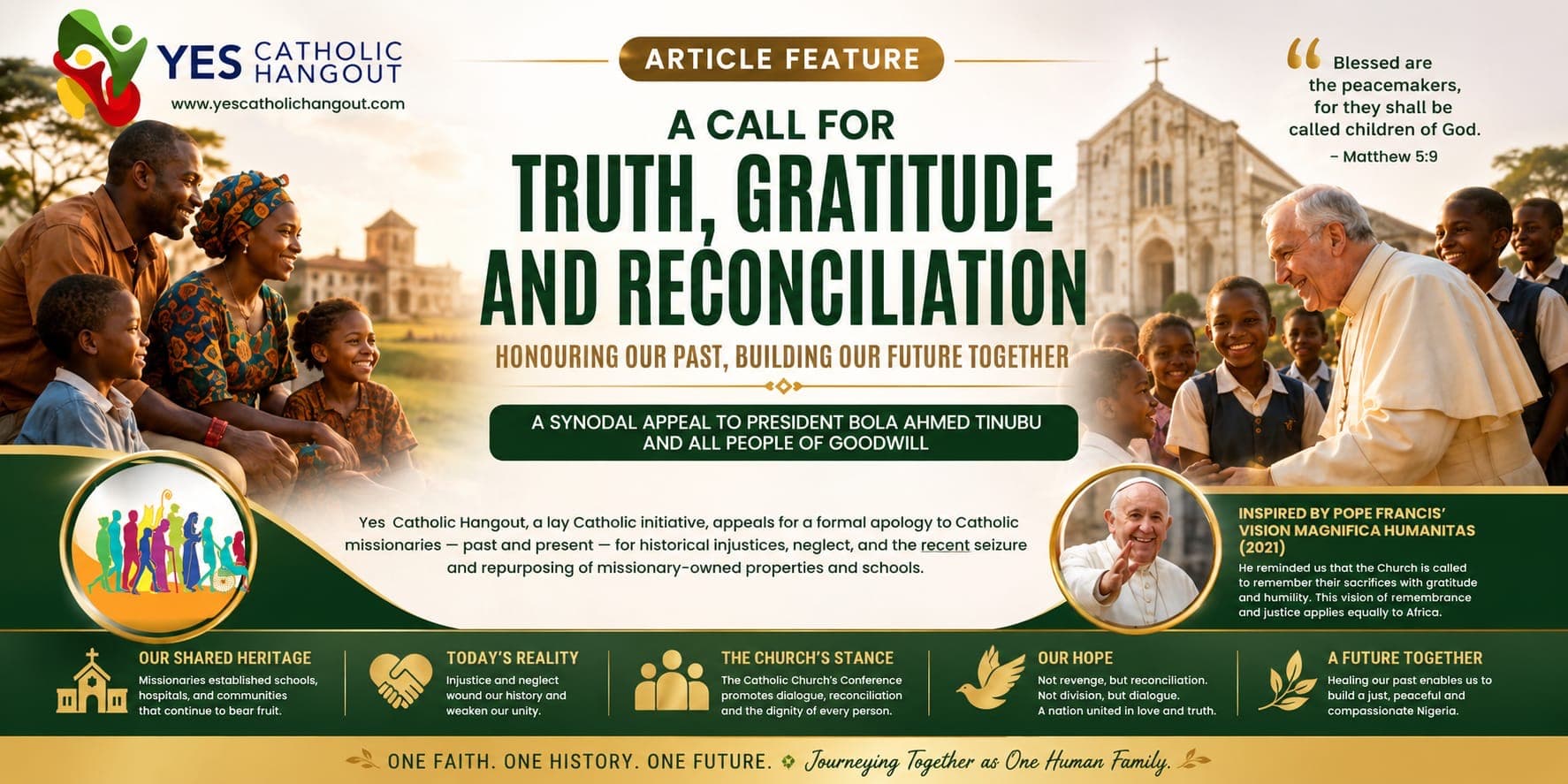
Nigerian Lay Group Urges Presidential Apology to Missionaries, Echoing Pope Leo XIV's Call for Historical Reckoning
A Nigerian Catholic lay initiative, Yes Catholic Hangout, has renewed its call for truth, gratitude, and reconciliation by urging the Federal Government to formally acknowledge the historical sacrifices and enduring contributions of Catholic missionaries in Nigeria. Inspired by Pope Leo XIV's vision of grateful remembrance and rooted in the principles of Magnifica Humanitas, the appeal presents historical recognition not as an act of division, but as a pathway to national healing, justice, and lasting peace.
Read article →
A decade after the publication of Amoris Laetitia, the Church continues to reflect deeply on the vocation and mission of the family in a rapidly changing world
Ten years after Amoris Laetitia, the Church continues to proclaim the family as the heart of evangelization and a living sign of God's faithful love. Reflecting on the enduring relevance of Pope Francis' apostolic exhortation, this article explores the beauty and challenges of family life in a changing world, highlighting the Church's call to accompany families with truth, mercy, and hope while addressing contemporary issues such as digital culture, artificial intelligence, migration, and social fragmentation.
Read article →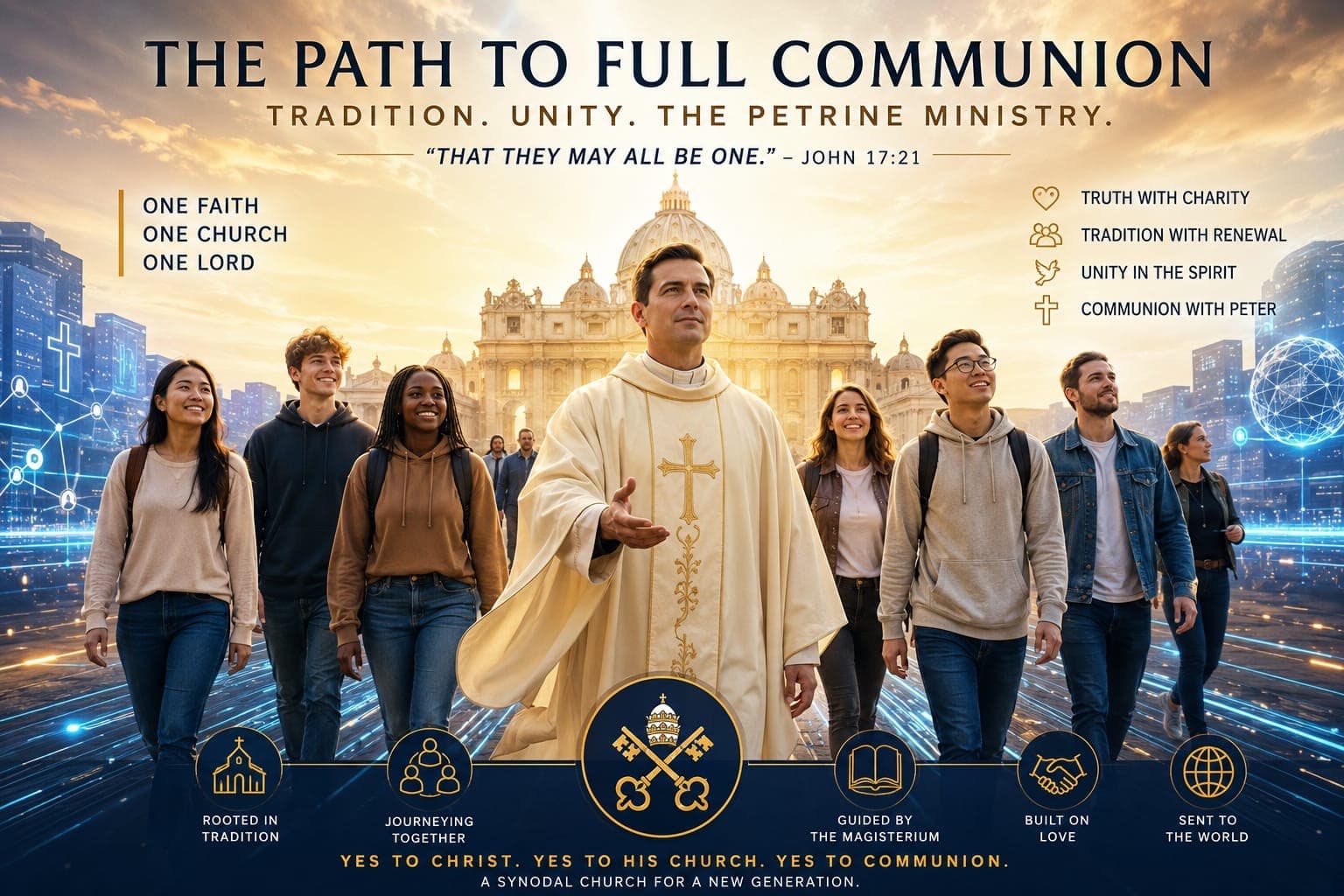
The Path to Communion in a Digital Age: Unity, Tradition, and the Mission of the Church Today
As the Church proclaims Christ's prayer "that they may all be one" in an increasingly digital world, the call to communion takes on new urgency. This reflection explores how faithful digital evangelization, ethical artificial intelligence, and authentic human encounter can strengthen unity rather than division. Drawing on the vision of Magnifica Humanitas and the mission of Yes Catholic Hangout, it affirms that technological innovation must always remain at the service of human dignity, ecclesial communion, and the Church's enduring mission to bring all people into deeper relationship with Christ and His Church.
Read article →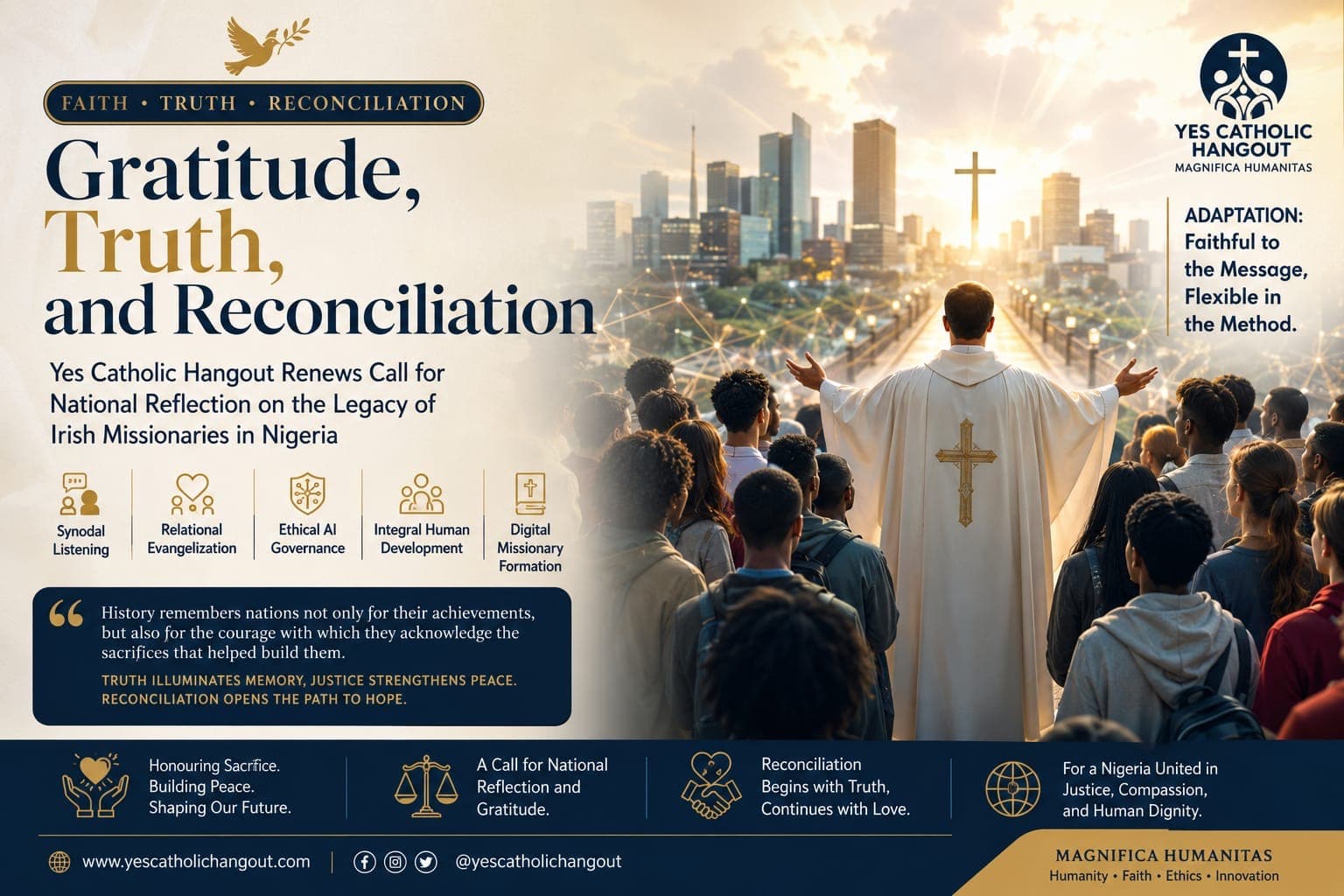
Gratitude, Truth, and Reconciliation: Yes Catholic Hangout Renews Call for National Reflection on the Legacy of Irish Missionaries in Nigeria
As Nigeria reflects on its history and future, Yes Catholic Hangout has renewed its call for a National Apology recognizing the sacrifices and documented suffering of Irish Catholic missionaries who devoted their lives to education, healthcare, evangelization, and community development across the country. Rooted in the vision of Magnifica Humanitas, the appeal presents truth, gratitude, and reconciliation as essential foundations for national healing, while reaffirming that authentic peace and technological progress must always serve human dignity and the common good.
Read article →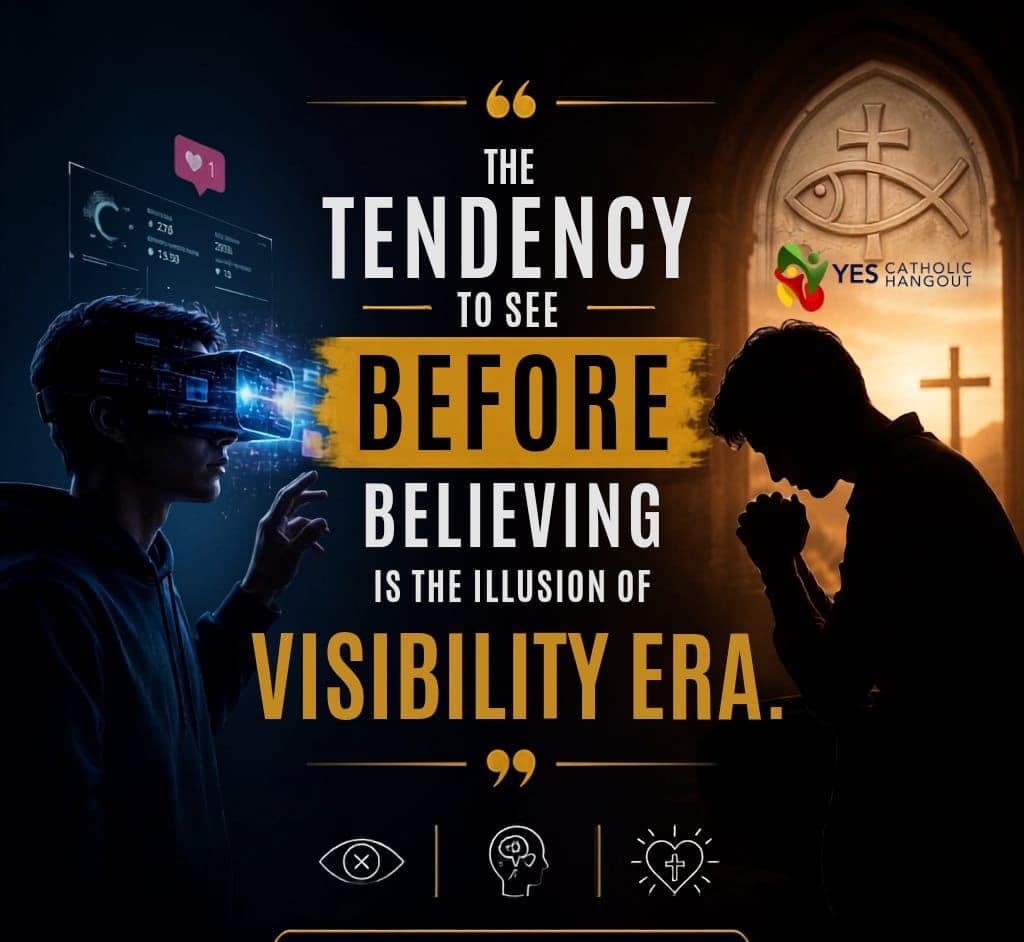
The Illusion of Visibility: Rediscovering Faith in the Digital Age
A reflection on human dignity, ethical artificial intelligence, and the Church’s mission in an age where seeing often precedes believing. “The tendency to see before believing is the illusion of the visibility era.” This observation captures one of the defining spiritual challenges of the digital age. Humanity now inhabits a culture where images, algorithms, metrics, and constant streams of information shape perception. Visibility is often mistaken for truth, popularity for credibility, and technological capability for wisdom. Yet the Christian faith has always invited humanity beyond what can merely be seen. The Gospel reminds believers that faith is not blind acceptance but a relationship of trust rooted in the encounter with the living Christ. While the Apostle Thomas sought visible proof before believing, Jesus responded with words that continue to echo through every generation: “Blessed are those who have not seen and yet have believed” (John 20:29). Today, this Gospel challenge takes on renewed significance. Artificial intelligence, social media, immersive technologies, and digital ecosystems have transformed the way people communicate, learn, work, and form relationships. These innovations offer remarkable opportunities for human flourishing, yet they also risk creating what may be described as an “illusion of visibility”—the assumption that only what is measurable, viral, or visually verified deserves trust. Such a mindset can gradually weaken humanity’s capacity for contemplation, silence, discernment, and hope. The Church therefore continues to proclaim that authentic knowledge involves more than information. Human wisdom grows through prayer, conscience, dialogue, community, reason, and openness to God’s grace. Faith does not reject science or technological progress; rather, it places them within a broader vision of the human person created in the image and likeness of God. Within this context, Magnifica Humanitas is presented as an independent Vatican-inspired ethical AI initiative seeking to encourage dialogue between faith and technological innovation. Drawing inspiration from the Gospel, Catholic Social Teaching, Laudato Si’, Fratelli Tutti, Ecclesia in Africa, and the Church’s synodal journey, the initiative proposes that digital transformation should always remain at the service of human dignity, solidarity, and integral human development. Its vision is founded upon five complementary pathways. First, Synodal Listening encourages communities to listen before judging, cultivating cultures of encounter in both physical and digital spaces. Second, Relational Evangelization promotes authentic accompaniment, mentorship, catechesis, and community as an antidote to algorithmic isolation. Third, Ethical AI Governance calls for transparency, accountability, meaningful human oversight, and respect for the dignity of every person in the design and deployment of digital systems. Fourth, Integral Human Development directs technological innovation toward education, healthcare, environmental stewardship, dignified work, poverty reduction, and the common good. Finally, Digital Missionary Formation equips both young people and adults with ethical, technological, entrepreneurial, and evangelizing skills so that they may become builders of peace within an interconnected world. These priorities reflect a broader conviction: technology must remain humanity’s servant and never become its master. The rapid expansion of artificial intelligence also presents a profound moral responsibility. Digital manipulation, misinformation, autonomous systems, and polarization remind societies that technological progress alone cannot guarantee justice or peace. Ethical discernment remains indispensable. Likewise, every conflict and every war reveal the tragic consequences of forgetting our shared humanity. Lasting peace is not simply the absence of violence but the presence of justice, truth, mercy, solidarity, reconciliation, and authentic fraternity. The digital age should therefore become an opportunity to strengthen relationships rather than deepen division. For the Church, adaptation does not mean abandoning the Gospel. It means proclaiming the timeless truth of Christ through new methods capable of reaching today’s world. Faithful to the Message, Flexible in the Method. This principle expresses the missionary vocation of the Church in every generation. New technologies may change the means of communication, but they cannot replace the encounter between persons, the witness of Christian charity, or the transforming power of the Gospel. As humanity continues its digital journey, believers are invited to cultivate the virtues that no algorithm can automate: faith, hope, love, wisdom, compassion, humility, forgiveness, and communion. The future will not ultimately be secured by technological dominance or systems of control. It will be shaped by peoples and communities who choose dialogue over division, solidarity over isolation, ethical innovation over exploitation, and the inviolable dignity of every human person. In an age captivated by visibility, the Church continues to proclaim an enduring truth: the deepest realities of human life—God’s grace, authentic love, hope, mercy, and eternal life—cannot always be seen, yet they remain the strongest foundations upon which humanity can build its future.
Read article →
Disrupt the Serenity of the Cosmos with Peace, Not War
In an age marked by war, artificial intelligence, and growing digital polarization, *Magnifica Humanitas* offers a different vision for humanity's future. Rooted in the Gospel and Catholic Social Teaching, the movement calls for a "holy disruption" that replaces the logic of conflict with fraternity, dialogue, and ethical innovation. By promoting synodal listening, ethical AI, integral human development, and digital missionary formation, it challenges individuals and communities to build a culture where technology serves human dignity and peace rather than domination and division.
Read article →
Synodality Without Ethical Digitality Will Be Amputated, It Cannot Walk not to talk of implementing walking together.
As the Church deepens its commitment to synodality, a journey of listening, participation, and shared discernment, a pressing question emerges from the intersection of faith and technology: Can a synodal Church truly walk if it lacks an ethical digital foundation? Drawing on Pope Leo XIV’s recent encyclical Magnifica humanitas (May 2026), the Synod on Synodality’s final report on mission in the digital environment (March 2026), and the grassroots Magnifica Humanitas movement, this analysis argues that synodality and ethical digitality are not separate agendas but two legs of the same body. Without both, the Church’s mission in the twenty-first century will be “amputated” , unable to move forward into the digital spaces where humanity increasingly lives, relates, and searches for meaning.
Read article →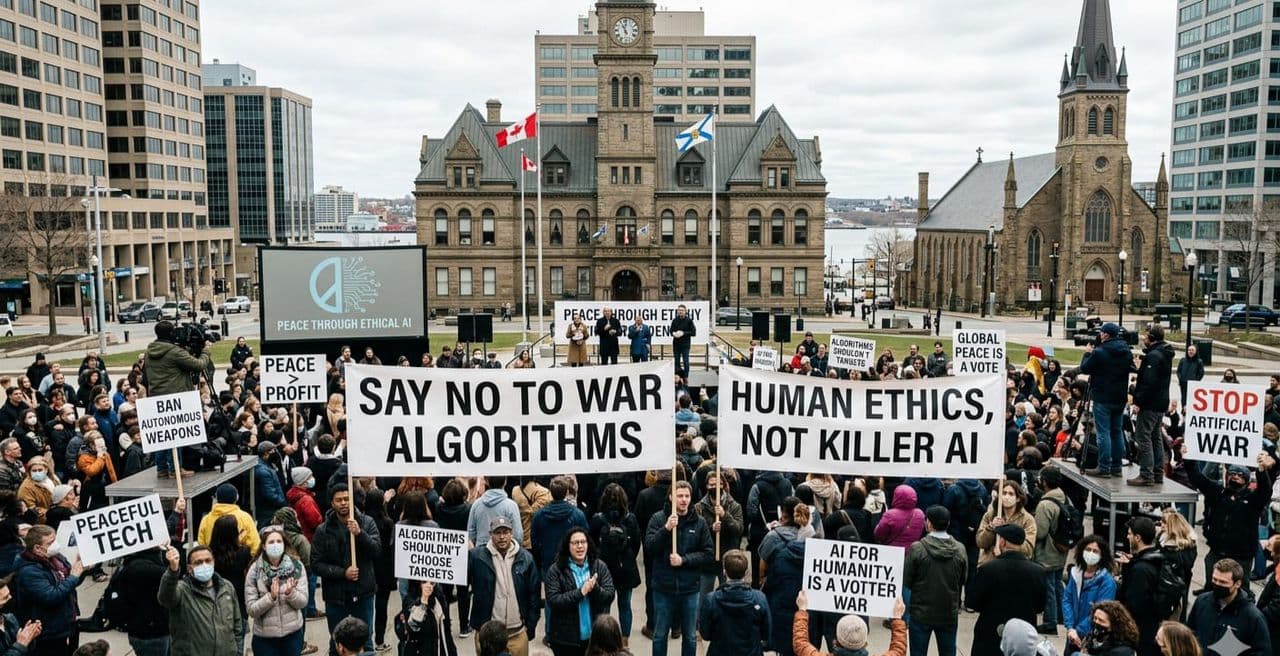
A Listening Church in the Age of Algorithms: The Call of Magnifica Humanitas
As artificial intelligence reshapes modern society, Magnifica Humanitas proposes a different path—one where technology serves human dignity, peace, and the common good. Rooted in the Gospel and Catholic Social Teaching, the Vatican-inspired initiative promotes ethical AI, synodal listening, and integral human development, calling on both older and younger generations to build a digital culture of fraternity, transparency, and authentic human encounter.
Read article →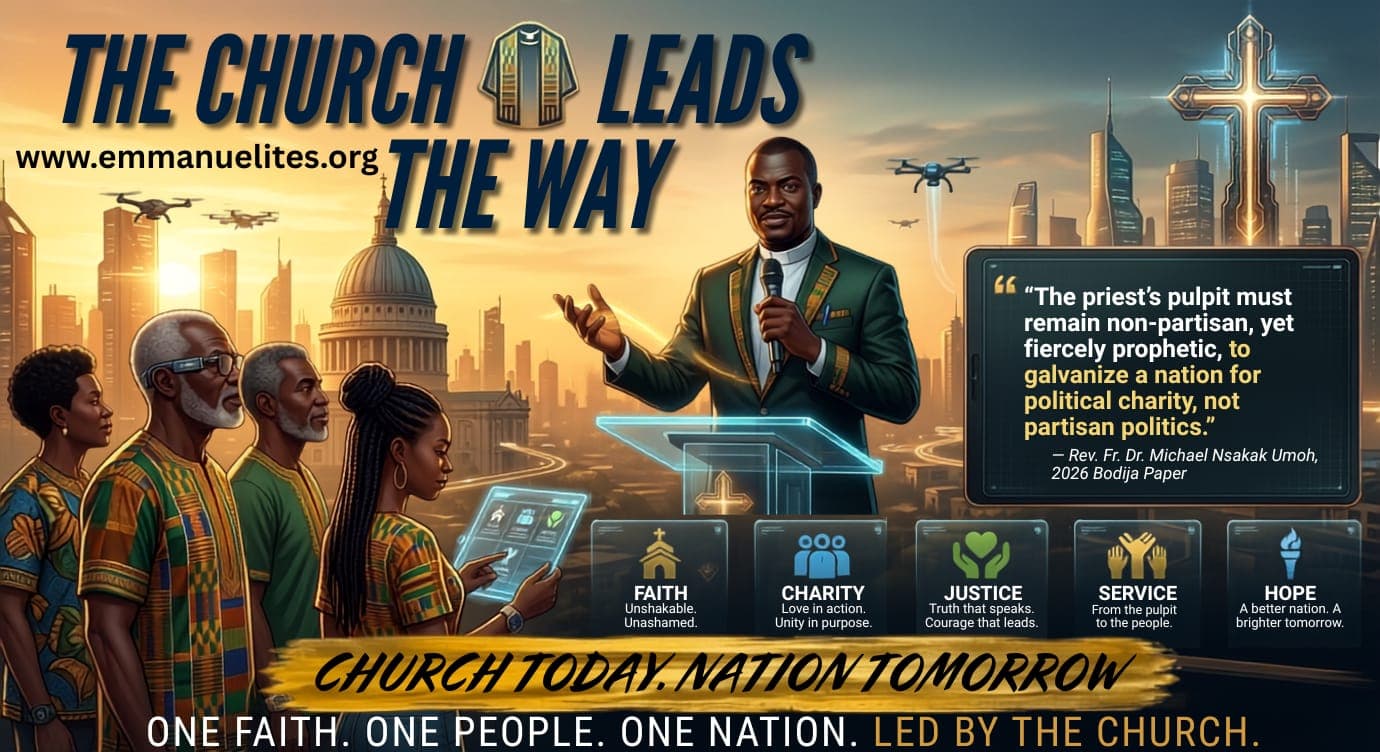
The Priest, the Pulpit, and Politics: Galvanising a Nation for Responsible Leadership
As Nigeria prepares for the 2027 General Election, Rev. Fr. Dr. Michael Nsikak Umoh calls on Catholic priests to embrace their prophetic mission of forming consciences, promoting justice, and mobilizing responsible civic participation while remaining strictly non-partisan. Addressing the country's economic hardship, insecurity, electoral challenges, and moral decline, the paper emphasizes that priests must be educators of conscience, defenders of human dignity, and voices of hope. Rooted in Catholic Social Teaching and the guidance of the Catholic Bishops’ Conference of Nigeria, the article presents a compelling roadmap for pastoral leadership in a critical moment of Nigeria’s democratic journey.
Read article →
Magnifica Humanitas: Building a Future Where Technology Serves Human Dignity and Peace
A new Vatican-inspired initiative, Magnifica Humanitas, seeks to ensure that artificial intelligence and emerging technologies remain at the service of humanity. Rooted in Catholic Social Teaching, the mission promotes ethical innovation, sustainable development, intergenerational collaboration, and a culture of peace founded on the dignity of every human person.
Read article →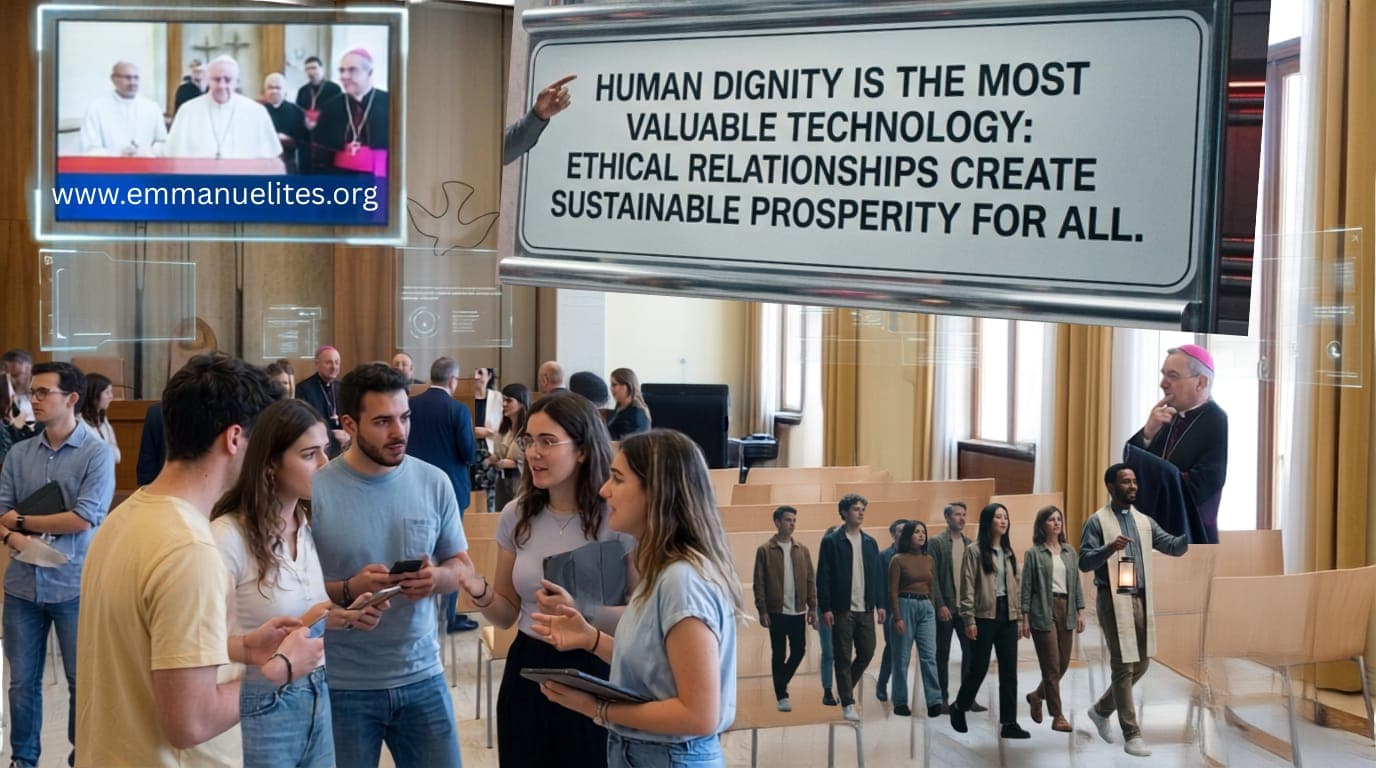
Magnifica Humanitas launched: Vatican-inspired mission champions ethical AI for human dignity and peace
Magnifica Humanitas is a new Ethical AI initiative that seeks to ensure technology serves human dignity, peace, and integral human development. Rooted in Catholic Social Teaching and the vision of a synodal Church, the movement bridges generations through responsible innovation, rejects war and conflict as failures of human fraternity, and promotes ethical AI, dialogue, and authentic human relationships as pathways to a more just and peaceful future.
Read article →
‘Magnifica Humanitas’ Mission Promotes Ethical Fraternity in Service of Human Dignity, Synodality, and Peace in the Age of Artificial Intelligence
Magnifica Humanitas has been launched to promote the ethical development and use of artificial intelligence in service of human dignity, integral human development, synodality, and peace. Drawing inspiration from the Gospel, Catholic Social Teaching, and Pope Leo XIV’s encyclical of the same name, the mission seeks to ensure that emerging technologies strengthen rather than diminish the dignity of the human person, building bridges between the wisdom of older generations and the creativity of the young.
Read article →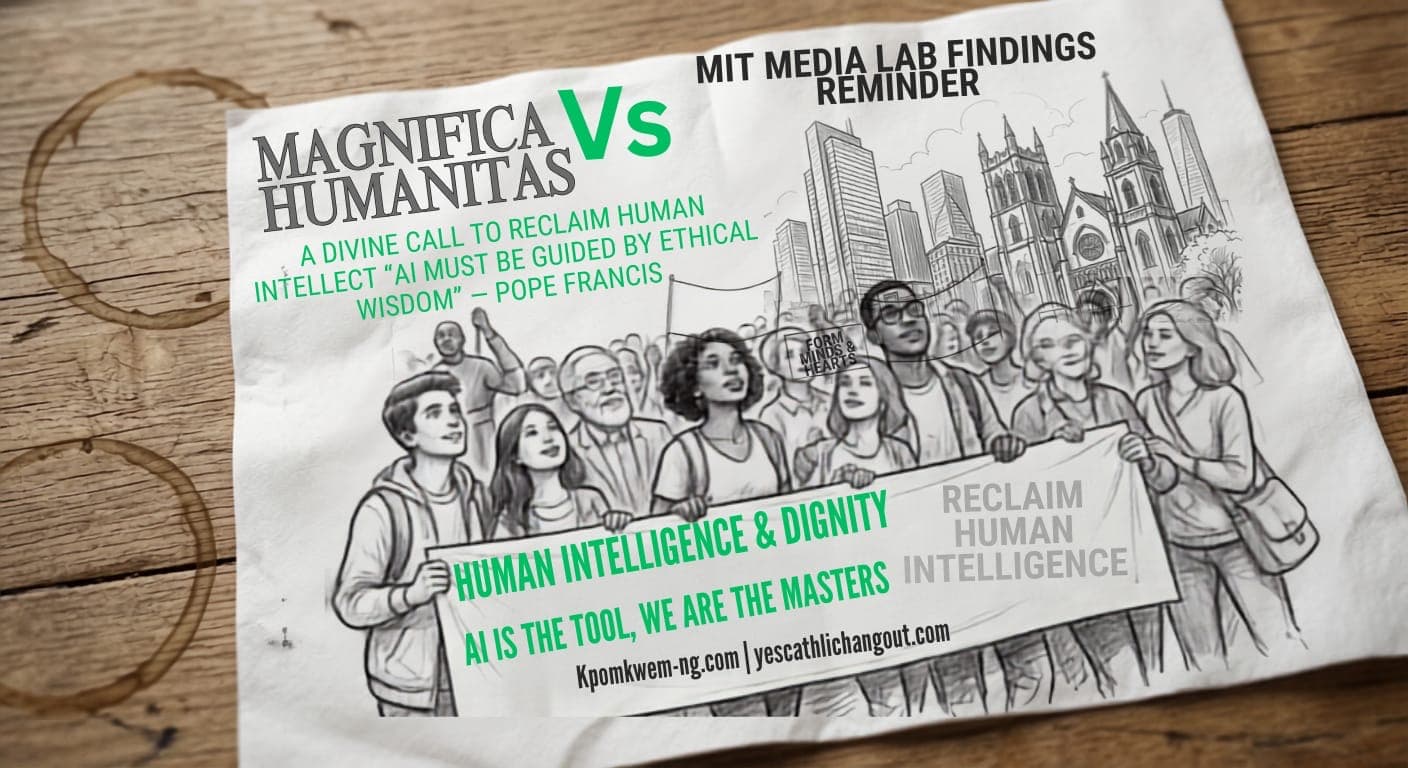
Magnifica Humanitas: A Divine Call to Reclaim the Splendor of Human Intellect in the Age of Artificial Intelligence
When artificial intelligence does the thinking for us, our brains begin to dim. That is not poetic language. It is what MIT researchers measured directly in the brain. ChatGPT users showed a 47% collapse in brain activity compared to those writing unaided, and 83% could not recall what they had just written. This is not just a scientific caution. It is a spiritual summons. Magnifica Humanitas calls every Catholic to reclaim what no algorithm can replace: the magnificent, irreducible dignity of human thought.
Read article →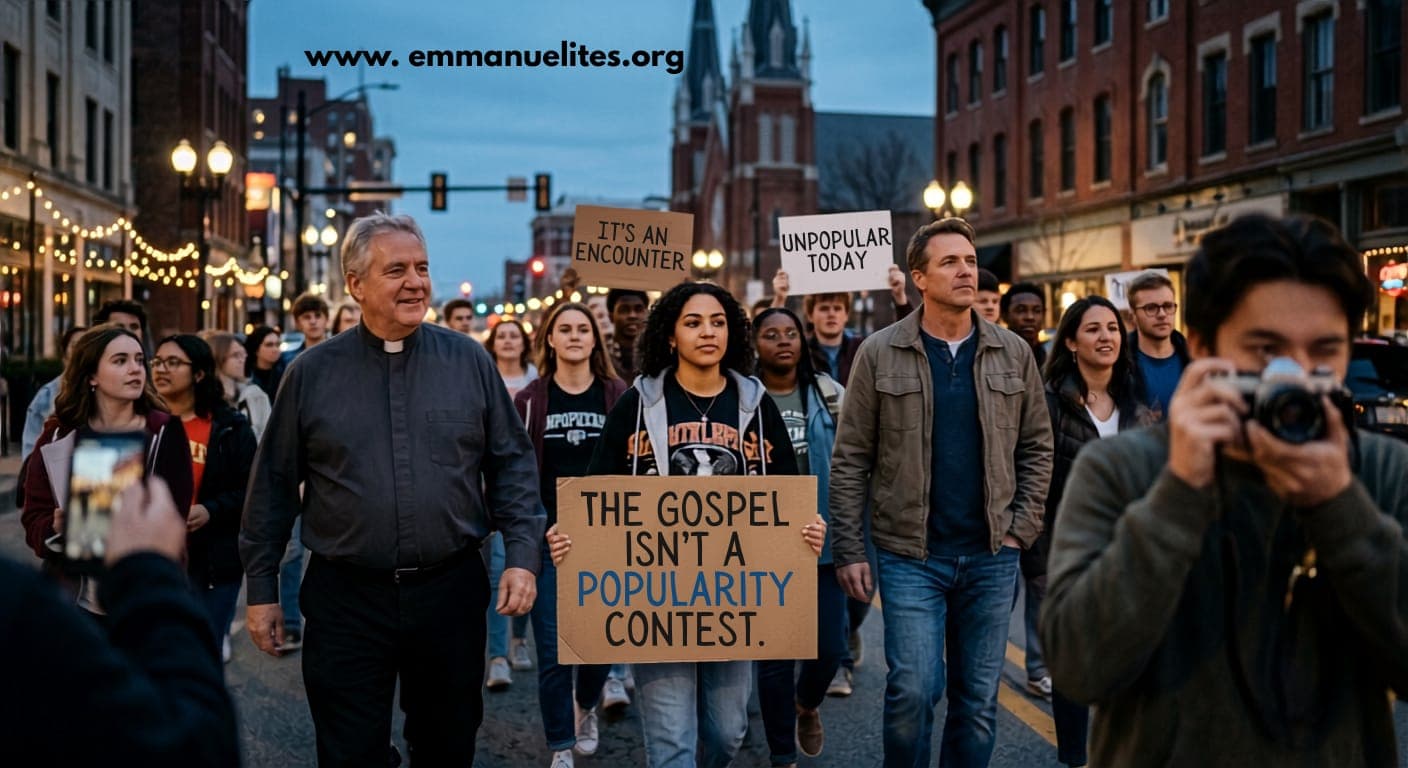
Magnifica Humanitas: A Global Call to Place Human Dignity at the Heart of the Digital Future
Humanity stands at a decisive moment in history. Artificial intelligence is transforming economies, reshaping societies, and influencing how billions of people communicate, work, and live. The challenge before us is not technological. It is human. Magnifica Humanitas proposes one simple but transformative principle to guide this moment: human dignity must become the operating system of the digital economy. If an innovation does not strengthen the dignity of the human person, it has lost its moral direction.
Read article →
Magnifica Humanitas: Ethical Artificial Intelligence at the Service of Human Dignity and Peace
Artificial intelligence, digital networks, automation, and emerging technologies possess an unprecedented capacity to shape societies, economies, cultures, and human relationships. Magnifica Humanitas emerges as a Vatican-inspired ethical mission with one simple but profound conviction at its heart: every person possesses an inviolable dignity that no technological system can replace, diminish, or exploit. This is the vision of a future built on fraternity rather than domination, and abundance where no one is excluded.
Read article →
The Beautiful Game, The Beautiful Peace: Why the World Cup 2026 Must Become Humanity’s Turning Point
In the summer of 2026, forty-eight nations representing billions of people across every continent, creed, and culture will converge on the stadiums of the United States, Mexico, and Canada for the FIFA World Cup. For one month, the planet will share a common heartbeat. The question before us is not whether the tournament will be beautiful. It will be. The question is whether we will let it be something more: a watershed moment for human solidarity in a world that has never needed peace more urgently.
Read article →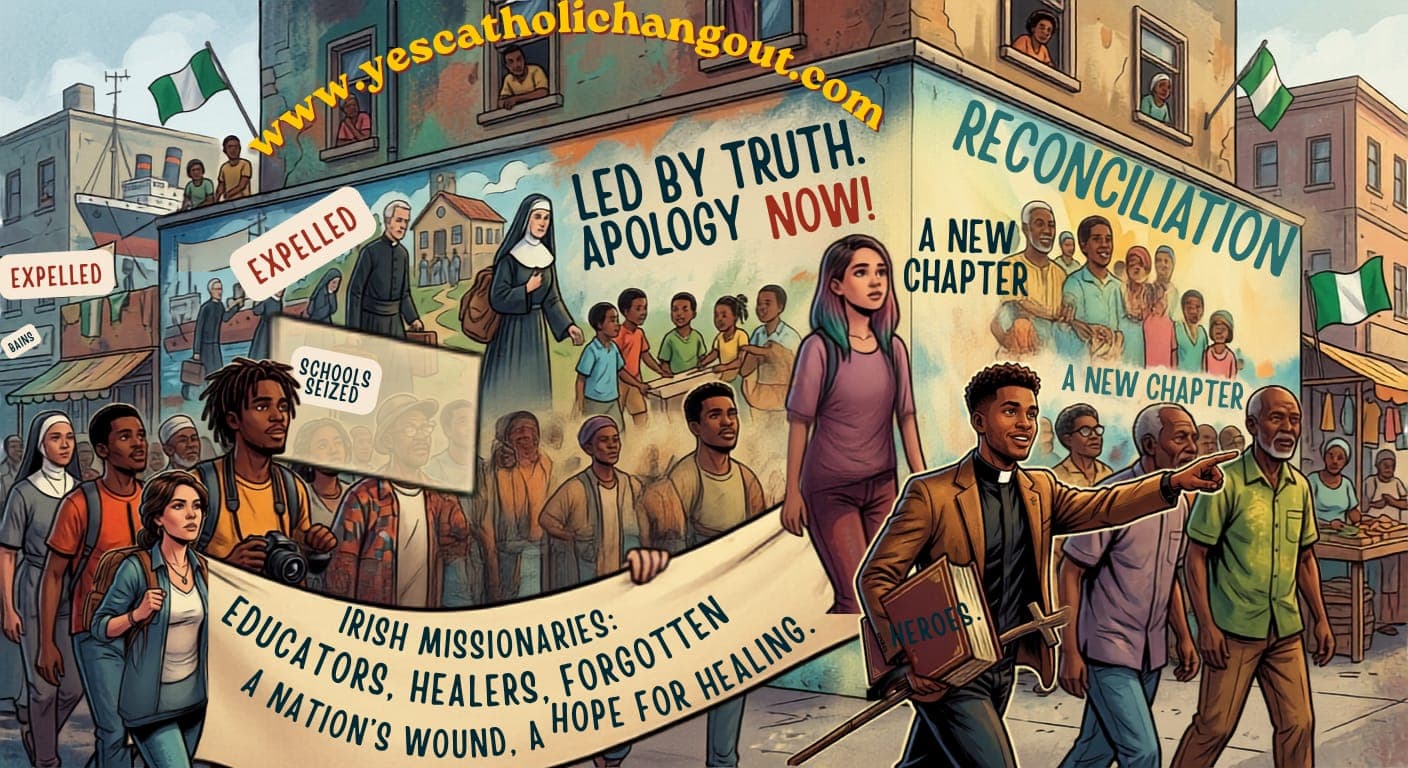
Open Letter to His Excellency, the President of the Federal Republic of Nigeria
In February 1970, approximately 300 Irish missionaries who had built Nigeria's schools, hospitals, and churches, who had remained with the Nigerian people through the horrors of war and famine, were expelled by the federal government. They deserved gratitude. They received suspicion. On the Feast of the Immaculate Heart of Mary, and in the spirit of Pope Leo XIV's historic apology in Magnifica Humanitas, this open letter calls on the President of the Federal Republic of Nigeria to do what moral courage demands: say we were wrong.
Read article →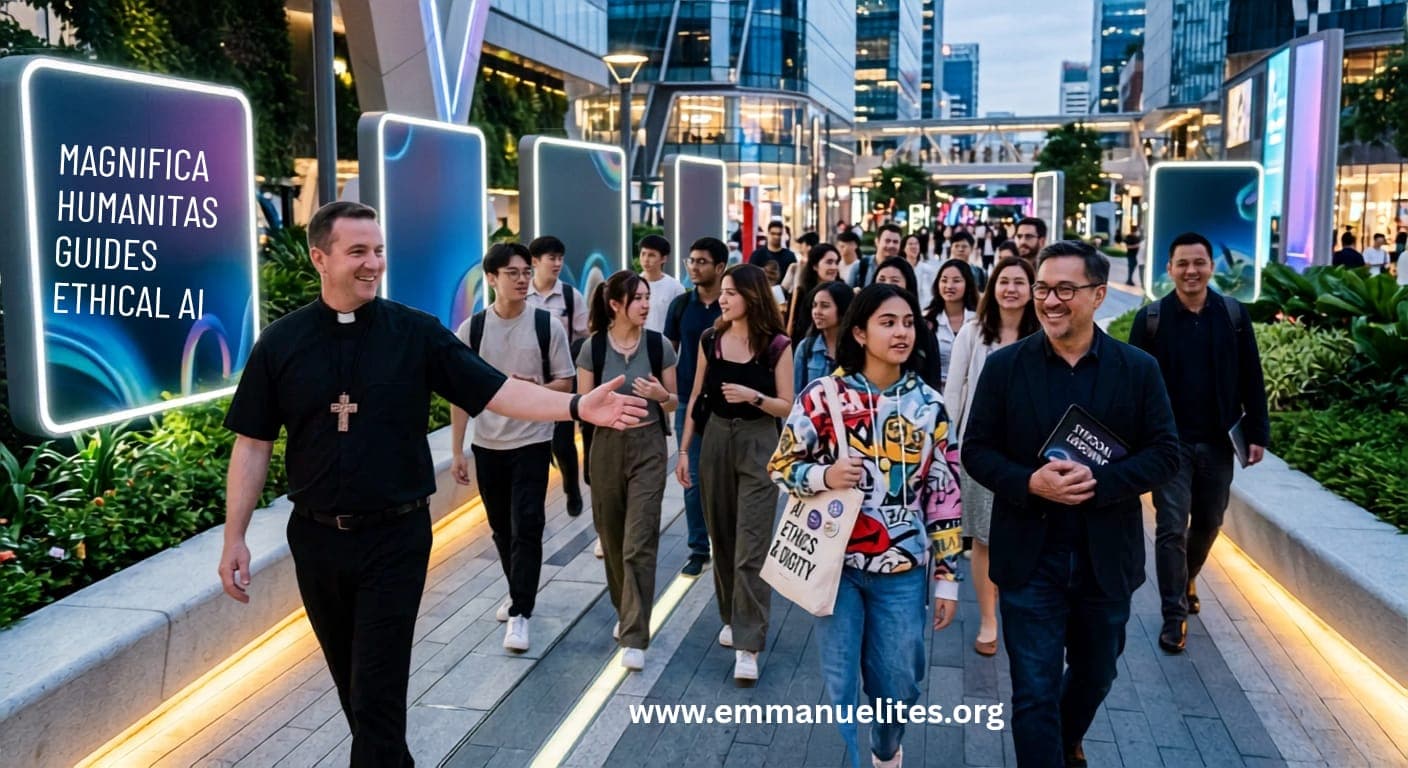
Magnifica Humanitas: A Vatican-Inspired Ethical AI Mission for Human Dignity, Synodality, and Peace
Magnifica Humanitas is a Vatican-inspired ethical AI mission with one governing principle: faithful to the message, flexible in the method. The Gospel does not change. The platform does. The call to human dignity does not change. The technology does. In an age of autonomous systems, digital manipulation, cyber conflict, and algorithmic isolation, this mission proposes five concrete pathways for transforming technology into a servant of fraternity and peace rather than an instrument of domination and exclusion.
Read article →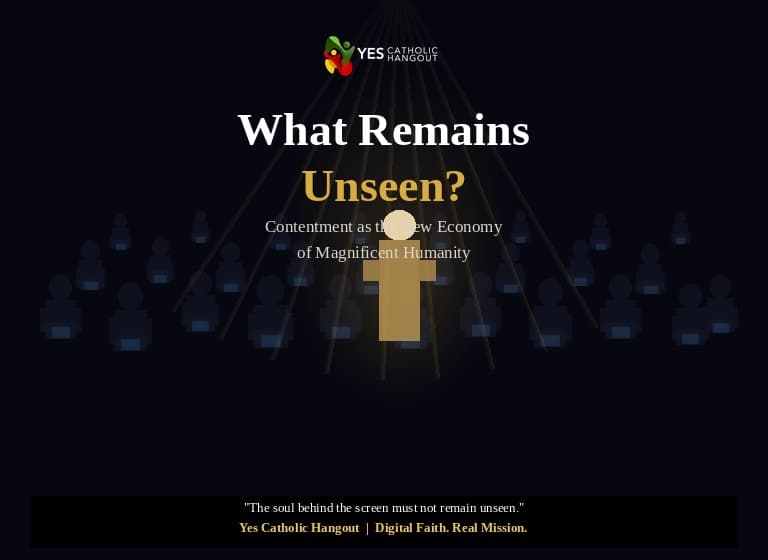
What Remains Unseen? Contentment as the New Economy of Magnificent Humanity
We measure productivity. We measure efficiency. We measure growth. But what remains unseen? The human person behind the data. The worker behind the output. The child behind the statistic. The soul behind the screen. In the age of artificial intelligence, the Church is being called to ask the question the digital economy consistently avoids: what remains unseen when humanity measures growth but forgets the human person? The answer is the foundation of a new economy. And its name is contentment.
Read article →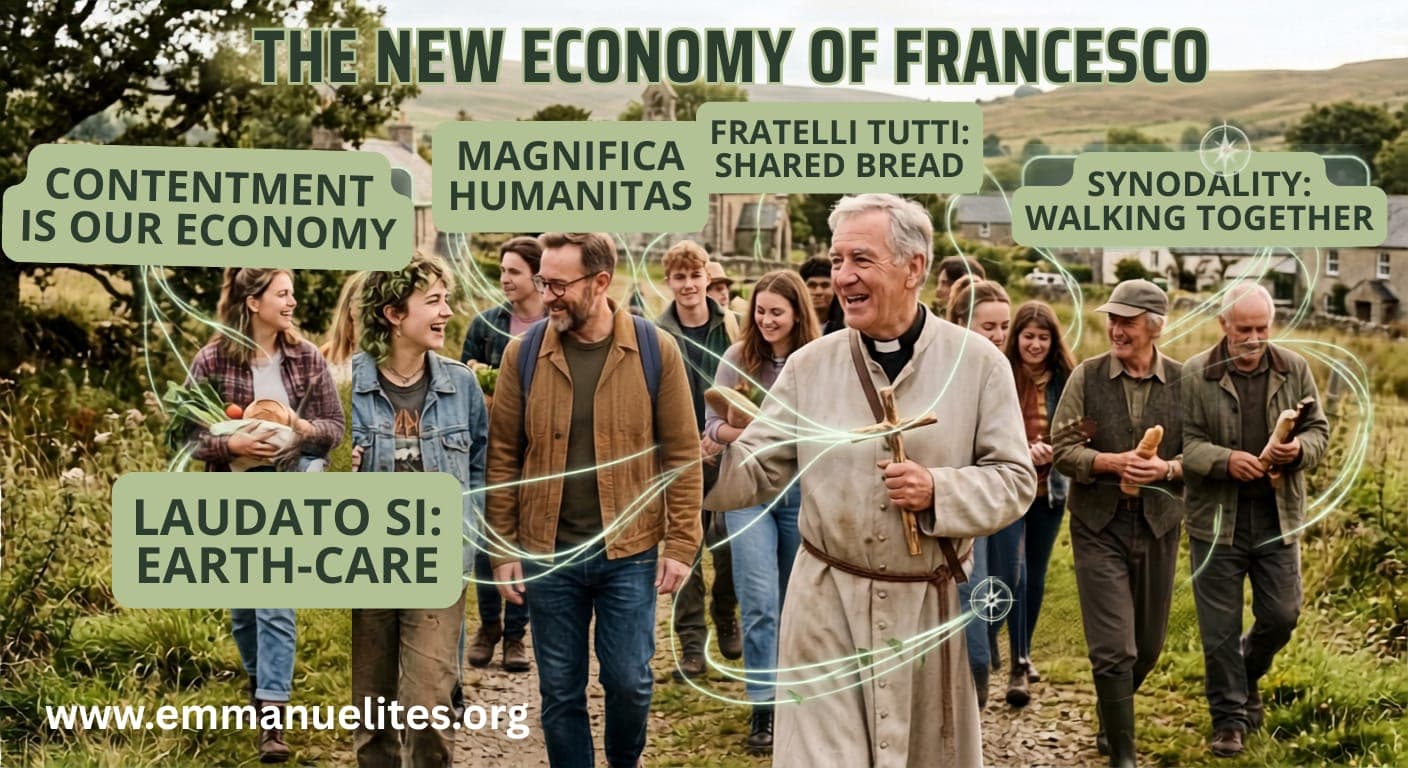
From Hustle to Holy Enough: Why Contentment Is the New Economy
Gen Z was told to go viral. Gen X was told to keep going. Both are asking the same deeper question: what kind of life is actually enough? In the age of artificial intelligence, automation, and digital comparison, the Church is being called to offer the world something it cannot find on any platform: a new economic imagination rooted in one simple but revolutionary word. Contentment. Not laziness. Not romanticized poverty. Not anti-technology. But the spiritual, social, and economic discipline of knowing what is enough so that everyone can have enough.
Read article →
Magnifica Humanitas Social Media Pack
Every war is a wound against magnificent humanity. That is the conviction at the heart of this campaign. In a world shaped by artificial intelligence, digital manipulation, economic exploitation, and ideological polarization, peace must be more than a slogan. It must become a culture of encounter, justice, mercy, truth, and authentic relationship. Magnifica Humanitas calls every generation to reject the normalization of conflict and build something better: zero war, no more war, create peace together.
Read article →
Don’t Outsource the Soul: Build Jerusalem, Not Babel
The most urgent question of the Artificial Intelligence age is not whether machines can become faster, cheaper, or more persuasive. The question is whether humanity will remain human. For Gen X, which remembers the world before the internet, and for Gen Z, which has inherited a world mediated by screens and algorithms, the Christian answer must be short enough to remember and deep enough to live: do not outsource the soul. Build Jerusalem, not Babel.
Read article →
Magnifica Humanitas, Algorithmethics, and the Ethical Technology Economy as a Pastoral Path for Integral Human Development
The artificial intelligence age is not merely another technical moment. It is an anthropological, moral, pastoral, educational, administrative, and economic turning point. The question before the Church is not whether technology will shape the world. It already does. The real question is whether the Church will help shape technology with a moral conscience strong enough to defend every person it touches, from the unborn child to the elderly, from the displaced worker to the voiceless poor. Magnifica Humanitas, Algorithmethics, and the Ethical Technology Economy are not three separate ideas. They are one urgent call: build Jerusalem, not Babel.
Read article →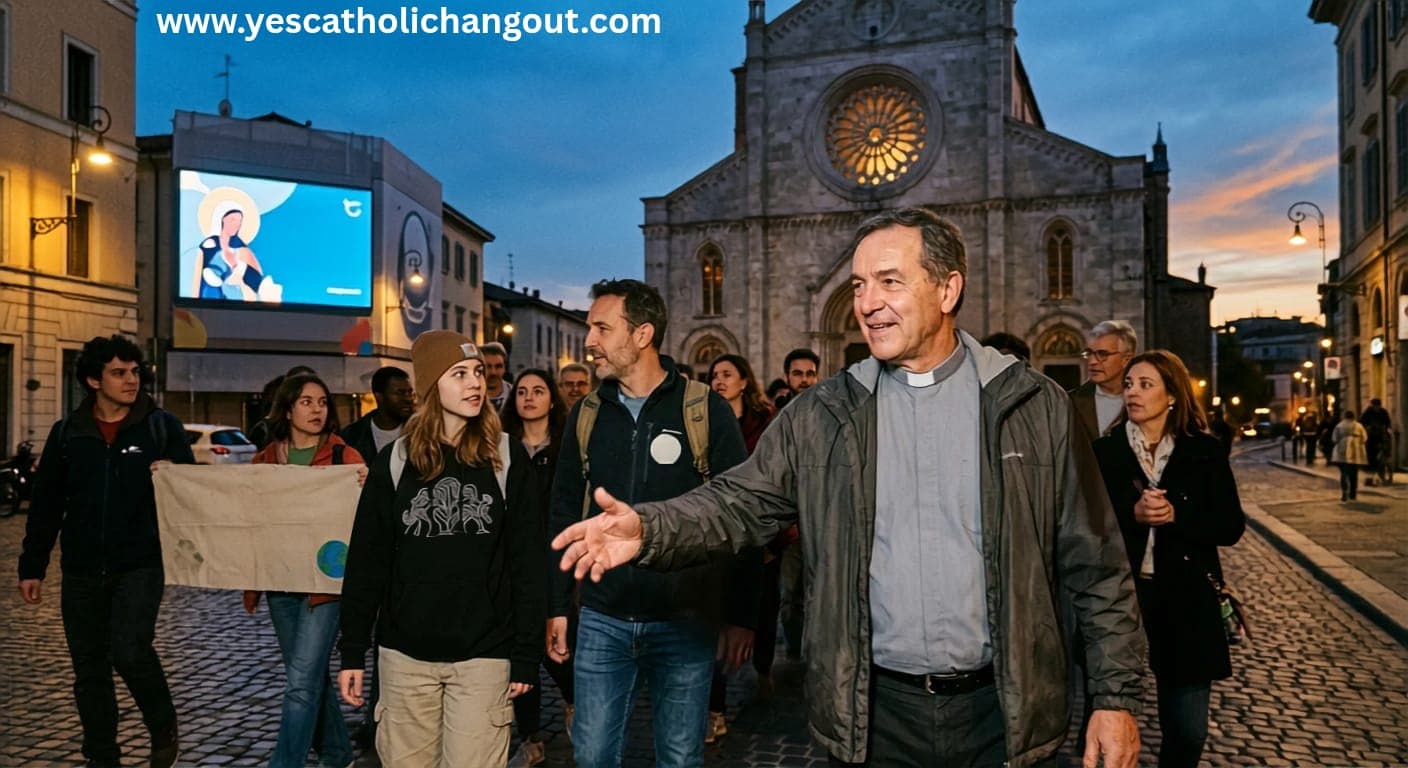
Practical Framework: Anthropological Theoalgorithm, Algorithmethics, and the Ethical Technology Economy
What does it actually look like to put Magnifica Humanitas into practice? This framework proposes a concrete answer. The Anthropological Theoalgorithm asks every digital system one non-negotiable question: does this technology help the person become more fully human before God, neighbor, society, creation, and conscience? Algorithmethics then translates that question into the design, deployment, governance, and economic use of AI. Together, they form not just an ethical vision but a program of action, one that Yes Catholic Hangout is building its entire mission around.
Read article →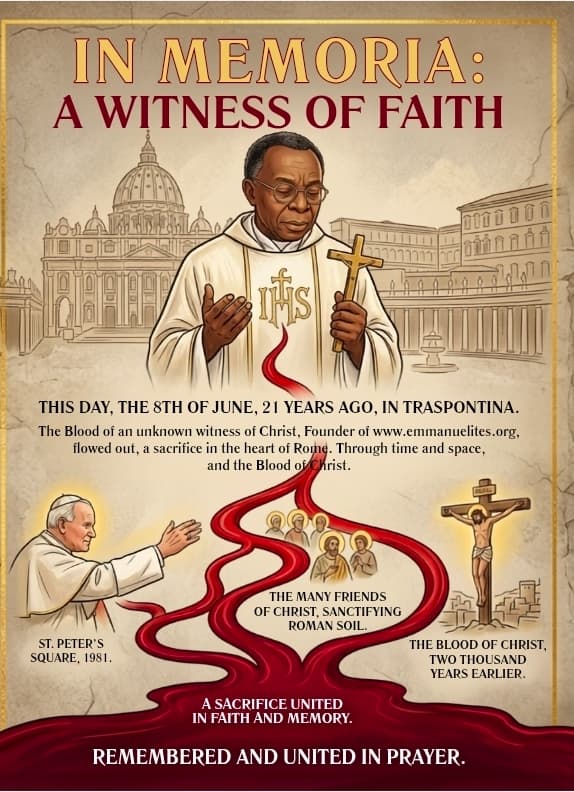
Research Notes: Congregation of Christ the Emmanuel and Founder
On June 8, twenty-one years ago, near the corridor that leads to St Peter's Basilica in Rome, something happened at Santa Maria in Traspontina that has not yet been fully told. These research notes document what is known, what is sourced, and what remains a devotional memorial claim, about the Congregation of Christ the Emmanuel, its founder Rev. Fr. Prof. John Okoro Egbulefu, his theology, his service to the Holy See, and the ecclesial journey of a community rooted in the charism of Emmanuelance. Before drawing conclusions, read carefully. Before communicating, understand fully.
Read article →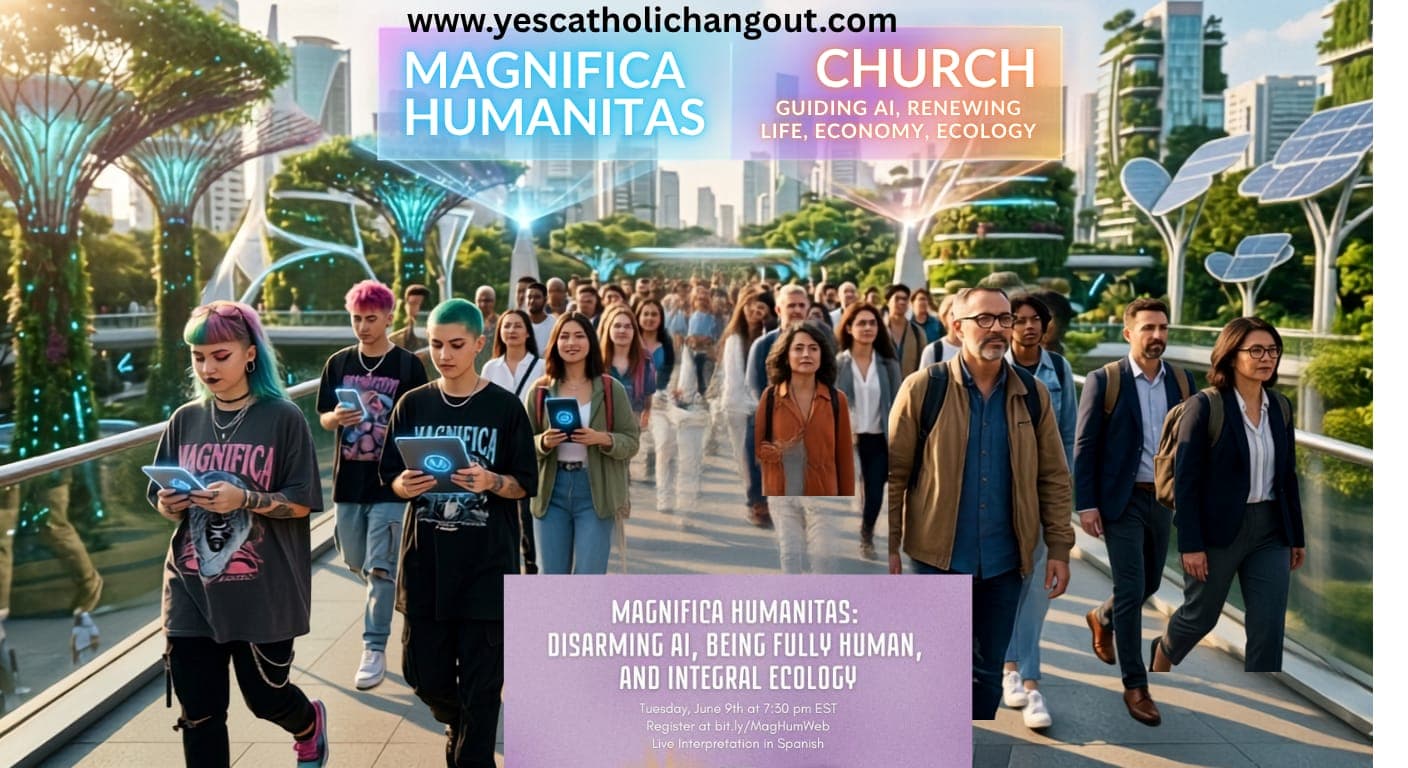
Stay Human, Stay Holy: Disarm AI, Defend Life, Build the Common Home
In the age of artificial intelligence, the Church faces a civilizational choice: build another Tower of Babel, where power, efficiency, and profit overwhelm conscience, or rebuild Jerusalem, where God, human dignity, truth, and solidarity dwell together. Magnifica Humanitas does not ask the Church to fear technology or surrender to it. It asks every generation, Gen X and Gen Z alike, to do something far more demanding: remain fully human, keep conscience awake, and keep creation sacred. This is what that looks like in practice.
Read article →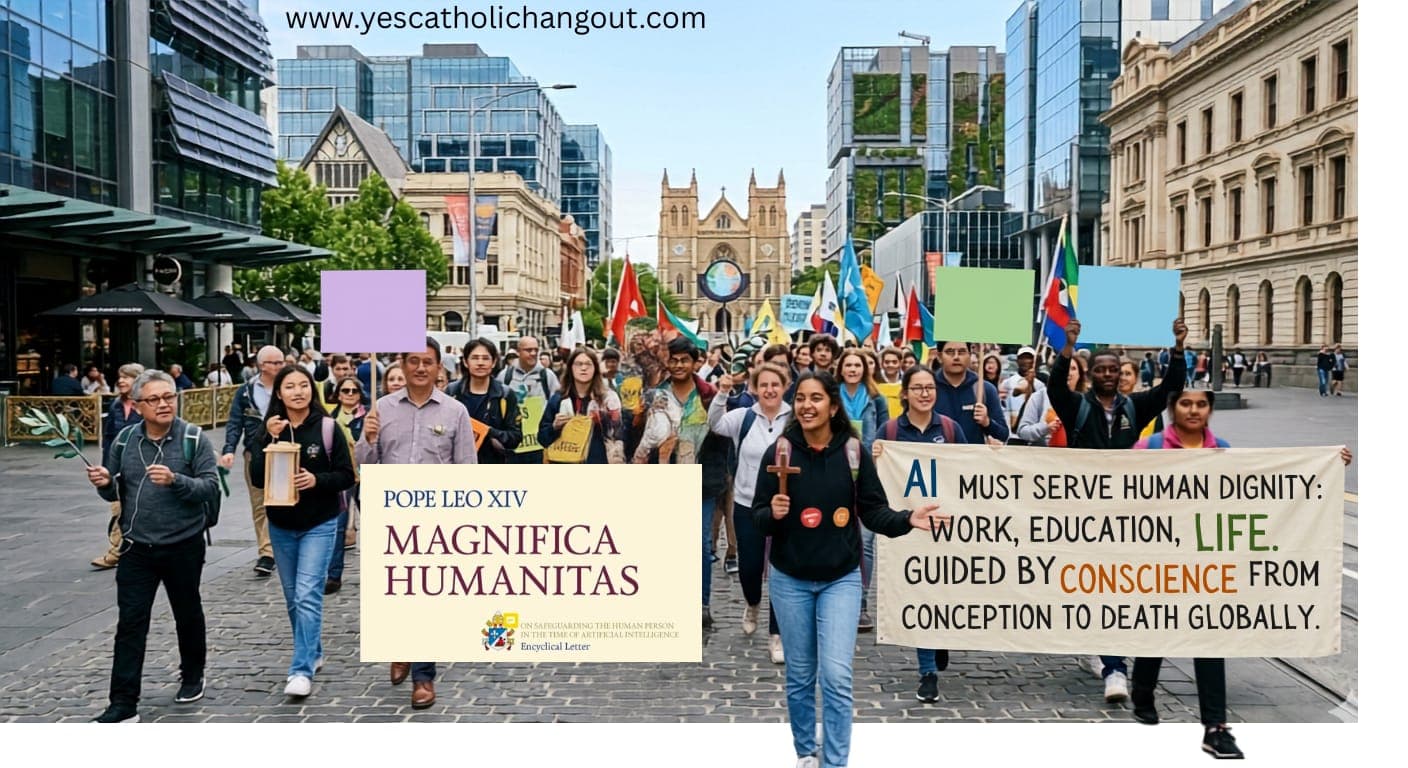
From Dial-Up to Deep Learning: Keep the Soul Online
When employees begin seeking religious exemptions from mandatory AI use at work, the question being asked is deeper than it appears. It is not about technology. It is about who governs it, and for whose good. Drawing from Rerum Novarum and Magnifica Humanitas, this article argues that the Church's response to the AI age must be neither technophobic nor technocratic. It must be pro-worker, pro-conscience, pro-life, and pro-poor. And it must keep the soul online.
Read article →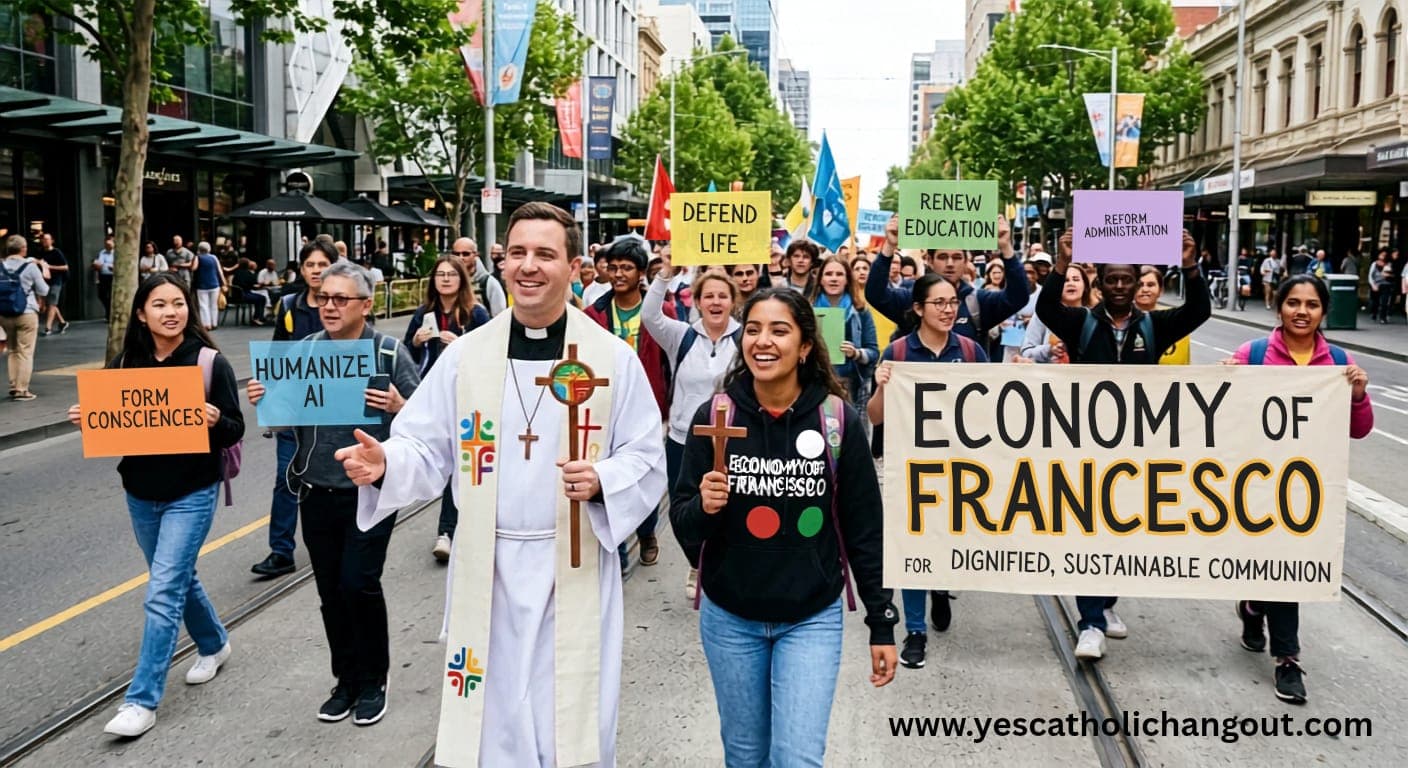
From Analog Grit to Algorithmic Grace: A Synodal and Entrepreneurial Moral Conscience for the AI Age
Humanity stands once again before a decisive moral choice. In the language of Magnifica Humanitas, the question is not whether the Church will accept or reject technology, but whether humanity will construct a new Tower of Babel or rebuild Jerusalem as a city of communion, justice, and peace. This article brings together the Economy of Francesco, Catholic Social Teaching, and Pope Leo XIV's encyclical to argue that the Church's answer to artificial intelligence is not a policy document, a press release, or a content strategy. It is a conscience. Formed, accountable, entrepreneurial, and synodal.
Read article →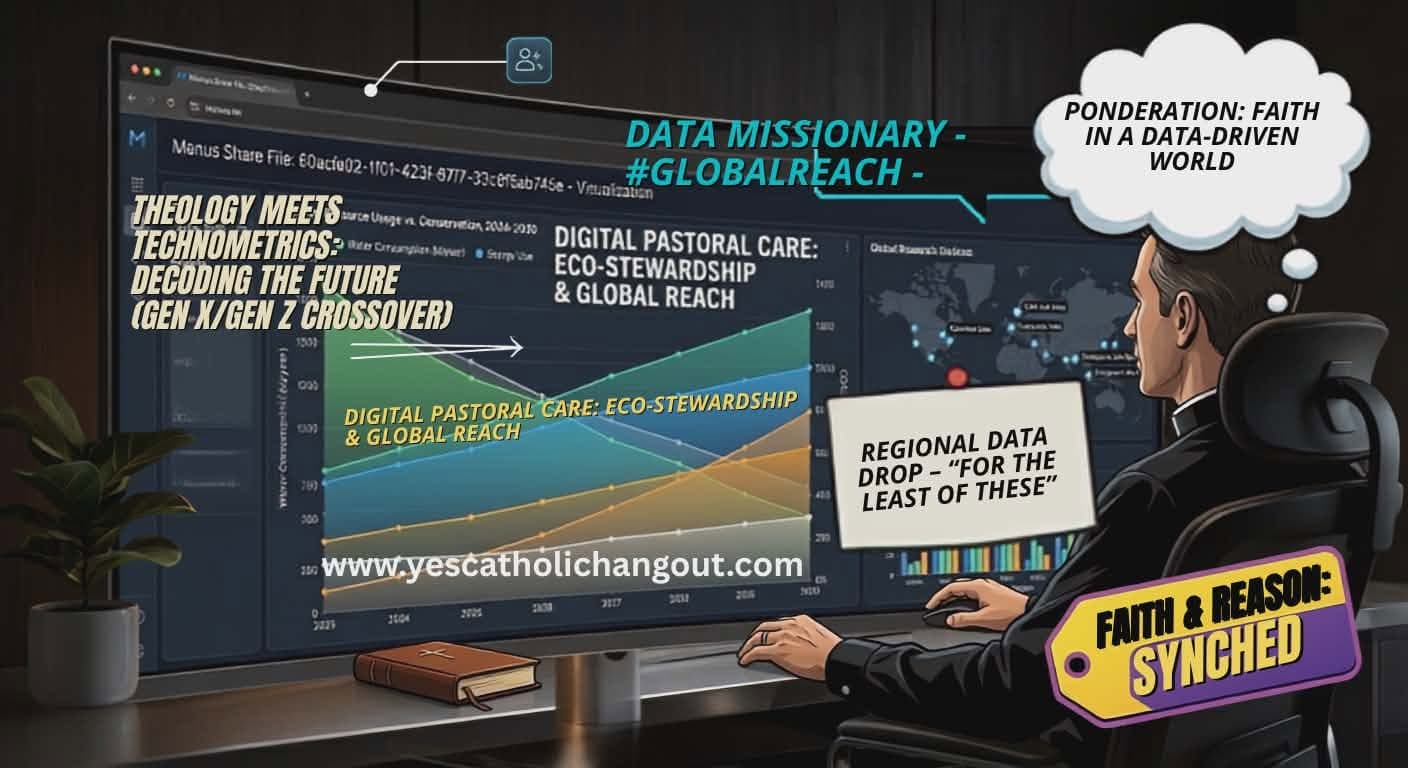
The Eucharist Viz-à-Vis Magnifica Humanitas: A Recipe for Gen Z and Gen X Returning to the Church in the Age of Disarming Artificial Intelligence through an Anthropological Theoalgorithm
In an age where machines learn, predict, imitate and persuade, the Church is summoned to announce a truth older than code and newer than every innovation: the human person is not a dataset, not a profile, not an expendable variable in the economy of attention, but a beloved creature made in the image of God and redeemed in the Body and Blood of Christ. Fr. Oliver CCE brings together the Eucharist and Magnifica Humanitas to offer Gen Z and Gen X not a content strategy, but an encounter. Not an algorithm, but an altar.
Read article →
Pope Leo XIV Appoints Maria Montserrat Alvarado to Lead Vatican Communications
Pope Leo XIV has appointed Maria Montserrat Alvarado, the first non-religious woman to lead a dicastery of the Holy See, as Prefect of the Dicastery for Communication. The appointment arrives days after the publication of Magnifica Humanitas, and the two events read together as a single pastoral statement: the Church is not retreating from the digital world. She is entering it more intentionally, more humanly, and more accountably than ever before. The question this moment puts to every Catholic communicator is the same one the encyclical puts to every Catholic: whose voice are you amplifying, and in whose service?
Read article →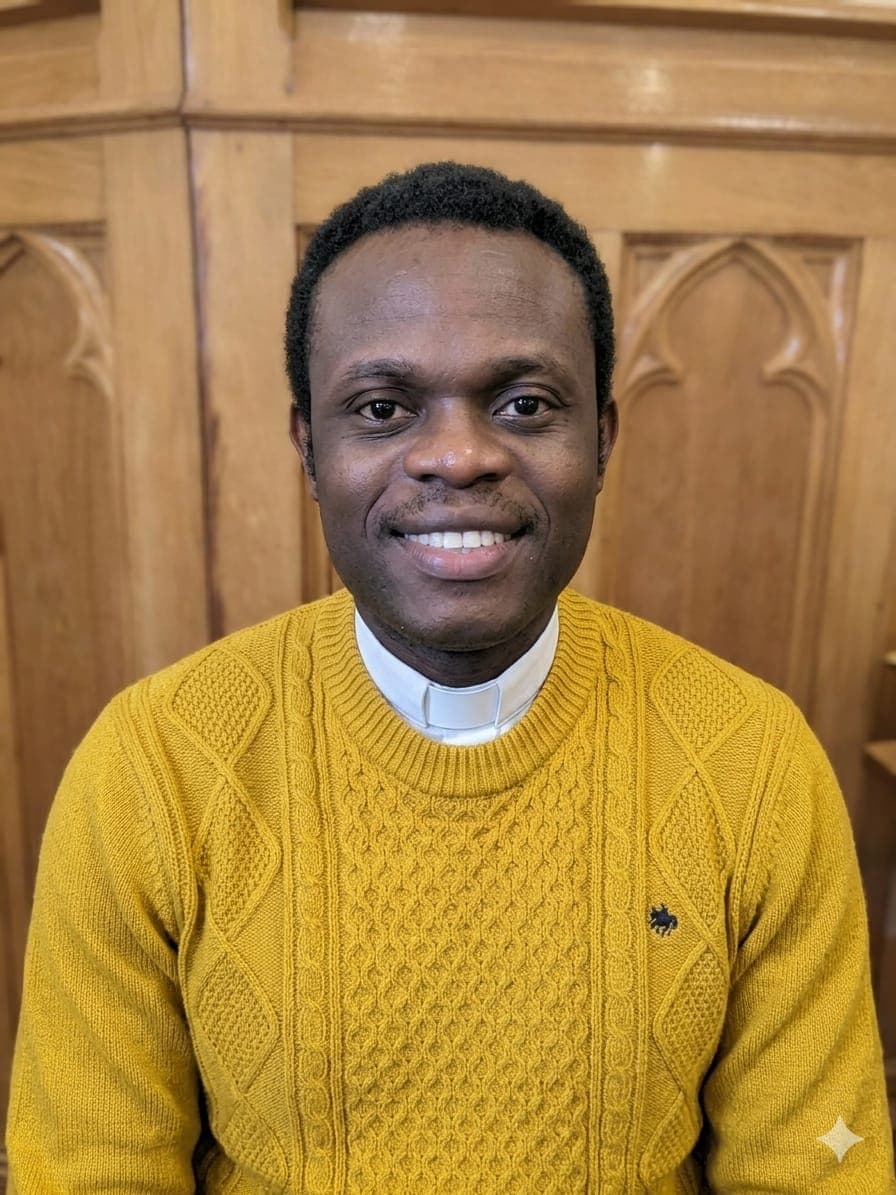
Reconciling "AI Godbots" with Magnifica Humanitas
What happens when a machine speaks in the name of God? That is the question at the heart of a growing global concern about "AI godbots," chatbots deployed on religious websites that simulate spiritual counsel, lead users through prayers of salvation, and in some cases present themselves as sources of divine guidance. Fr. Oliver CCE brings together the empirical alarm raised by religious leaders worldwide and the theological architecture of Pope Leo XIV's Magnifica Humanitas to argue that the danger is not technology itself but what happens when simulation is mistaken for sacrament, generated fluency for wisdom, and technological power for spiritual authority. The answer, he argues, is not panic or passivity. It is disarmament.
Read article →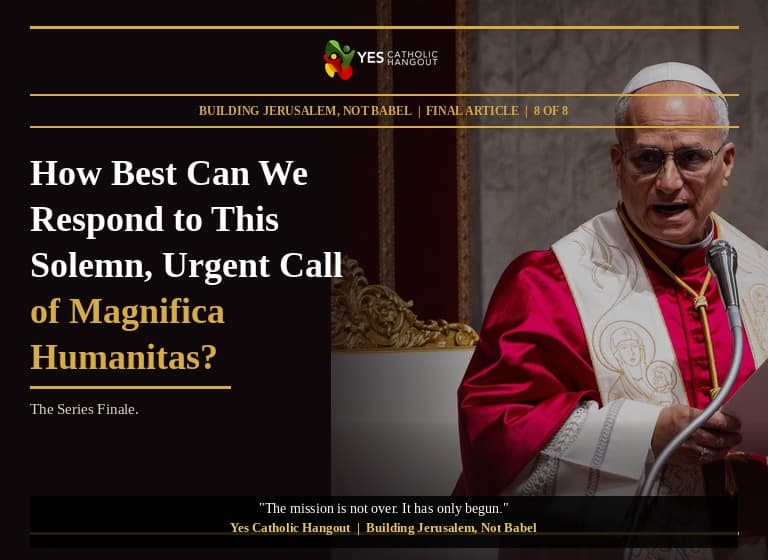
How Best Can We Respond to the Solemn, Urgent Call of Magnifica Humanitas
Eight articles. One encyclical. One urgent question that has been building since Article 1. Magnifica Humanitas is not a document written for theologians and filing cabinets. It is a solemn, urgent call addressed to every Catholic alive right now, in every ordinary life, on every ordinary screen. Pope Leo XIV is not asking us to solve the AI crisis. He is asking us to respond faithfully, concretely, and humanly to the world we actually live in. This is what that response looks like.
Read article →
The Church Has No Business Being Online. Or Does She?
Should the Church be online? It is a question Catholics have wrestled with since the internet became a mass phenomenon. Magnifica Humanitas answers it without hesitation. Digital spaces are not a parallel or purely virtual world. The people in them are real people, with real loneliness, real questions, and real hunger for God. And therefore the Church’s responsibility toward them is real responsibility. The question is not whether to be present. It is whether to be present with purpose.
Read article →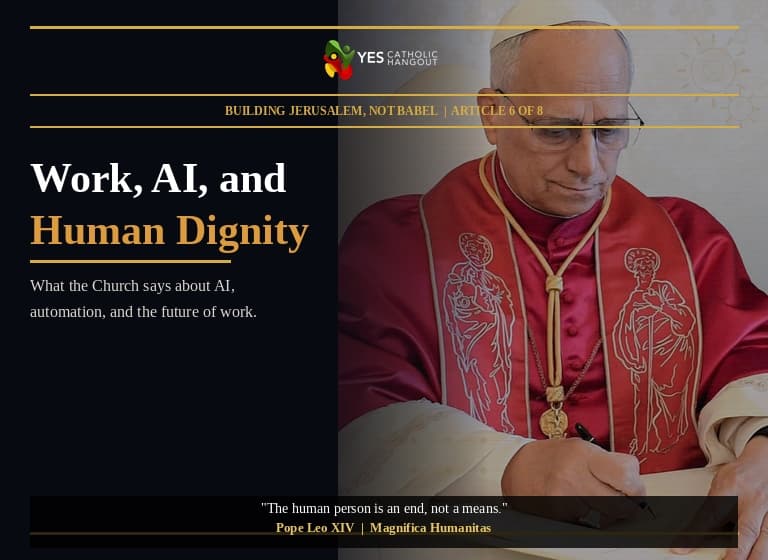
Work, AI, and Human Dignity
Millions of people around the world are quietly carrying a question they are often too afraid to say out loud: will I still have a job in ten years? Pope Leo XIV takes that fear seriously in Magnifica Humanitas. Work, in the Catholic tradition, is not simply a means of earning income. It is a path to dignity, creativity, and participation in the common good. And when AI threatens it on a massive scale, what is at stake is not just employment. It is the human vocation itself.
Read article →
Scrolling Away Our Freedom
You pick up your phone to check one thing. Twenty minutes later you are still there, feeling vaguely worse than before, wondering where the time went. Pope Leo XIV names that feeling not as a bad habit or a lack of discipline but as a justice issue. The platforms we use every day are not designed for our flourishing. They are engineered to exploit our vulnerabilities, capture our attention, and sell it. And when a business model is built on human weakness, the Pope says, the person is being treated as a means rather than an end.
Read article →
The Hidden Cost of Your Devices
Your phone works perfectly. The screen is sharp, the response instant, the experience seamless. But behind that polished surface is a chain of human cost that the digital economy has worked hard to keep invisible. In Magnifica Humanitas, Pope Leo XIV names it plainly: data laborers working in psychologically damaging conditions, children mining rare earth minerals with their bare hands, and trafficking victims moved through the same digital infrastructure that powers your apps. This is not a distant problem. It is the hidden cost of your devices.
Read article →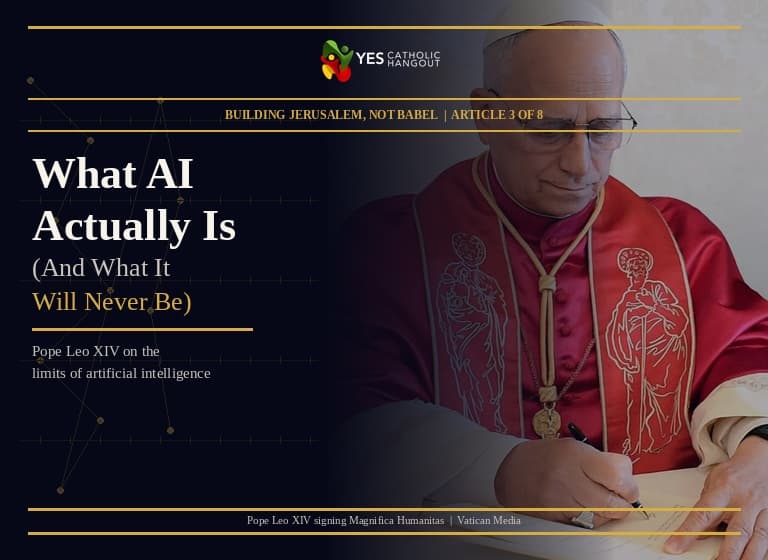
What AI Actually Is (And What It Will Never Be)
Artificial intelligence can write essays, compose music, diagnose diseases, and hold conversations that feel surprisingly human. But Pope Leo XIV draws a line that most public conversations about AI completely miss. AI imitates certain functions of human intelligence. It does not replicate human intelligence itself. It has no body, no conscience, no capacity for love, and no understanding of what it produces. And according to Magnifica Humanitas, recognizing that difference is not a technical question. It is a spiritual one.
Read article →
Carlo Acutis Was Right
Carlo Acutis never set out to be a saint. He set out to show people what he already saw: that the Eucharist was real, that miracles were documented, and that the internet could be a doorway to the sacred rather than a distraction from it. Now, with Pope Leo XIV’s Magnifica Humanitas laying out the Church’s vision for faith in the digital age, one thing becomes undeniable. That fifteen-year-old boy with a computer and a mission was ahead of all of us.
Read article →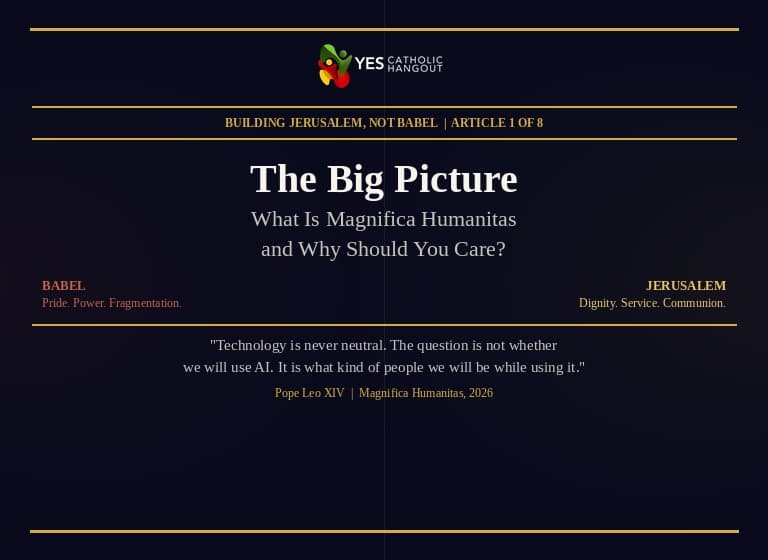
The Big Picture: What Is Magnifica Humanitas and Why Should You Care?
Pope Leo XIV's first encyclical, Magnifica Humanitas, arrives at a moment the Church cannot afford to ignore. Artificial intelligence is already shaping who gets a job, what news we see, and increasingly, who lives and dies on battlefields. Drawing on two powerful biblical images, the Tower of Babel and Nehemiah's rebuilding of Jerusalem, the Pope presents humanity with a stark choice: use technology for domination and pride, or direct it toward dignity, solidarity, and the common good. This is not an anti-technology document. It is a deeply human one.
Read article →
A Sign, A Saint, and a Mission: Carlo Acutis and the Beginning of Yes Catholic Hangout
In January 2019, the Church opened the tomb of Carlo Acutis — a fifteen-year-old who had used the internet to bring souls closer to God — and discovered something that stirred the faith of all who witnessed it. That same month, Yes Catholic Hangout was founded. Whether coincidence or providence, both moments point to the same truth: the mission Carlo lived for did not end with him. It is only just beginning.
Read article →
Saint Carlo Acutis and the Digital Mission of the Church: What He Means for Yes Catholic Hangout
Carlo Acutis showed that holiness is possible even in the digital age. His legacy of using technology for evangelization lives on through initiatives like Yes Catholic Hangout, building a new path for faith in the modern world.
Read article →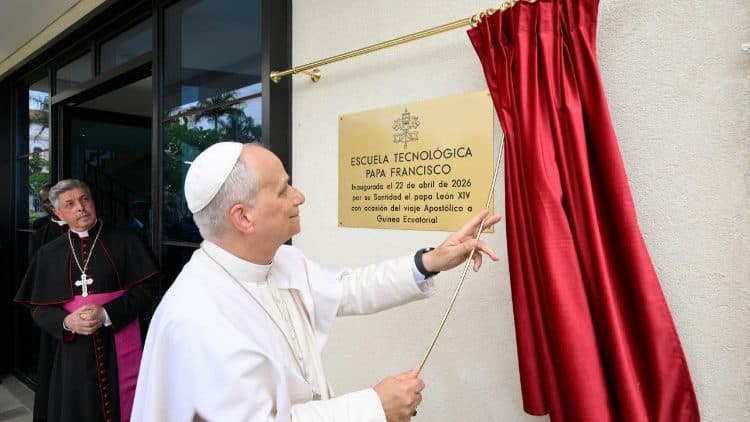
Pope Leo XIV Highlights Role of Technology in Youth Formation During Visit to Equatorial Guinea
Pope Leo XIV’s visit to the Pope Francis Technology School in Equatorial Guinea highlights a growing reality: the future of the Church is inseparable from the digital world. As the Church continues its mission, technology is no longer a distraction—but a powerful tool for education, formation, and evangelization.
Read article →
Pope Francis in Cameroon: A Call to a Synodal and Listening Church in Africa
During his visit to Cameroon, Pope Francis emphasized a Church rooted in synodality—one that listens deeply, walks with the people, and becomes a living expression of communion in Africa’s diverse cultural landscape.
Read article →