
Transparency and the Human Person: A Synodal Call for Ethical Governance in the Digital Age
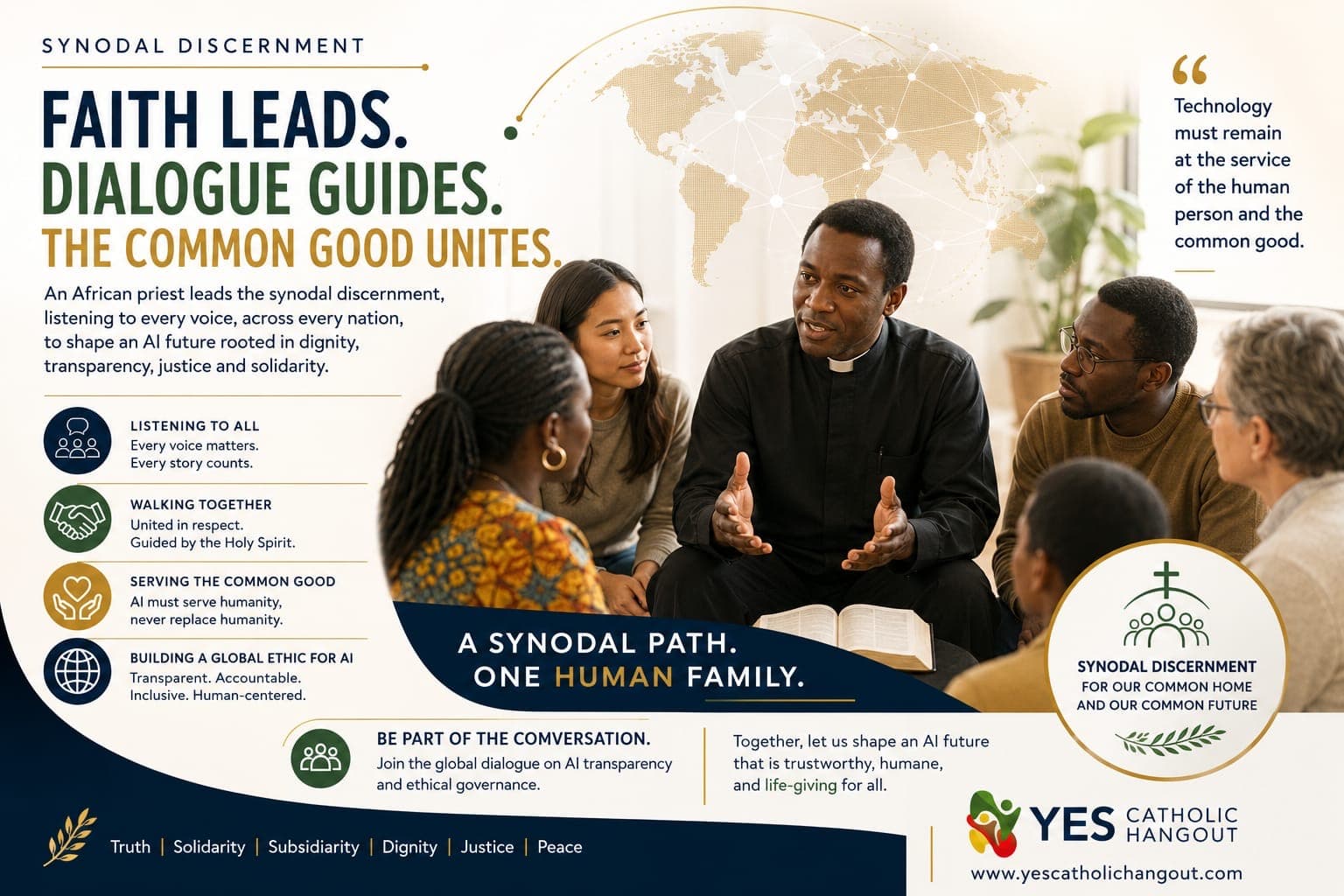
In the Age of Artificial Intelligence, Transparency Is a Moral Imperative
Artificial Intelligence is reshaping the foundations of human society. From healthcare and education to governance, finance, communication, and national security, algorithmic systems increasingly influence decisions that affect millions of lives. Amid this unprecedented technological transformation, one question rises above all others: can humanity trust the systems it creates?
Canada’s consultation on Artificial Intelligence transparency provides more than a regulatory opportunity. It represents a profound ethical invitation to reconsider the relationship between technology, democracy, and the human person. Transparency is no longer merely a technical requirement. It is a moral expression of accountability, justice, and respect for human dignity.
For the Church, this conversation is not peripheral. It belongs at the very heart of her mission to proclaim the dignity of every person and to illuminate the signs of the times with the light of the Gospel.
Transparency as an Expression of Human Dignity
Every algorithm embodies human choices. Every dataset reflects human priorities. Every automated decision influences human lives.
Consequently, Artificial Intelligence can never be understood as ethically neutral. Behind every technological system stand designers, institutions, cultures, and moral assumptions. Transparency therefore becomes the first condition of responsibility.
A transparent AI ecosystem enables citizens to understand how significant decisions are made. It protects fundamental rights, strengthens democratic accountability, and prevents hidden biases from undermining justice.
Such transparency reflects the vision of Magnifica Humanitas, which calls technological innovation to remain firmly rooted in the inviolable dignity of the human person. Human beings must never become objects manipulated by algorithms. Rather, technology must remain an instrument serving authentic human flourishing.
The measure of technological progress is not computational power but the extent to which it safeguards truth, freedom, justice, and the common good.
A Synodal Way of Governing Artificial Intelligence
Synodality offers an indispensable methodology for ethical AI governance.
The digital future cannot be shaped exclusively by governments, technology companies, or academic institutions. Authentic governance requires listening to the voices of all stakeholders, particularly those who are often excluded from technological decision-making.
Scientists, policymakers, Indigenous communities, educators, religious leaders, entrepreneurs, civil society organizations, youth, persons living with disabilities, and vulnerable populations all possess wisdom that enriches responsible innovation.
This culture of listening reflects the Church’s conviction that genuine discernment emerges through dialogue, participation, and shared responsibility. Artificial Intelligence therefore demands not only technological excellence but also synodal wisdom: listening before designing, consulting before regulating, serving before controlling.
This participatory approach transforms governance from an exercise of power into a ministry of stewardship.
Fraternity in the Digital World
The digital revolution has connected humanity more rapidly than ever before. Yet connectivity alone does not guarantee communion.
The vision of Fratelli Tutti reminds us that authentic progress must strengthen fraternity, solidarity, and social friendship. Technologies that deepen inequality, concentrate power, manipulate information, or exclude vulnerable communities ultimately weaken the social fabric they promise to improve.
AI transparency therefore becomes an act of fraternity. When systems are understandable, explainable, and accountable, trust grows. When trust grows, collaboration becomes possible. When collaboration flourishes, technology becomes a bridge rather than a barrier.
The future of Artificial Intelligence should unite peoples rather than divide them, empower communities rather than marginalize them, and strengthen democratic participation rather than weaken public confidence.
Integral Ecology and Responsible Innovation
Artificial Intelligence also raises profound ecological questions.
The Church’s vision of integral ecology reminds us that digital technologies exist within broader environmental, economic, and social systems. Data centres consume enormous energy resources. Electronic waste continues to expand globally. Rare mineral extraction often affects vulnerable communities.
Ethical AI must therefore consider not only algorithmic performance but also ecological sustainability. Responsible innovation asks difficult questions: how are technologies produced? Whom do they benefit? Who bears their environmental costs? How do they contribute to a more just and sustainable future?
Innovation worthy of humanity must care simultaneously for people, communities, and our common home.
An Economy That Serves the Human Person
The Economy of Francesco proposes a compelling vision for the digital age: economies exist for people, not people for economies.
Artificial Intelligence possesses extraordinary potential to improve productivity, healthcare, education, scientific discovery, agriculture, and public administration. Yet these opportunities must never justify economic systems that reduce workers to data points or consumers to predictable behavioural patterns.
Ethical innovation requires economic structures that promote inclusion, participation, meaningful work, entrepreneurship, and shared prosperity.
Transparency in AI markets strengthens investor confidence, protects consumers, encourages responsible entrepreneurship, and creates conditions for sustainable innovation that benefits all rather than a privileged few.
The future digital economy must remain profoundly human.
Canada’s Opportunity and a Global Responsibility
Canada’s commitment to public consultation on AI transparency offers an important example of democratic participation in technological governance.
Its significance, however, extends beyond national borders. Artificial Intelligence knows no geographical boundaries. Algorithms developed in one nation influence citizens across continents. Ethical failures in one jurisdiction can rapidly affect the global community. Likewise, responsible leadership can inspire international cooperation.
Canada therefore has an opportunity to contribute meaningfully to a worldwide culture of trustworthy Artificial Intelligence, one rooted in openness, accountability, respect for human rights, and international collaboration.
Such leadership invites every nation to recognise that transparency is not simply regulatory compliance but a shared moral responsibility.
The Mission of Faith in the Digital Age
As Ethical Innovator, Synodal Secretary, and Founder of www.yescatholichangout.com, I believe the Church has a distinctive vocation within this emerging digital civilization.
Our mission is neither to resist innovation nor to embrace technology uncritically. Rather, we are called to accompany humanity through discernment: to illuminate innovation with wisdom, to inspire governance with compassion, and to remind every generation that technological advancement achieves its highest purpose only when it protects the dignity of every human person.
Faith and science are not rivals. Ethics and innovation are not competitors. They become partners whenever truth, justice, solidarity, and hope guide technological development.
Toward an Ethical Digital Civilization
Artificial Intelligence is one of humanity’s greatest achievements. Whether it becomes one of humanity’s greatest blessings depends upon the ethical choices we make today.
Transparency must become more than a legal obligation. It must become a cultural virtue. Accountability must become more than institutional compliance. It must become a moral commitment. Innovation must become more than technological advancement. It must become an expression of service to humanity.
As our world continues its digital transformation, may governments, researchers, entrepreneurs, educators, faith communities, and citizens walk together along a synodal path of listening, discernment, and responsible innovation.
Only then will Artificial Intelligence truly become an instrument of peace rather than division, inclusion rather than exclusion, hope rather than fear.
The future of Artificial Intelligence should not merely be intelligent.